The Ultimate Green Season Safari Packing List for Wet Weather
Heading to the Maasai Mara in the green season? Our ultimate packing list covers clothing, gear, and essentials to keep you dry and comfy on your wet weather safari.
Ultimate Green Season Safari Packing List for Wet Weather: Mara Triangle Safaris Guide
So, you’ve decided to visit the Maasai Mara during the green season. Top choice! Everyone talks about the dry season, but you’re in for a proper treat. Think lush, vibrant landscapes, dramatic skies, and fewer crowds. It’s when the Mara truly comes alive, bursting with new life. But here’s the deal: “green season” is a nice way of saying “rainy season.” That means packing requires a bit more thought than just chucking some shorts and t-shirts in a bag. Don’t stress, though. We’ve got you covered with a complete guide to make sure you’re sorted for every possibility, from brilliant sunshine to a sudden downpour. This isn’t just a list; it’s your game plan for an epic, comfortable, and unforgettable adventure.
Let’s get you packed and ready for the adventure of a lifetime.
What Safari Clothing Should You Pack?
First things first, let’s talk clothes. The key here is layering. Mornings can be nippy, afternoons can get warm and sunny, and evenings might bring a cool breeze along with the rain. You need to be ready to add or remove layers faster than a leopard spots its dinner. The goal is to stay comfy, dry, and blended with the environment. Bright colors are a no-go; they can spook the animals. Instead, think neutral, earthy tones. This approach ensures you’re prepared for the fluctuating temperatures you’ll experience from an early morning game drive to a relaxing evening by the fire.
Essential Tops for Layering
Your upper body wardrobe is all about versatility. Start with a base of comfortable t-shirts and long-sleeved shirts. Cotton is fine, but moisture-wicking fabrics are even better, as they’ll dry quickly if you get caught in a shower or work up a sweat. Pack a couple of each. Over these, you’ll want a warm fleece jacket or a mid-weight jumper. This is your go-to for chilly mornings and evenings. A good fleece provides excellent insulation without being bulky, making it easy to pack and carry. It’s the perfect middle layer that will see you through most of the day.
Bottoms: Trousers and Shorts
For your lower half, a couple of pairs of sturdy safari trousers or chinos are essential. Go for colours like khaki, beige, or olive green. Many travelers swear by convertible trousers that zip off into shorts. These are brilliant for adapting to the midday heat. While shorts are great for relaxing at the lodge, long trousers are better for game drives. Why? They offer more protection from the sun and, more importantly, from pesky insects like tsetse flies, especially when you’re out and about in the bush. Make sure they are made of a quick-drying material.
Don’t Forget Your Waterproofs
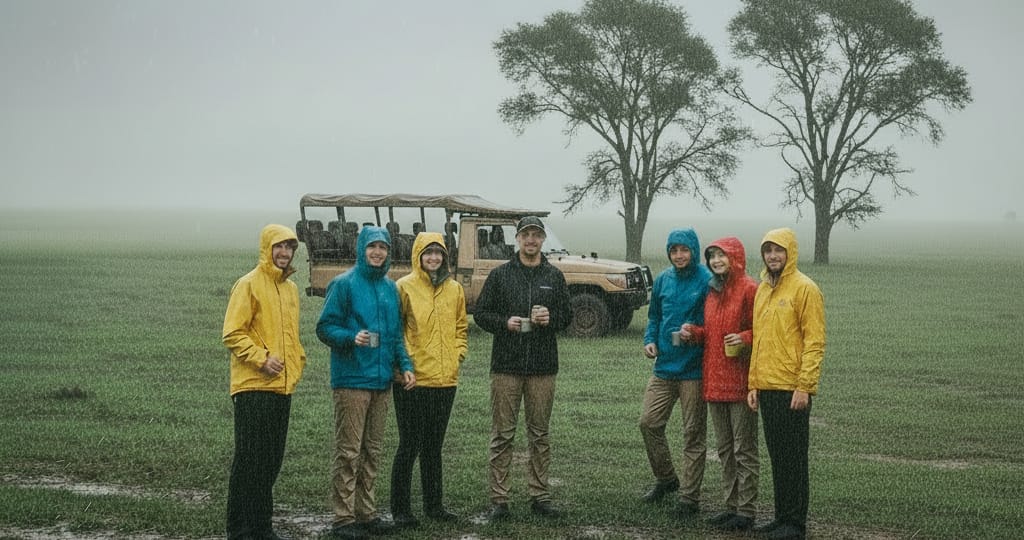
This is non-negotiable for the green season. You absolutely need a lightweight, breathable, and properly waterproof rain jacket. A cheap poncho won’t cut it when you’re faced with a real African downpour. Look for a jacket with a hood that can be easily rolled up and stowed in your daypack. Waterproof trousers are also a smart idea. You might not wear them every day, but you’ll be chuffed you have them when the heavens open up during a game drive. Staying dry is the difference between loving the rain and being miserable in it.
Choose a waterproof jacket that’s a size bigger than you normally wear.
This makes it easy to throw on over your fleece or other layers without feeling constricted.
What’s the Best Footwear for a Wet Safari?
Your feet are your foundation for this trip, and keeping them happy is paramount. You’ll be getting in and out of safari vehicles, maybe doing a bit of walking around the lodge, and you need footwear that can handle mud, puddles, and uneven ground. The wrong shoes can quickly ruin your day, so this is one area where you don’t want to compromise. Comfort is king, but durability and water resistance are just as important. Think about the entire journey, from the airport to deep within the Maasai Mara.
Boots for Bush Walks and Game Drives
A pair of waterproof, ankle-high hiking or walking boots is your best mate for a green season safari. They offer support on uneven terrain and, most importantly, will keep your feet dry. Make sure they’re well broken-in before you travel; the last thing you want is to be dealing with blisters on your first day. Look for boots with good grip to handle slippery surfaces. These will be your primary footwear for game drives and any guided bush walks, providing protection and stability when you need it most.
Comfortable Shoes for the Lodge
When you’re back at the lodge, you’ll want to kick off your boots and slip into something more comfortable. A pair of trainers, sneakers, or even sturdy sandals like Tevas or Keens are perfect for this. They are great for walking to and from your tent, lounging in the common areas, or enjoying a meal. Having a second pair of shoes allows your main boots to air out and dry completely if they’ve had a particularly wet or muddy day, ensuring they’re ready for the next day’s adventure.
Socks, Socks, and More Socks
You can never have too many pairs of socks. Pack more than you think you’ll need. Bring a mix of moisture-wicking hiking socks for when you’re wearing your boots and some comfortable cotton ones for relaxing. If a pair gets wet, you’ll want a dry one ready to go. Wet socks are a recipe for discomfort and blisters. Consider packing a few pairs of thicker, warmer socks for the cooler evenings as well. It’s a small detail that can make a huge difference to your overall comfort.
Pop a couple of silica gel packets (the kind you find in new shoe boxes) into your boots overnight.
They will help absorb any moisture and have them feeling fresh for the morning.
What Essential Accessories Should I Bring?
The right accessories are the finishing touches that elevate your safari from good to great. These are the items that provide comfort, protection, and convenience, often in ways you hadn’t anticipated. It’s not just about clothing; it’s about the gear that supports your daily activities. From protecting you from the elements to helping you capture the perfect photo, these small items pack a big punch. Think of this as your safari toolkit, filled with essentials you’ll be glad you remembered.
Sun and Rain Protection for Your Head
A good hat is a must-have. A wide-brimmed hat is fantastic because it protects your face, ears, and neck from the sun. On top of that, it helps keep the rain out of your eyes during a shower. Make sure it has a chin strap to stop it from flying off when the safari vehicle gets a move on. While a baseball cap is better than nothing, the extra coverage from a wide-brimmed hat is worth its weight in gold. Look for one made from a crushable, water-resistant material so you can easily stuff it in your bag.
Scarves and Buffs
A scarf, pashmina, or a buff is an incredibly versatile piece of kit. You can use it to keep your neck warm on a chilly morning, as a dust mask on a dry track, or for extra sun protection. It can even add a bit of style to your evening outfit back at the lodge. A lightweight wool or fleece scarf is perfect for warmth, while a cotton or synthetic buff is great for all-around use. This simple item takes up almost no space but has a dozen different uses.
The All-Important Daypack
You will need a comfortable, waterproof daypack to carry all your daily essentials on game drives. This includes your camera, binoculars, extra layers, water bottle, sunscreen, and rain jacket. A 20-30 litre pack is usually the perfect size. Look for one with multiple compartments to keep your gear organized and easily accessible. A built-in rain cover is a fantastic feature, but if your bag doesn’t have one, you can buy one separately. This bag will be your constant companion, so choose one that feels good on your shoulders.
Line the inside of your daypack with a dry bag or even a simple bin liner.
This provides an extra layer of guaranteed waterproofing for your electronics and other valuables, just in case.
What Electronics and Camera Gear Are Necessary?
Capturing the memories of your safari is a huge part of the experience. The green season offers incredible photographic opportunities, with dramatic skies, lush backdrops, and plenty of animal action. Whether you’re a seasoned photographer or just snapping pics on your phone, you need to be prepared. This means not only bringing the right gear but also having a plan to keep it all charged and protected from the elements, especially the rain and humidity.
Your Camera and Lenses
For the photography enthusiasts, a DSLR or mirrorless camera with a good zoom lens is ideal. A lens in the 100-400mm range will give you the versatility to shoot both landscape shots and close-ups of distant wildlife. Don’t forget to pack extra memory cards; you’ll take more photos than you expect. It’s also wise to bring a waterproof camera cover or even a simple plastic bag and a rubber band to protect your gear during a downpour. The best time to visit the Maasai Mara for photography can be subjective, but the green season light is magical.
Keeping Everything Charged
Power can be limited in safari camps. Lodges typically run on generators that are only on for a few hours each day. Bring a universal travel adapter and a portable power bank. A high-capacity power bank can recharge your phone and other small devices several times over, ensuring you’re never caught with a dead battery when a perfect photo opportunity arises. Also, bring extra batteries for your camera. Charge everything—your camera, phone, and power bank—whenever you have access to electricity.
Binoculars are a Must
Binoculars are just as important as a camera. A good pair of binoculars brings the action right to you, allowing you to see the details of a lion’s mane or the colourful plumage of a distant bird. You don’t want to be the person in the vehicle who has to borrow someone else’s. A magnification of 8×42 or 10×42 is generally recommended for safari. They offer a great balance between magnification and field of view, and they perform well in the low light of dawn and dusk.
Store your electronics with silica gel packs in a zip-lock bag to combat the humidity and prevent moisture damage.
This is especially important for camera lenses, which can be prone to fogging.
What Health and Personal Items Should Be on My List?
Taking care of yourself is just as important as packing the right clothes. Being in a remote location means you can’t just pop down to the shops if you forget something. You need to be self-sufficient with your personal health and hygiene items. From basic toiletries to a comprehensive first-aid kit, having these things on hand will ensure you stay healthy and comfortable throughout your trip. The African bush is a wild place, and being prepared for minor scrapes, bites, and sun exposure is just common sense.
Essential Toiletries
While most lodges provide basic soap and shampoo, it’s always best to bring your own travel-sized toiletries, especially if you have sensitive skin or prefer certain brands. Don’t forget your toothbrush, toothpaste, deodorant, and any personal hygiene products you use daily. Pack everything in a waterproof toiletry bag to prevent any leaks from ruining the contents of your luggage. A good lip balm with SPF is also a lifesaver, as the wind and sun can be harsh on your lips.
First-Aid Kit
Your first-aid kit doesn’t need to be massive, but it should be well-stocked. Include basics like plasters (Band-Aids), antiseptic wipes, pain relievers (like ibuprofen or paracetamol), antihistamines for allergic reactions, and any personal prescription medications you need. It’s also wise to include medication for stomach upsets and rehydration salts, just in case. Insect repellent containing DEET is crucial for protection against mosquitoes and other biting insects. The Maasai Mara ecosystem is teeming with life, and that includes the six-legged kind.
Sun and Insect Protection
The African sun is powerful, even on an overcast day. A high-SPF, broad-spectrum sunscreen is essential. Apply it generously before you head out on every game drive. As mentioned, a potent insect repellent is your best defence against bites. Tsetse flies are active during the day and are attracted to dark colours like blue and black, another reason to stick to your neutral safari wardrobe. Mosquitoes are most active at dawn and dusk, so be sure to apply repellent before your morning and evening activities.
Pack solid toiletries (shampoo bars, solid perfume, etc.) to save space and eliminate the risk of leaks in your luggage.
They are a game-changer for travel.
What Documents and Money Do I Need?
Right, let’s talk about the boring but incredibly important stuff. Getting your documents and money in order before you leave is critical. Without the correct paperwork, your safari adventure could be over before it even begins. Having everything organized and easily accessible will save you a ton of stress at airports and border crossings. In this digital age, it’s also smart to have both physical and digital copies of your most important documents. This section is all about dotting the i’s and crossing the t’s.
Passport, Visa, and Travel Documents
Your passport is your most valuable possession on this trip. Ensure it is valid for at least six months beyond your planned departure date and has at least two blank pages. Check the visa requirements for Kenya for your nationality well in advance of your trip; many nationalities can now apply for an e-visa online. Print out copies of your flight itinerary, safari confirmation, and any other pre-booked accommodation or tour vouchers. Keep all these important documents together in a travel wallet.
Money Matters: Cash and Cards
The official currency in Kenya is the Kenyan Shilling (KES). It’s a good idea to have some local currency for small purchases, souvenirs, and tips. You can exchange money at the airport upon arrival or withdraw from an ATM. US dollars are also widely accepted, especially for larger payments and tips for your guides and lodge staff. Bring clean, recent-issue US dollar bills. It’s also wise to carry a credit or debit card (Visa and MasterCard are the most widely accepted) for larger expenses or emergencies. Inform your bank of your travel plans to avoid any issues.
Insurance and Emergency Contacts
Comprehensive travel insurance is not optional; it’s essential. Make sure your policy includes coverage for medical emergencies, trip cancellation, and emergency evacuation. The cost of a Maasai Mara safari is an investment you want to protect. Keep a copy of your insurance policy details with you. Also, create a list of emergency contacts, including your insurance provider’s 24-hour helpline, your bank, and a contact person back home. Leave a copy of your itinerary and documents with someone at home.
Take photos of your passport, visa, and credit cards with your phone and save them to a secure cloud service like Google Drive or Dropbox.
If you lose the physical copies, you’ll have a digital backup.
How Should I Pack for Internal Flights?
Many safari itineraries, especially those in the Maasai Mara, involve small internal flights on bush planes. These flights are an experience in themselves, offering incredible views of the landscape. However, they come with strict luggage restrictions that you need to be aware of. The rules are in place for safety reasons due to the small size and weight limits of the aircraft. Packing smart for these flights is key to a smooth and hassle-free transfer between locations.
Understanding Luggage Restrictions
The most important rule for bush flights is the luggage allowance. Typically, the limit is 15 kg (33 lbs) per person, and this includes both your main bag and your hand luggage. That’s not a lot, so you need to be ruthless with your packing. Check the specific allowance with the airline or your tour operator beforehand, as it can vary slightly. The weight limit is strictly enforced, so weigh your bag at home to avoid any nasty surprises at the airstrip.
The Right Kind of Bag
A hard-shell suitcase with wheels is a definite no. These are not suitable for bush planes. The luggage holds are small and irregularly shaped, so you need a soft-sided duffel bag or holdall. A bag without a rigid frame can be easily manipulated to fit into the available space. This is a non-negotiable requirement for most internal safari flights. It also makes it easier for the lodge staff and pilots to handle your luggage.
What to Keep in Your Hand Luggage
Even though your hand luggage counts towards the total weight limit, there are certain items you should always keep with you. This includes your passport and documents, any medication, your camera, and a change of clothes. In the unlikely event that your main bag is delayed, you’ll have all your absolute essentials with you. Packing cubes can be a fantastic way to organize your duffel bag and compress your clothing to maximize space. This is where planning your Maasai Mara safari itinerary carefully pays off.
Wear your heaviest items of clothing—your hiking boots, fleece, and jacket—on the flight.
This frees up a significant amount of weight and space in your luggage.
What Are Some Fun Extras to Bring?
Once you have all the essentials packed, you can think about a few extras to enhance your experience. These aren’t necessities, but they can add an extra layer of enjoyment and comfort to your trip. After all, a safari is a holiday, and part of the fun is relaxing and soaking in the incredible surroundings. These items are small, lightweight, and can make your downtime even more special.
Entertainment for Downtime
There will be periods of downtime at the lodge, perhaps in the middle of the day between game drives or after dinner. Bring a good book, load up your Kindle or tablet with movies, or pack a deck of cards. It’s a great way to relax and unwind. A journal and pen are also wonderful to have, allowing you to jot down your thoughts, feelings, and the amazing wildlife sightings you’ve had each day. The great migration offers plenty to write about.
Capturing and Identifying Wildlife
While your guide will be a fountain of knowledge, having your own wildlife field guide can be a lot of fun. It allows you to identify the different species of birds and mammals you see and learn more about their behaviour. There are some great pocket-sized guides and apps available for East African wildlife. It’s a rewarding way to engage more deeply with the environment around you, especially if you’re interested in the diverse animals you might see in Kenya during the rainy season.
Small Gifts for Local Communities
If you plan on visiting a local village or school, it can be nice to bring some small gifts. Things like school supplies (pencils, notebooks) or balls for the children are always appreciated. It’s best to check with your safari operator for guidance on what is appropriate and how to best distribute any gifts. This ensures your contribution is helpful and respectful. Understanding the Maasai people and their culture is an enriching part of the experience.
Bring a small, portable Bluetooth speaker for your room or tent. It’s perfect for listening to a podcast or some music while you relax between safari activities.
Just be mindful of the volume and your neighbours.
What Should I Leave at Home?
Knowing what not to pack is almost as important as knowing what to pack. Overpacking is a common mistake, and it can be a real pain, especially with those strict luggage limits on internal flights. Every item in your bag should serve a purpose. Leaving unnecessary items at home will lighten your load and make your travel experience much smoother. Think minimalist and practical.
Don’t Pack These Items
Leave your fancy clothes and expensive jewellery at home. A safari is a casual and practical affair; there’s no need for formal wear. Brightly coloured clothing, especially white, blue, and black, should be avoided. White gets dirty instantly, while blue and black can attract tsetse flies. Camouflage clothing is also a bad idea, as it’s associated with military personnel in many African countries and is illegal for civilians to wear in some. Finally, don’t bring single-use plastics like plastic bags; they are banned in Kenya.
The Problem with Drones
While it might be tempting to get those epic aerial shots, flying a drone in most national parks and reserves in Kenya, including the Maasai Mara, is strictly prohibited without special permits. These permits are difficult and expensive to obtain. Flying a drone illegally can result in hefty fines and confiscation of your equipment. It’s best to leave it at home and focus on ground-level photography. The rules about drones and hiking in parks like Hell’s Gate are there to protect the wildlife and the visitor experience.
Why Less is More
Remember that most lodges and camps offer a laundry service, often included in the price or available for a small fee. This means you don’t need to pack a different outfit for every single day. You can pack for a few days and have your clothes washed. This is the secret to packing light and staying within that 15 kg limit. Pack smart, not heavy. A lighter bag means less stress and more freedom to enjoy your incredible African safari adventure.
Do a trial pack a week before you leave.
Lay everything out, then be ruthless and remove at least three items you don’t absolutely need.
You’ll thank yourself later.
Final Packing Checklist
You’re almost there! To make things super easy, here is a quick-reference table. Use this as your final check before you zip up your bag and head to the airport. Ticking things off a list is strangely satisfying, isn’t it? This ensures you haven’t forgotten any of the absolute must-haves for your green season safari.
| Category | Items |
|---|---|
| Clothing | Neutral-coloured t-shirts, long-sleeved shirts, fleece jacket, waterproof jacket, safari trousers, shorts |
| Footwear | Waterproof hiking boots, comfortable lodge shoes, plenty of moisture-wicking socks |
| Accessories | Wide-brimmed hat, scarf/buff, sunglasses, waterproof daypack |
| Electronics | Camera, zoom lens, extra batteries, memory cards, power bank, universal adapter, binoculars |
| Health & Personal | Toiletry bag, first-aid kit, prescription meds, high-SPF sunscreen, insect repellent (with DEET) |
| Documents & Money | Passport, visa, flight/safari confirmations, travel insurance, cash (KES & USD), credit/debit cards |
| Luggage | Soft-sided duffel bag (max 15kg total), packing cubes |
With this list in hand, you’re all set for an incredible journey. Packing for a wet weather safari in the Maasai Mara is all about being prepared for anything. By focusing on layers, waterproofs, and practical gear, you ensure that no matter what the weather does, your comfort and enjoyment are never compromised. Now, the only thing left to do is get excited. The adventure of a lifetime awaits you in the stunning, vibrant, and wild green season of the Maasai Mara. For more tips, check out our guide on what to expect on a Kenya safari.