

How to Spot Rare Animals on a Kenyan Safari
Discover how to spot rare animals on a Kenyan safari with our fun guide! Learn top tips, best times, and the elusive creatures you can find.
Spot Rare Animals on a Kenyan Safari: Ultimate Guide
Everyone talks about the lions. You’ve probably seen the pictures a thousand times: a sleepy male lion yawning in the grass or an elephant dusting itself with red earth. But did you know there is a whole other world hiding in the bushes? While the big guys get all the fame, the real magic happens when you look a little closer at the shadows.
Finding the hidden gems of the savannah feels like winning a treasure hunt that most people don’t even know they are playing. If you want to truly brag to your friends back home, you need to go beyond the basics and learn how to spot rare animals on a Kenyan safari.
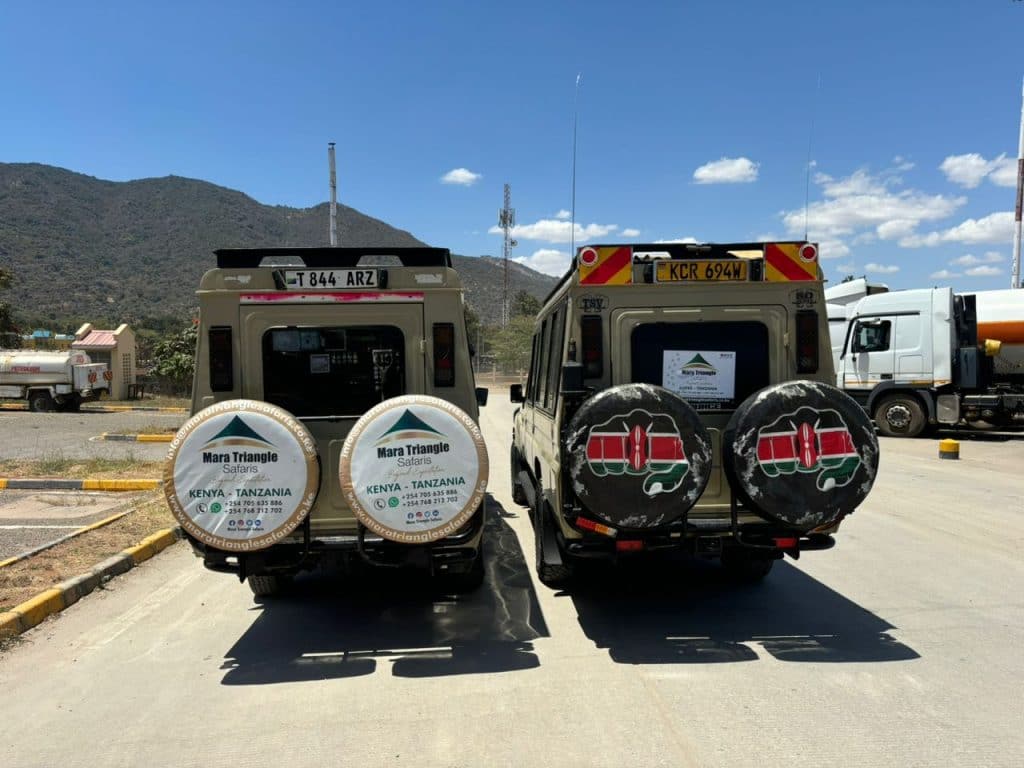
Why Searching for Rare Animals on a Kenyan Safari is Thrilling
Have you ever felt your heart skip a beat because you saw something no one else did? That is exactly what happens when you search for rare animals on a Kenyan safari. While spotting a lion is cool, finding an animal that is shy and elusive gives you a rush of adrenaline that is hard to beat.
It transforms a regular game drive into a high-stakes detective mission where every rustle in the grass matters. You become part of the wild world, tuning your senses to catch movements that most tourists miss completely. Spotting these creatures makes your Kenya safari animal checklist look impressive and unique compared to the standard list everyone else brings home.
It’s Like a Treasure Hunt
Think of it as the ultimate game of hide-and-seek where the prize is a photo of something incredible. When you focus on finding rare animals on a Kenyan safari, you stop looking at just the big picture and start seeing the details.
You notice the strange shape of a tree branch or the flash of color in a bush that reveals a hidden creature. This focus makes your whole trip more engaging and fun because you are always on high alert for something special. It is definitely one of the best safari experiences in Kenya you can have.
Be the Coolest Traveler
Most people come back with photos of zebras, but you will come back with stories of elusive hunters and strange nocturnal beasts. By dedicating time to spotting rare animals on a Kenyan safari, you show that you are a true adventurer who digs deeper than the surface.
Your stories will be different, and your photos will stand out because they feature creatures that many people didn’t even know existed. It really highlights the difference between a standard trip and the best safari in Kenya and Tanzania.
Bring binoculars for everyone in your group so you don’t have to share when something amazing pops up quickly!
The Best Times to Find Rare Animals on a Kenyan Safari
Timing is everything if you want to succeed in your mission. You can’t just show up at noon and expect the shyest creatures to be waiting for you. To see rare animals on a Kenyan safari, you need to be awake when they are active, which usually means early mornings or late evenings.
The cooler parts of the day are when the magic happens because the sun isn’t too hot for them to move around. Understanding the rhythm of the wild is the first step to becoming a master spotter of these unique beasts.
The Magic of the Golden Hour
Sunrise and sunset are not just for pretty pictures; they are prime time for wildlife. Many rare animals on a Kenyan safari are crepuscular, meaning they are most active during the twilight hours. This is when the light is low, and they feel safe enough to come out of hiding to hunt or forage for food. If you are serious about your Kenya safari packages prices, make sure they include game drives during these crucial times.
Night Drives are a Game Changer
If you really want to see the strange stuff, you have to embrace the dark. Some of the most rare animals on a Kenyan safari only come out after the sun goes down completely. A night game drive opens up a whole new world where eyes shine in the spotlight and weird noises fill the air. It is the best way to see small animals in Kenya that would be invisible during the day.
Ask your guide specifically for a “dawn patrol” drive to catch nocturnal animals just before they go to sleep.
Choosing the Right Park for Rare Animals on a Kenyan Safari
Not all parks are created equal when it comes to elusive wildlife. Some places are crowded with tourists, scaring away the shy creatures you want to see. To spot rare animals on a Kenyan safari, you need to pick a location that supports diverse wildlife and offers distinct habitats. Places like the Masai Mara or Samburu offer different opportunities to see creatures that might not exist in other parts of the country.
Samburu’s Special Five
If you head north to Samburu, you get a chance to see animals found nowhere else. This park is famous for specific rare animals on a Kenyan safari known as the “Samburu Special Five.” These animals have adapted to the dry conditions and look very different from their cousins in the south. It is often a debate of Tanzania or Kenya for safari, but unique regions like Samburu make Kenya a top winner for variety.
The Mara Triangle Advantage
We at Mara Triangle Safaris know that the Mara Triangle is less crowded, which is perfect for shy animals. Because there are fewer vehicles, rare animals on a Kenyan safari here are less stressed and more likely to step out into the open. It is a massive perk of choosing the best safari in Kenya where exclusivity helps you see more. You can find affordable Kenya safari packages that specifically focus on these quieter conservancies.
Look for conservancies that allow off-road driving, as this helps you get closer to animals hiding deep in the bush.
10 Rare Animals on a Kenyan Safari
Here is the ultimate list you need to keep handy. These are the creatures that will make your trip legendary. If you spot these rare animals on a Kenyan safari, you have truly won the wildlife lottery.
1. Pangolin
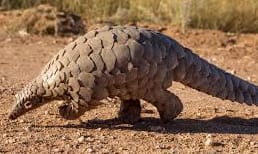
This is perhaps the holy grail of sightings because they are so shy and sadly endangered. A pangolin looks like a walking pinecone covered in tough scales that protect it from predators like lions. They are nocturnal and very secretive, usually curling up into a tight ball if they feel threatened by anything nearby. Spotting one of these rare animals on a Kenyan safari is a once-in-a-lifetime event that very few travelers ever get to experience.
2. Aardvark
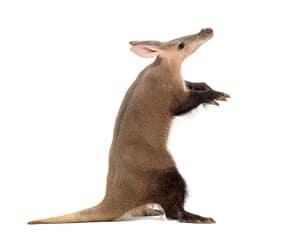
With a pig-like nose and rabbit-like ears, the aardvark is a strange-looking creature that comes out at night. They are incredible diggers and spend their nights hunting for termites and ants to eat with their long, sticky tongues. Seeing one is difficult because they are solitary and stay far away from noisy vehicles or bright lights. If you see this member of the rare animals on a Kenyan safari list, consider yourself extremely lucky.
3. Honey Badger
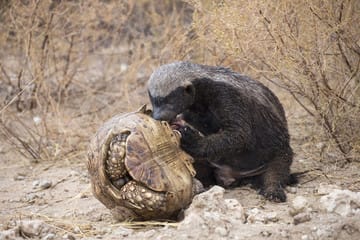
Do not let their size fool you because these guys are tough and fearless fighters. The honey badger is known for taking on animals much larger than itself, including lions and poisonous snakes. They have thick skin and a bad attitude, making them one of the most dangerous animals in Kenya pound for pound. Finding these rare animals on a Kenyan safari is exciting because they are always on a mission and never back down.
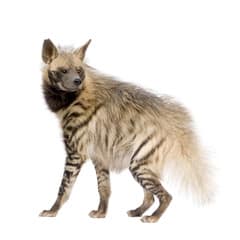
4. Striped Hyena
Unlike their noisy spotted cousins, striped hyenas are solitary, quiet, and very hard to find. They have beautiful vertical stripes on their bodies and a majestic mane that they raise when they are scared or angry. They are strictly nocturnal and prefer to scavenge alone rather than hunt in big loud packs. Spotting these rare animals on a Kenyan safari requires a sharp eye during a night drive in dry, rocky areas.
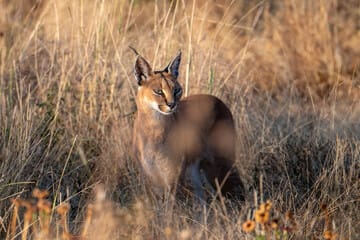
5. Caracal
The caracal is a stunning medium-sized cat with distinctive tufts of black hair on the tips of its ears. They are incredible jumpers and can leap high into the air to catch birds right out of the sky. Because they are so secretive and blend perfectly into the tall grass, they are a challenge to spot. Adding this cat to your list of rare animals on a Kenyan safari is a huge achievement for any wildlife lover.
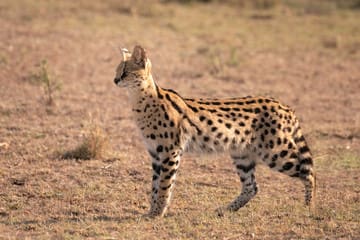
6. Serval Cat
This cat looks like a mini cheetah but has much larger ears and longer legs for its body size. They use those big ears to listen for rodents moving underground or in thick grass before they pounce. They are generally shy and prefer areas with tall grass and plenty of water to hunt near. Seeing one of these rare animals on a Kenyan safari hunting in the tall grass is a beautiful sight.
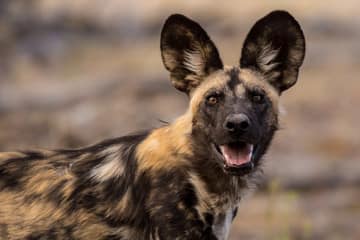
7. African Wild Dog
Also known as painted wolves, these colorful predators are highly endangered and move very quickly across huge distances. They hunt in packs and are incredibly efficient, often succeeding more than lions do when they chase prey. Their beautiful coats are a mix of black, white, and tan patches that are unique to every individual. Finding a pack of these rare animals on a Kenyan safari is a highlight because of their playful and social behavior.
8. Lesser Kudu
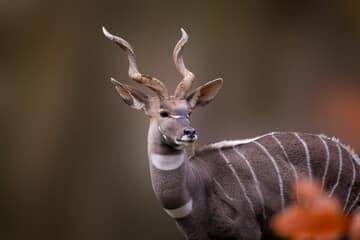
This beautiful antelope has spiral horns and crisp white stripes running down its grey-brown body. They are very shy and usually freeze when they see a car, hoping you won’t notice them in the thick bush. They prefer dry, brush-filled areas where they can easily hide from predators and tourists alike. Spotting these rare animals on a Kenyan safari requires scanning the thickets carefully instead of just looking at open plains.
9. Gerenuk
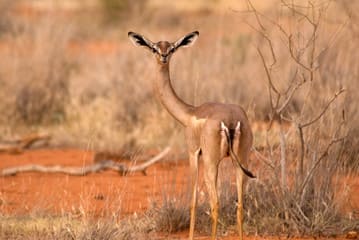
The Gerenuk is also called the “giraffe gazelle” because it has a ridiculously long neck. It stands on its hind legs to reach high branches that other antelopes cannot reach, looking very funny while doing it. They are found in drier regions like Samburu and are fascinating to watch as they balance on two legs. These are definitely unique rare animals on a Kenyan safari that will make you smile when you see them feeding.
10. Zorilla
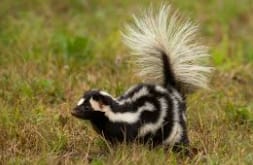
The zorilla looks very much like a skunk and has a defense mechanism that smells just as bad. They are small, fluffy, and black with white stripes, making them easy to spot if they are out in the open. However, they are strictly nocturnal and very small, so they easily disappear into the tall grass. Seeing one of these rare animals on a Kenyan safari is rare, but keep your distance if you do!
Take photos quickly because rare animals usually don’t stick around for a photoshoot!
Using Guides to Locate Rare Animals on a Kenyan Safari
You might have great eyes, but you don’t have the experience that a local guide has. Our guides at Mara Triangle Safaris have spent years learning the habits and hiding spots of the wildlife. To find rare animals on a Kenyan safari, you need to trust the person behind the wheel who knows the land better than anyone. They know which bush a leopard likes or where the wild dogs were seen last week.
Guides Talk to Each Other
One of the biggest secrets is that guides are constantly talking on the radio to share information. When one guide spots rare animals on a Kenyan safari, they let the others know so everyone can enjoy the sighting. This network is your best tool for finding animals you would never see on your own. It is a huge part of what makes Kenya safari all inclusive packages worth the money.
Learning the Signs
Guides don’t just look for animals; they look for tracks, poop, and warning calls from birds. If a bird is shouting at a bush, there is a good chance a predator or snake is hiding in there. By listening to your guide, you learn how to track rare animals on a Kenyan safari yourself. This knowledge helps you understand the list of wild animals in Kenya much better.
Ask your guide questions! They love sharing their knowledge and it might help them remember a specific spot to check.
Patience is Key for Spotting Rare Animals on a Kenyan Safari
If you are in a rush, you are going to miss out on the best stuff. Nature does not run on a schedule, and animals don’t care about your itinerary. To see rare animals on a Kenyan safari, you have to be willing to sit still and wait. Sometimes you sit by a waterhole for an hour, and just when you want to leave, something amazing appears.
The Art of Waiting
It can be boring to sit in a car, but that silence is often when the animals decide it is safe to move. When the engine cuts, the bush comes alive, and you might hear the footsteps of rare animals on a Kenyan safari. This patience is what separates a tourist from a traveler. It allows you to calculate your Kenya safari cost per day based on quality moments, not just rushing around.
Don’t Chase, Just Watch
Chasing animals usually scares them away, especially the shy ones we are looking for. It is better to predict where they are going and wait for them to come to you. This respectful approach is the best way to get close to rare animals on a Kenyan safari without stressing them out. It ensures you see the top 5 animals in Kenya behaving naturally.
Bring a good book or a journal to keep you occupied during the quiet waiting periods at waterholes.
Equipment You Need for Rare Animals on a Kenyan Safari
You don’t need to be a professional photographer, but having the right gear helps a lot. Your phone camera might be great for selfies, but it won’t capture a small cat 100 meters away. To truly appreciate rare animals on a Kenyan safari, you need tools that bring the action closer to your eyes. Investing in a few key items can change your entire experience.
Binoculars are Mandatory
We cannot stress this enough: bring a good pair of binoculars for yourself. You do not want to be waiting for someone else to pass them over while the animal disappears into the bush. Binoculars help you scan the shadows where rare animals on a Kenyan safari love to hide. They are essential for seeing details on small animals in Kenya.
A Good Camera with Zoom
You will want to prove to your friends that you actually saw these incredible creatures. A camera with a decent zoom lens allows you to capture photos of rare animals on a Kenyan safari from a safe distance. You don’t need the most expensive gear, just something better than a smartphone. This is a vital part of your Kenya safari packages prices planning.
Pack extra batteries and memory cards because you will take way more photos than you think.
Habitat Clues for Finding Rare Animals on a Kenyan Safari
Animals live in specific places for a reason, usually because of food or safety. If you know what an animal eats or where it sleeps, you know where to look. Finding rare animals on a Kenyan safari becomes easier when you understand their favorite habitats. Rocky outcrops, river banks, and thickets all hold different surprises.
River Banks and Waterholes
Water is life in Africa, and everyone has to drink eventually. Rivers are great places to spot elusive cats like leopards or rare birds that need to fish. Hanging around water sources increases your chances of spotting rare animals on a Kenyan safari coming down for a drink. This is often where the dangerous animals in Kenya congregate.
Rocky Kopjes
Kopjes are piles of ancient rocks that stick out of the grass plains. These are favorite hangouts for lions, leopards, and hyraxes who like to sunbathe or hide in the caves. checking these rock formations with binoculars is a smart strategy for finding rare animals on a Kenyan safari. It is a classic scene from the best safari in Kenya and Tanzania.
Look for “alarm calls” from antelopes; if they are staring at a spot and snorting, a predator is there.
Safety While Searching for Rare Animals on a Kenyan Safari
It is easy to get excited and forget that these are wild animals. But safety should always be your number one priority. Even small creatures can be dangerous if they feel cornered or threatened. When looking for rare animals on a Kenyan safari, always listen to your guide and stay inside the vehicle.
Respect the Personal Space
Getting too close can stress the animal and cause it to attack or run away forever. We want to observe them, not disturb them, so keeping a respectful distance is key. This ensures that you can watch rare animals on a Kenyan safari for longer periods. It is a vital rule for any Kenya safari animal checklist.
Keep Your Arms Inside
It might be tempting to hang out of the window to get a better look, but that is a bad idea. Predators see the vehicle as one big object, but if you stick your arm out, you break that shape. Staying inside keeps you safe while you hunt for rare animals on a Kenyan safari. This ensures your affordable Kenya safari packages remain fun and accident-free.
Never shout or make loud noises when you spot an animal; whisper so you don’t scare it away.
Why Book With Us to See Rare Animals on a Kenyan Safari
At Mara Triangle Safaris, we specialize in showing you the things other people miss. We know that you want more than just a typical tourist trip; you want an adventure. Our guides are experts at tracking down rare animals on a Kenyan safari and sharing their secrets with you. We want you to leave with memories that last a lifetime.
Customized for Adventure
We tailor our safaris to suit your interests, whether you love birds, cats, or weird nocturnal beasts. We don’t just drive around aimlessly; we hunt for the specific experiences you want. This focus maximizes your chances of seeing rare animals on a Kenyan safari. Check our Kenya safari all inclusive packages for great deals.
Small Groups, Big Experiences
We believe in intimate experiences, so we keep our groups small and personal. This means you have more room in the car and more attention from your guide. It creates the perfect environment for spotting rare animals on a Kenyan safari without the crowds. It justifies the Kenya safari cost per day by providing immense value.
Tell us in advance which animals you dream of seeing so we can plan the best route for you!
Frequently Asked Questions
What is the rarest animal to see in the Masai Mara?
The rarest animal to spot is usually the Pangolin or the Aardvark. They are nocturnal, shy, and their numbers are quite low. Finding one is considered the ultimate prize for guides and tourists. Even frequent visitors rarely see these rare animals on a Kenyan safari.
What is the rarest animal to see on a safari?
Across most safaris, the African Wild Dog and the Pangolin are very rare. Wild dogs move huge distances, making them hard to pin down. Pangolins are solitary and nocturnal, making them nearly invisible. Spotting either of these rare animals on a Kenyan safari is a massive stroke of luck.
What is the most rare animal in Kenya?
The Hirola antelope is considered one of the rarest, found only near the Somali border. Another contender is the Black Rhino, though conservation is helping their numbers. In standard parks, the Pangolin remains the most elusive of rare animals on a Kenyan safari.
What is the secret 7 of Africa?
The Secret 7 are the Aardvark, African Wild Cat, Civet, Large-spotted Genet, Pangolin, Porcupine, and Serval. These are hard-to-find nocturnal animals. Hunters of rare animals on a Kenyan safari love trying to check these off their list.
Why can’t you wear black on a safari?
Black and dark blue clothing attracts Tsetse flies, which have a painful bite. These colors also absorb heat, making you very hot under the African sun. It is better to wear neutral colors like khaki or green while looking for rare animals on a Kenyan safari.
What are the secret 7 animals?
As mentioned, they are the Aardvark, African Wild Cat, Civet, Genet, Pangolin, Porcupine, and Serval. They are secretive, mostly nocturnal, and smaller than the Big 5. Spotting them requires patience and night drives to find these rare animals on a Kenyan safari.
What is the 12 hour rule for Masai Mara?
This rule usually refers to the validity of park tickets, which are often valid for 12 or 24 hours depending on the reserve. It ensures that traffic is regulated within the park. Knowing this helps you plan your time to find rare animals on a Kenyan safari.
Is it easy to spot animals in Masai Mara?
Yes, it is one of the best places in the world for wildlife density. However, while lions are easy, spotting rare ones takes effort. You need a good guide to find the specific rare animals on a Kenyan safari.
What I wish I knew before safari?
I wish I knew how cold the early mornings can be in an open vehicle. Also, that patience is more important than rushing around. Knowing this helps you stay comfortable while waiting for rare animals on a Kenyan safari.
What is the best safari in Kenya?
The Masai Mara is widely considered the best due to its high density of animals. However, Samburu is excellent for unique rare species. Both offer great chances to spot rare animals on a Kenyan safari.
How much does Kenya safari cost?
Costs vary wildly from $150 to over $1000 per day depending on luxury levels. It depends on accommodation, season, and transport type. All budgets can offer chances to see rare animals on a Kenyan safari.
Can I wear red in Kenya?
You should avoid wearing bright red on game drives as it makes you stand out to animals. However, red is traditionally worn by the Maasai people. Stick to neutral tones when trying to spot rare animals on a Kenyan safari.
Ready for Your Adventure?
Are you ready to swap boring vacations for a thrilling treasure hunt in the wild? There is nothing quite like the feeling of spotting a creature that few people ever get to see. At Mara Triangle Safaris, we are passionate about making sure you get the full African experience, from the Big Five to the Secret Seven.
Don’t just dream about the adventure—live it with us!
Check out our packages and let us help you build the trip of a lifetime. Book with Mara Triangle Safaris today or contact us here to start planning your wild escape!
Email: info@mara-triangle-safaris
deals@maratrianglesafaris.co.ke
Phone: (+254) 705 635 886
(+254) 768 212 702
Venus complex, Northern bypass, 1st floor room 4107
Website: https://maratrianglesafaris.co.ke/contact/
Visit our contact page at https://maratrianglesafaris.co.ke/contact/ to get in touch.
We can’t wait to welcome you to Kenya!