

Top Hiking Adventures in Hell’s Gate National Park for 2026
Most people think an African safari involves sitting squarely on your backside in a 4×4 for eight hours a day, watching the wilderness roll by like a movie screen, but you aren’t most people. You want the dust on your boots, the sun on your neck, and the adrenaline spike that comes from realizing there isn’t a pane of glass separating you from a wild buffalo. Hell’s Gate National Park is the antidote to the “sedentary safari,” offering a completely different vibe where you are the engine that moves you through the landscape. Located just a short drive from Nairobi, this geological wonder allows you to walk, cycle, or climb right alongside zebras, giraffes, and gazelles in a setting that looks like it was ripped straight out of a prehistoric epic. If you are keen to stretch your legs and experience the Great Rift Valley from the ground up, this guide is your ultimate playbook for tackling Hell’s Gate in 2026.
Why Hell’s Gate is the G.O.A.T. of Kenyan Walking Safaris
There is a massive difference between seeing a giraffe from a Land Cruiser and standing ten feet away from one while you are on foot, looking up at its knees and realizing just how massive these creatures actually are. Hell’s Gate National Park is one of the few places in Kenya where you can legally walk or cycle unguided among the wildlife, providing an immersive experience that feels heaps more authentic than the standard game drive loop. The park is named after a narrow break in the cliffs that was once a tributary of a prehistoric lake, and the dramatic scenery of towering cliffs, water-gouged gorges, and stark rock towers makes it visually spectacular. Because there are no large predators like lions or cheetahs roaming prominently during the day—though leopards do exist in the shadows—the park is considered safe for hiking and cycling, making it a wicked spot for adventure lovers who want to get their heart rate up.
But it’s not just about the lack of lions; it’s about the sheer variety of landscapes you can traverse in a single day, from the dusty valley floor to the cool, echoing depths of the gorges. You get a geology lesson and a biology field trip all rolled into one sweaty, satisfying package that leaves you feeling properly accomplished by sunset. The freedom to explore at your own pace is the real drawcard here, allowing you to stop for a selfie with a warthog or marvel at a steam vent without a guide rushing you to the next sighting. It’s raw, it’s real, and for 2026, it remains the absolute best place to ditch the vehicle and connect with the African earth.
The Geology That Built the Drama
The landscape here is dramatic because it is relatively young in geological terms, formed by intense volcanic activity that has left behind massive columns of basalt and cliffs of red rock that glow during the golden hour. When you are hiking here, you are walking through the aftermath of earthly violence, seeing firsthand how the Rift Valley was torn apart and stitched back together by lava and water.
Start your hike as early as possible—around 6:30 AM or 7:00 AM—because the Rift Valley floor heats up like a pizza oven by midday, and you don’t want to be caught in the open without shade when the sun is at its peak.
Getting to Naivasha: The Road Trip Breakdown
Getting to the park is half the adventure, and thankfully, the drive from Nairobi to Naivasha has improved significantly over the years, making it an easy day trip or a brilliant weekend getaway. You will be heading northwest out of the city, dropping down the Great Rift Valley escapement, which offers views that are absolutely mental and worth a stop at the viewpoint just to take it all in. The drive typically takes about two to two-and-a-half hours depending on the notorious Kenyan traffic, but once you hit the lower escarpment road, it’s smooth sailing past Mount Longonot and into the lakeside town of Naivasha. If you are flying in from overseas, you might be adjusting to the time zone, so hiring a private driver or booking a transfer through Mara Triangle Safaris is a smart move to avoid the stress of navigating local roads yourself.
Once you arrive in Naivasha, the turnoff to the park is well-signposted, located south of the lake, and the road leading to the Elsa Gate—the main entrance—is usually in decent nick, though it can get dusty in the dry season. The transition from the chaotic highway to the serene acacia-lined roads of the park approach is immediate, and you’ll likely spot baboons hanging out by the roadside before you even pay your entry fee. It’s a straightforward journey, but one that transports you from the urban hustle to the prehistoric wild in the blink of an eye.
Understanding the Entry Gates
There are two main gates: Elsa Gate and Olkaria Gate, but for most hikers and cyclists, Elsa Gate is the main hub where you can rent bikes and get the most direct access to the main cliffs. Olkaria is better if you are heading straight for the spa, but for the hiking adventures we are discussing, stick to Elsa.
If you are driving yourself, keep your windows rolled up until you are through the gate, as the resident baboons at the entrance are cheeky buggers and will absolutely snatch a bag of crisps right off your passenger seat if you give them half a chance.
Cycling the Valley Floor: Two Wheels and Wild Views
If walking feels a bit too slow for your liking, renting a mountain bike at the Elsa Gate is the most popular way to cover ground and see the best of the park efficiently. The ride from the main gate to the Gorge is roughly 7 to 8 kilometers (about 5 miles) one way, and it is mostly flat or gently downhill on the way in, which makes you feel like a Tour de France champion effortlessly gliding past herds of impala. However, do not be fooled by the easy ride in, because the return journey is slightly uphill and often against the wind, which can be a bit of a stitch if you haven’t saved some energy. The bikes available for rent are generally sturdy mountain bikes designed to handle the gravel and dust, but don’t expect top-tier carbon fiber racing gear; these are workhorses meant to survive the bush.
Riding a bike here gives you a silent approach that cars don’t have, meaning you can often coast right up to a dazzle of zebras grazing by the track without spooking them. It is a surreal experience to be pedaling along with the towering cliffs on your left and a herd of buffalo specifically ignoring you on your right. Just remember that while they look peaceful, these are wild animals, so always maintain a respectful distance and have an escape route planned in your mind just in case an animal decides to cross the road abruptly.
Important Cycling Safety Stats
- Distance: Approx 14km – 18km round trip.
- Terrain: Gravel, dirt, and some sandy patches.
- Difficulty: Moderate (due to heat and altitude).
- Bike Rental: Available at Elsa Gate.
Check the brakes and the tire pressure on your rental bike thoroughly before you leave the gate area; asking to swap bikes five minutes in is no worries, but realizing you have a flat tire 5km into the bush is a major hassle.
The Ol Njorowa Gorge: Hiking the Devil’s Bedroom
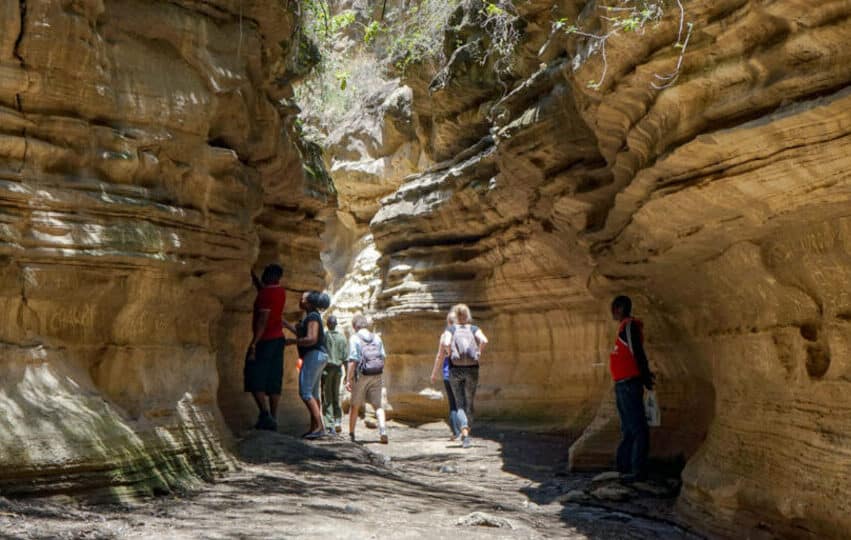
This is the main event for hikers and undeniably the most famous feature of the park, known globally as the inspiration for the scenery in The Lion King and a filming location for Tomb Raider. The Ol Njorowa Gorge is a deep, water-gouged canyon that cuts through the volcanic rock, creating a labyrinth of winding paths, hot water springs, and stunning rock formations that change color depending on how the light hits them. Hiking down into the gorge feels like entering a different world, where the temperature drops, the air gets humid, and the walls close in to create incredible acoustics. You will need to scramble over rocks, navigate small streams, and occasionally use ropes to descend short vertical sections, making it a proper adventure rather than just a casual stroll.
However, it is crucial to note that access to the gorge is strictly regulated due to the risk of flash floods, which can happen suddenly if it rains in the surrounding highlands, even if the sky above you is clear. In 2026, the park authorities are very strict about guides; you generally cannot enter the gorge without hiring a local Maasai guide at the entrance to the canyon. These guides are absolute legends who know every rock and crevice, and they will not only keep you safe from slippery drops but also explain the geothermal history and point out hidden hot springs where you can boil an egg if you brought one.
Navigating the Lower Gorge
The hike can vary in length depending on how deep you go, but the standard route takes about two hours and involves a mix of walking and light climbing. It’s a full-body workout that requires decent agility, so leave the flip-flops at home and wear shoes with serious grip.
Bring a waterproof bag or a Ziploc for your phone and car keys because you will likely slip or get splashed while navigating the stream crossings in the gorge, and nobody wants a waterlogged iPhone ruining the vibe.
Fischer’s Tower: A Rock Climber’s Paradise
Standing like a sentinel near the Elsa Gate entrance, Fischer’s Tower is a 25-meter-high volcanic plug that serves as the premier rock climbing spot in the park. Even if you have never climbed before, this is a fantastic place to try it out, as there are local guides with ropes and harnesses ready to belay you up the easier routes for a small fee. For experienced climbers, the tower offers a unique challenge with its distinct rock texture and the added distraction of rock hyraxes (cute, guinea pig-like relatives of the elephant) cheering you on from the crevices. Reaching the top gives you a panoramic view of the entire valley that you simply cannot get from the ground, offering a wicked perspective on the sheer scale of the Rift Valley.
The climb is safe, well-bolted, and catered to various skill levels, so you don’t need to be an expert alpinist to get to the top and feel like a hero. It is an optional activity, but one that adds a massive adrenaline kick to your hiking trip, breaking up the walking with some vertical exertion. Watching your friends struggle up the face while you shout encouragement from the bottom is also top-tier entertainment.
The rock can get extremely hot in the afternoon sun, making it tough on your hands, so aim to tackle the climb first thing in the morning when the rock is cool and the light is best for photos.
The Obsidian Caves: A Geological Treasure Hunt
If you venture further off the main track, you can hike towards the Obsidian Caves, a fascinating area where the rock faces are gleaming with black volcanic glass. Obsidian is formed when lava cools so rapidly that it doesn’t have time to crystallize, resulting in a shiny, sharp, glass-like rock that was used by early humans to craft tools and weapons. Entering the small caves and seeing the walls sparkle is a trippy experience, and it connects you to the deep human history of the Rift Valley, often called the Cradle of Mankind. The hike here is generally quieter than the gorge route, offering a bit of solitude and a chance to spot birds of prey circling the updrafts near the cliffs.
This area is less about adrenaline and more about appreciation for the weird and wonderful geology that makes Kenya so unique. You can pick up small shards of obsidian from the ground (look, don’t take—leave them there for the next traveler), and marvel at how sharp the edges still are after thousands of years. It’s a brilliant detour for anyone interested in geology or those who just want to see something shiny.
Be very careful where you place your hands when exploring the cave entrances, as snakes and lizards love the cool shade of the rocks during the heat of the day.
The Geothermal Spa: Soaking Your Tired Bones
After hours of hiking through dust and scrambling over rocks, there is literally nothing better than finishing your day at the Olkaria Geothermal Spa. Located towards the Olkaria Gate side of the park, this massive natural swimming pool is fed by the hot springs that power the nearby geothermal energy plant. The water is naturally heated, rich in minerals like sulphur and silica, and is an iridescent milky blue color that looks absolutely stunning against the backdrop of steam rising from the ground. It is the ultimate recovery session for your sore muscles, essentially a giant, outdoor hot tub where you can float and reflect on the day’s adventures.
The spa has different sections with varying temperatures, so you can find a spot that isn’t scalding hot and just relax with a cold drink in hand. It’s a bizarre but wonderful contrast to go from the rugged, dusty wilderness to a developed pool complex powered by the earth’s core. Just be aware that the sulphur smell is strong—it smells like rotten eggs—but you get used to it quickly, and the skin benefits are supposedly worth the funk.
Do not wear your favorite white swimsuit or expensive jewelry into the spa water, as the high mineral content and sulphur can discolor fabrics and tarnish silver almost instantly.
Wildlife Encounters on Foot: Safety First, Mates
It is easy to get complacent when the animals look so calm, but you must remember that a buffalo doesn’t care about your Instagram following and can run faster than Usain Bolt. The golden rule of hiking in Hell’s Gate is to keep a respectful distance—usually at least 30 to 50 meters—from any large herbivore. Buffaloes are the most dangerous animals you will encounter here; they are grumpy, unpredictable, and often hide in thick bushes, so always stay on the marked trails and keep your eyes peeled. Giraffes are generally chill but can kick with lethal force if they feel threatened, and zebras can bite if you try to get too close for a selfie.
Being on foot puts you in their territory, so you need to be aware of your surroundings constantly, listening for movement in the bush and watching the behavior of the animals. If an animal stops grazing and stares at you, you are too close and need to back away slowly without turning your back. It’s thrilling, yes, but it requires common sense and a healthy dose of respect for the wild.
Key Wildlife to Watch For
- Buffalo: The biggest threat. Avoid solitary males.
- Zebra: Common and generally safe, but give space.
- Giraffe: Peaceful giants, usually seen browsing acacia.
- Warthogs: Funny to watch, but they can charge if cornered.
- Baboons: Thieves. Guard your lunch.
If you see a lone buffalo (often called a “Dagaa Boy”), give it an extremely wide berth, as these old bulls are often injured or ousted from the herd and are significantly more aggressive than the breeding herds.
Best Time to Visit Hell’s Gate for Hikers
While Kenya is a year-round destination, for hiking Hell’s Gate, you really want to aim for the dry seasons to avoid trudging through mud and getting rained out of the gorge. The best months are typically from June to October and then again from December to March, when the trails are dry, the sky is blue, and the risk of flash floods in the gorge is lower. However, even in the dry season, the Rift Valley weather can be unpredictable, so a sudden shower is never out of the question. The “long rains” in April and May can make the cycling tracks sticky and difficult to navigate, and the gorge is frequently closed during this time for safety reasons.
Visiting during the week is also a smart move if you want to avoid the crowds, as Hell’s Gate is a popular weekend getaway for Nairobi residents. If you can swing a Tuesday or Wednesday visit, you might find you have huge sections of the park entirely to yourself.
Check the local weather forecast for Naivasha specifically, not just Kenya in general, as the weather in the Rift Valley can be quite different from the weather in Nairobi or the Mara.
Packing List: What Gear Do You Actually Need?
You don’t need to look like you are summitting Everest, but showing up in flip-flops and a singlet is a recipe for disaster. The terrain is dusty, rocky, and thorny, so you need durable clothing that protects you from the sun and the scrub.
The Essential Checklist
- Sturdy Footwear: Hiking boots or trail runners with good grip are non-negotiable for the gorge.
- Sun Protection: A wide-brimmed hat, sunglasses, and SPF 50+ sunscreen are vital because the sun at the equator is fierce.
- Hydration: Bring at least 3 liters of water per person; it is hot, dry, and you will sweat buckets.
- Dust Mask/Buff: A lightweight scarf or buff is great to pull over your mouth when a vehicle drives past and kicks up a dust cloud.
- Snacks: Energy bars, nuts, or fruit to keep your energy up, as there are no shops inside the park trails.
- First Aid Kit: Plasters (Band-Aids) for blisters and some antiseptic cream.
Wear light-colored, breathable clothing (khaki, tan, or light grey) to reflect the sun and avoid attracting tsetse flies, which are attracted to dark blue and black colors.
Accommodation: Where to Crash After the Hike
Most adventurous travelers choose to stay around Lake Naivasha, which offers a massive range of options from budget campsites to luxury lodges. Camping inside the park is possible at designated sites like the Endachata Campsite, which offers a properly wild experience where you can hear hyenas whooping at night. However, you need to be fully self-sufficient with your own tent, food, and firewood if you choose this option. If you prefer a real bed and a hot shower (which you will definitely want), the shores of Lake Naivasha are lined with beautiful lodges and camps that cater to every budget.
Staying outside the park allows you to enjoy the lake views and easily access other attractions, but staying inside means you beat the crowds in the morning and get the sunrise over the cliffs all to yourself. It really depends on your comfort level and how much you want to rough it.
If you are camping inside the park, make sure you zip your tent completely shut every single time you leave it, or you will return to find a baboon has ransacked your luggage and stolen your toothpaste.
Combine Your Trip: Lake Naivasha Boat Rides
You’ve conquered the dust, so why not balance it out with some water? A boat ride on Lake Naivasha is the perfect companion activity to a Hell’s Gate hike, usually done in the late afternoon when the light is golden and the hippos are starting to wake up. The lake is fresh water and hosts a massive population of hippos, as well as incredible birdlife including fish eagles, pelicans, and kingfishers. Drifting along the papyrus-lined shores is relaxing and offers a different perspective on the Rift Valley ecosystem.
You can often organize a boat ride that takes you to Crescent Island, another sanctuary where you can walk among animals, effectively doubling your walking safari experience for the trip. It’s a chill way to wind down after the physical exertion of the gorge and the bike ride.
Ask your boat captain to take you near the submerged acacia forests; seeing the dead trees rising out of the water creates a hauntingly beautiful scene that is perfect for photography.
Final Thoughts
Hell’s Gate National Park is not your average walk in the park; it is a full-blown adventure that puts you right in the middle of the action. Whether you are scaling Fischer’s Tower, dodging dust on a mountain bike, or scrambling through the water-worn crevices of the gorge, you are guaranteed an experience that is active, engaging, and totally unforgettable. So, grab your boots, pack plenty of water, and get ready to sweat—it’s going to be wicked.