10 Days Kenya Bush Safari
Description
The Definitive 10‑Day Kenya Safari Itinerary – Tsavo to the Mara
Welcome to the most comprehensive, SEO‑rich 10‑day Kenya safari guide on the internet. This day‑by‑day plan takes you from the vibrant capital Nairobi through the red‑earth wilderness of Tsavo, the elephant kingdom of Amboseli, the flamingo‑rimmed Rift Valley lakes, and finally the world‑famous Maasai Mara. Each section is packed with insider wildlife knowledge, photography tips, cultural notes, and real‑world logistics – all designed to help you book the safari of a lifetime.
Day 1: Arrival at Nairobi – Rest & Preparations at Movenpick Hotel
Airport meet & greet 5‑star urban oasis
After landing at Jomo Kenyatta International Airport (NBO), you’ll clear customs and be met by a Mara Triangle Safaris representative holding a branded sign. A private, air‑conditioned vehicle will transfer you to the Movenpick Hotel Nairobi in Westlands – a tranquil 5‑star property known for its Swiss hospitality, large pool, and famous daily “Chocolate Hour” (16:00–17:00). Use this day to recover from your flight, adjust to East African time, and do any last‑minute shopping for binoculars, memory cards, or insect repellent at the nearby Sarit Centre. Lunch and dinner are at your own account – recommended restaurants: About Thyme (garden setting), Fogo Gaucho (Brazilian churrascaria), or the hotel’s own Swiss restaurant. Overnight at Movenpick Nairobi.
Accommodation: Movenpick Hotel Nairobi – Request rate & availability →
Day 2: Nairobi → Tsavo East National Park – Red Elephants & Man‑Eater Lions
5‑6 hours drive Big Five territory Afternoon game drive
After an early breakfast (06:00), your guide will brief you on the day. Depart Nairobi and drive southeast along the Mombasa Road (A109). The landscape transforms from urban bustle to the baobab‑studded scrubland of the Taru Desert. Enter Tsavo East National Park – at 13,747 km², one of the largest parks in Kenya. The park is famous for its dust‑red elephants, which bathe in the iron‑rich soil and appear almost mahogany in color. It is also the historic location of the “Tsavo Man‑Eaters” – two lions that killed over 100 railway workers in 1898 – a story immortalized in the film The Ghost and the Darkness.
Arrive at Voi Wildlife Lodge around 12:30 for a buffet lunch overlooking a bustling waterhole. The lodge’s waterhole regularly attracts elephants, buffalo, waterbuck, and warthogs – you can watch them while dining. After a short rest, board your safari vehicle at 15:30 for an afternoon game drive along the Voi River basin. Expect to see:
- Red elephants: Herds of up to 100 individuals, often led by a large matriarch.
- Lions: Tsavo lions have smaller manes; look for them resting under acacia trees near the Galana River.
- Leopards: Elusive but occasionally seen in the rock outcrops (kopjes) near Aruba Dam.
- Crocodiles & hippos: The Galana River and Aruba Dam are prime spots.
- Gerenuk: A long‑necked antelope that stands on its hind legs to browse high acacia leaves.
At 18:15, return to the lodge for dinner. The lodge’s night lighting around the waterhole allows you to see nocturnal visitors. Overnight at Voi Wildlife Lodge.
🔭 Photography tip: Use a shutter speed of at least 1/500s for moving elephants. The golden hour (17:30–18:15) produces dramatic warm light that makes the red dust glow.
Accommodation: Voi Wildlife Lodge – Request rates & booking →
Day 3: Tsavo East → Taita Hills Sanctuary – The Iconic Salt Lick Safari Lodge
Private conservancy Floodlit waterhole 300+ bird species
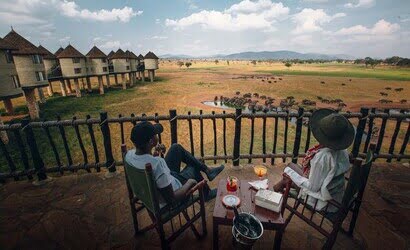
After breakfast, we drive to Taita Hills Sanctuary, a 28,000‑acre private conservancy bordering Tsavo West. Unlike national parks, private conservancies allow night drives, walking safaris, and much lower vehicle densities. Lunch is at the legendary Salt Lick Safari Lodge, built on stilts with elevated walkways connecting the rooms. The lodge overlooks a floodlit waterhole that attracts elephants, buffalo, lions, and sometimes leopards – you can watch from your bed or the underground photographic hide.
In the afternoon, enjoy a game drive in the sanctuary. Special wildlife includes the fringe‑eared oryx, gerenuk, greater kudu, and the endemic Taita falcon. The sanctuary also has a healthy population of African wild dog (painted wolf) – one of the rarest predators in Africa. Return to the lodge for dinner, then head to the underground hide (open 24/7) where you can photograph animals at eye level. Overnight at Salt Lick Safari Lodge.
Accommodation: Salt Lick Safari Lodge – Request special rates →
Day 4: Full Day in Taita Hills – Walking Safari, Waterhole Vigil & Sundowners
Guided bush walk Hide photography Sundowner viewpoint
Today is dedicated to total immersion. Awake at 06:00 for a walking safari (2‑3 hours) accompanied by an armed ranger. You’ll track animals on foot, learn to identify dung and footprints, and explore the ancient baobab groves. Return for breakfast. Then you can either relax by the pool or spend hours at the photographic hide – the lodge provides bean bags and camera rests.
After lunch, we drive to the southern sector of the sanctuary for an extended afternoon game drive and sundowner. This area is known for large herds of eland, zebra, and buffalo, and is the best place to spot the elusive serval cat. At 18:00, stop at a viewpoint overlooking the Taita Hills; your guide will serve drinks and snacks as the sun sets over the African savannah. Return to Salt Lick for a gourmet dinner.
Optional upgrade: Night game drive with spotlight (extra fee) – excellent for aardvark, genet, and bushbabies.
Day 5: Taita Hills → Tsavo West → Amboseli – Mzima Springs & Kilimanjaro’s Shadow
Underwater hippo observatory Shetani lava Kilimanjaro views
After breakfast, we depart Taita Hills and enter Tsavo West National Park. First stop: Mzima Springs, a natural oasis where 250 million liters of crystal‑clear water bubble up daily from underground. An underwater observatory allows you to see hippos, crocodiles, and giant tilapia swimming just below the surface – a unique experience that’s great for children and photographers alike. Then we drive past the Shetani Lava Flow, a black volcanic rock formation that erupted from a fissure a few hundred years ago. The name “Shetani” means “devil” in Swahili – local legends say a demon emerged from the lava.
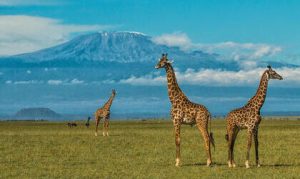
We continue with an en‑route game drive, crossing into the Amboseli ecosystem. The landscape flattens, and suddenly Mount Kilimanjaro (5,895 m) appears on the horizon – Africa’s highest peak. Arrive at Sentrim Amboseli Camp in late afternoon, just in time to see the mountain’s snows turn pink at sunset. Overnight at Sentrim Amboseli Camp.
Accommodation: Sentrim Amboseli Camp – Request rates →
Day 6: Amboseli National Park – Giants of Africa & Kilimanjaro Backdrops
World’s best elephant photography Observation Hill Swamp birding
Rise at 05:30 for a pre‑dawn coffee, then depart for an early morning game drive. Amboseli is globally renowned for its elephant population (over 1,600 individuals) and the stunning backdrop of Kilimanjaro. We drive straight to the Enkongo Narok swamp, where herds of elephants, buffalo, and hippos gather. The golden sunrise light on Kili’s glacier creates iconic postcard images. Keep your camera ready – you’ll see elephant families with tiny calves, dust‑bathing, and play‑fighting.
At 09:00, we stop at Observation Hill, a small volcanic cone that offers a 360‑degree panorama of the entire park. On clear days, Kilimanjaro seems close enough to touch. After a picnic breakfast, we explore the Lake Amboseli basin – a dry lakebed that sometimes floods, attracting flamingos and pelicans. In the afternoon, we visit the swamp loops near the lodge, where lions, cheetahs, and hyenas are often seen hunting. Return to Sentrim Camp for dinner.
📖 Did you know? The Amboseli Trust for Elephants (ATE) has been studying the park’s elephants for over 50 years – some individuals have names like “Echo” and are known to millions through National Geographic documentaries.
Day 7: Amboseli → Lake Naivasha – Boat Safari & Crescent Island Walking Safari
Hippo boat ride Walk among giraffes African fish eagles
After breakfast, we drive to the Great Rift Valley (approx 5‑6 hours). The scenery changes dramatically as we ascend the escarpment overlooking Lake Naivasha – a freshwater lake with a healthy hippo population. Lunch is at a lakeside restaurant. Then we board a motorized boat for a 2‑hour safari. The lake is home to hundreds of hippos (watch their ears and eyes break the surface) and a spectacular array of birds: African fish eagles (they often dive for fish right in front of you), cormorants, pelicans, and herons.
The boat takes you to Crescent Island, a private wildlife sanctuary accessible only by boat. Here you can walk among the animals – an exhilarating experience. The island has no predators, so you can safely approach zebras, wildebeests, giraffes, elands, impalas, and waterbucks. Your guide will explain the ecology and point out bird nests. After the walk, we drive (approx 1 hour) to Lake Nakuru National Park, arriving at Punda Milia Nakuru Camp in time for dinner. Overnight at Punda Milia.
Accommodation: Punda Milia Nakuru Camp – Request best rates →
Day 8: Lake Nakuru National Park – Flamingos, Rhinos & Lions
Pink flamingo lake Black & white rhinos Makalia Falls
After breakfast, we enter the park with picnic lunch boxes. Lake Nakuru is famous for its huge flocks of lesser and greater flamingos – when conditions are right, over a million birds turn the lake into a living pink carpet. Even when water levels fluctuate, the birdlife is spectacular: pelicans, cormorants, and dozens of wader species. The park is also a rhino sanctuary, and you have excellent chances of seeing both black (critically endangered) and white rhinos grazing near the lake shore. Baboon Cliff offers a panoramic view of the entire park – a must for photography.
We’ll also explore Makalia Falls (a scenic waterfall) and the Lion Hill area, where lions are often found resting in the shade. Leopards are sometimes spotted in the acacia trees near the park entrance. In the late afternoon, return to Punda Milia Camp for dinner and overnight.
🔬 Conservation success: Lake Nakuru’s rhino population has rebounded from near extinction to over 100 individuals thanks to dedicated anti‑poaching efforts.
Day 9: Lake Nakuru → Masai Mara – The Great Migration Theater
Endless plains Afternoon game drive Big Five guaranteed
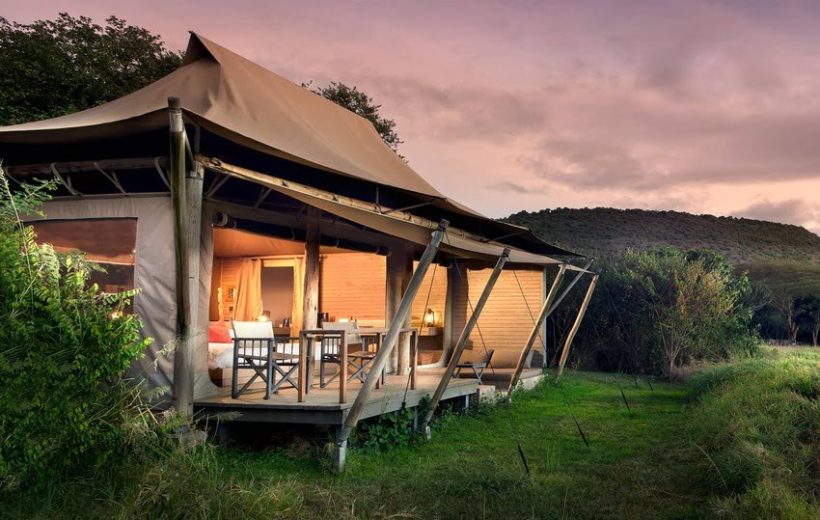
Early breakfast, then drive to the crown jewel of Kenya: Masai Mara National Reserve. The journey takes us across the Loita Plains, where Maasai herders graze their cattle alongside zebras and wildebeests. Arrive at Enkorok Mara Camp in time for lunch. This classic tented camp sits along the Talek River – hippos grunt in the background as you eat.
At 15:30, we depart for an afternoon game drive. The Mara is part of the Serengeti‑Mara ecosystem, home to the highest concentration of large mammals on Earth. You can expect to see:
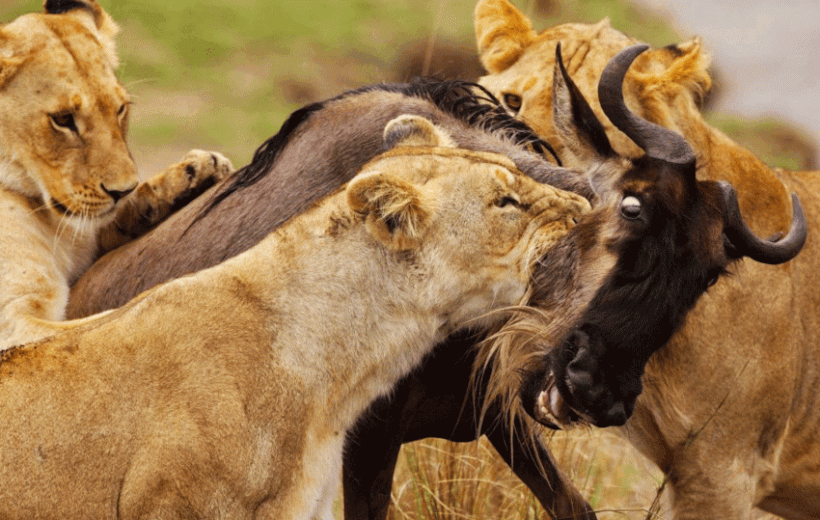
- Lions: Large prides (15+ individuals) are common; you may see them hunting or resting in the open.
- Leopards: Often found in the trees along the Talek River, sometimes with a kill.
- Elephants, buffalo, and rhino: The Mara is one of the few places where you can see all of the Big Five in a single day.
- Cheetahs: Frequent the open plains east of the Mara River.
- Great Migration (July–October): If your timing is right, witness wildebeest and zebra crossing the Mara River – crocodiles wait below.
Return to camp at 18:15 for dinner. Overnight at Enkorok Mara Camp.
Accommodation: Enkorok Mara Camp – Request rates & migration upgrade →
Day 10: Maasai Mara → Nairobi – Final Game Drive & Farewell
Early morning predator watch Return to Nairobi End of safari
Wake up at 05:30 for one last early morning game drive – predators are most active at dawn. We’ll search for any animals you may have missed: perhaps a leopard dragging a kill into a tree, or a pack of hyenas finishing a night hunt. Return to Enkorok for a full breakfast (around 09:00). Then we pack up and begin the scenic drive back to Nairobi, with a final en‑route game drive as we leave the reserve. Stop at the Oloolaimutia Gate for a restroom break and souvenir shopping (local Maasai markets).
We arrive in Nairobi around 14:00-15:00, depending on traffic. You may choose to have a farewell lunch at a city restaurant like Carnivore Restaurant (famous for game meat) or Talisman (garden setting) – at your own account. Afterwards, we transfer you to Jomo Kenyatta International Airport for your outbound flight (recommended check‑in 3 hours before departure). If you are extending your stay, we’ll drop you at your hotel. Asante sana (thank you very much) for choosing Mara Triangle Safaris – we hope to welcome you again!
Expert Safari Tips & Practical Information – 10-Day Kenya Safari
Best Time to Book
- July–October: Great Migration river crossings in Mara
- January–February: dry & warm, calving season in Mara
- June–September: peak wildlife in Tsavo & Amboseli
- November & March–May: low season (lush scenery, fewer tourists)
Packing Essentials
- Neutral colored clothing (khaki, green, beige)
- Warm jacket (morning game drives)
- Sun hat, SPF 50+, insect repellent
- Binoculars & camera with 200‑500mm lens
- Power bank & universal adapter
Tipping Guide
- Driver/guide: $15‑20 per person/day
- Camp staff: $5‑10 per person/day
- Discretionary but greatly appreciated
❓ Frequently Asked Questions (SEO‑rich)
- Can I see the Big Five in 10 days? Yes – Tsavo has elephant, lion, buffalo, leopard; Rhino are seen in Lake Nakuru. Masai Mara has all five.
- Is this safari suitable for families? Absolutely – many lodges offer family tents and child‑friendly game drives.
- Do I need travel insurance? Yes – must cover emergency evacuation, trip cancellation, and medical expenses.
- Can I book a private vehicle? Yes – every itinerary can be customized to a private 4x4 vehicle for your group.
Highlights
- Maasai Mara National Reserve
- Amboseli National Park
- Lake Nakuru
- Balloon rides
- Boat rides
Tour Plan
Upon arrival, at the airport, you will be met by one of our representatives and be transferred to the hotel where you will enjoy some rest and spend the night. Lunch and dinner on this day will be on own account.
Dinner and Overnight: Moven pick Nairobi
Meal Plans: Breakfast Only
You will be picked up from the hotel and drive to Tsavo East National Park, arriving in time for lunch. Upon arrival, you will have lunch at Voi Wildlife Lodge and then proceed to enjoy game watching in the park on the afternoon game drive. The park is home to numerous animals, including The Big Five: lion, leopard, rhino, elephant, and Cape buffalo. The rivers around the park are also home to most of this wildlife, and crocodiles eagerly hide within the dark depths, waiting to pounce on anything brave enough to approach the shores. In the late afternoon you will head to Taita Hills, where you will arrive at Salt Lick Safari Lodge in time for dinner.
Dinner and Overnight: Salt Lick Safari Lodge Meal Plans: Lunch, Dinner & Breakfast
After breakfast you will spend the rest of the day enjoying game watching on the afternoon and evening game drives around the lodge. You will have an ideal opportunity to view and photograph the diverse array of wildlife within the Sanctuary. The waterholes below provide a wonderful opportunity to view animals at close proximity in their natural habitat.
Dinner and Overnight: Salt Lick Safari Lodge Meal Plans: Lunch, Dinner & Breakfast
After breakfast, you will check out with picnic lunches and drive leisurely to Tsavo West National Park. Here you will enjoy en route game drives as you head towards Amboseli National Reserve. The park is a vast expansion of African Savannah with a more diverse array of habitats which include open plains, semi desert scrub, woodland, chyulu hills and rock outcrops. The movie “The Ghost and the Darkness” was shot here! Arrive in Amboseli in time for dinner and enjoy your overnight.
Dinner and Overnight: Sentrim Amboseli Camp Meal Plans: Lunch, Dinner & Breakfast
You will have breakfast and spend the full day enjoying game watching with picnic lunches from the camp. Amboseli National Park is located in the lower slopes of mighty Mount Kilimanjaro – Africa’s highest – whose peak lies across the border in Tanzania. It is quite an experience to see Kilimanjaro hovering above the clouds in an early morning. The animal pictures arising against the dramatic backdrop of the mountain will thrill the photography enthusiast. Amboseli is renowned for its huge elephant herds. You are likely to see buffalo, black rhino, zebra, wildebeest and other plain animals.
Dinner and Overnight: Sentrim Amboseli Camp Meal Plans: Lunch & Dinner & Breakfast
You will have your early breakfast then drive to Lake Naivasha. Upon arrival, you will have lunch and thereafter proceed for the afternoon boat rides. After the boat rides you’ll also visit the Crescent Island. On Crescent Island, game viewing is pretty easy. You can spot a variety of animals from giraffes, elands, wildebeest, zebras, impalas, etc. There are also several avian species and aquatic habitat.
The Lake is home to lots of hippos which can be spotted easily from the island. Later on, you will proceed to Nakuru, which is just a few kilometers away, where you will have your dinner and overnight.
Dinner and Overnight: Punda Milias Nakuru Camp Meal Plans: Lunch, Dinner & Breakfast
After breakfast, you will equip yourself with picnic lunch boxes from the camp and proceed for a full day game drive around the park. Flocks of greater and lesser flamingos are found on this Lake which turns it pink hence it is dubbed the pick lake. It is also a home to the endangered black and white Rhino, the big cats and other wildlife. Later after the game drives, you will return to the camp for dinner and overnight.
Dinner and Overnight: Punda Milias Nakuru Camp Meal Plans: Lunch, Dinner & Breakfast
After an early morning breakfast, you will be picked up from the hotel and drive to Masai Mara, so named to mean the “spotted plains” in the Mara language. Arrive in time for lunch. Masai Mara National Park is home to the greatest concentration of large mammals and is widely recognized as Africa’s ultimate wildlife reserve.
The park is the northern extension to the vast Serengeti-Mara ecosystem, famous for its annual migration of wildebeest. After lunch, you will enjoy game watching on the afternoon game drives until sunset in this spectacular place of breathtaking sceneries, never-ending plains and the most abundant variety of wildlife remaining anywhere in the world.
Dinner and Overnight at Enkorok Mara Camp
Meal Plan: Breakfast, Lunch and Dinner
After breakfast you will spend the rest of the day in game watching on morning and afternoon game drives. Wildlife is abundant in the Reserve with the gentle grasslands ensuring that animals are never out of sight. Birds are prolific including immigrants, 450 bird species have been recorded among them 57 birds of prey. Masai Mara offers visitors numerous reasons to visit this animal paradise. Large numbers of Lions, Cheetah, Elephant, Rhino, African Buffalo, Wildebeest, Giraffe, Zebra and many more animals are found in their natural habitat.
Dinner and Overnight Enkorok Mara Camp
Meal Plan: Breakfast Lunch and Dinner
You shall rise and have your breakfast then proceed back to Nairobi as you enjoy the morning game drive en route. Upon arrival in Nairobi, you may opt to have a farewell lunch in one of the city restaurants (on own account). Thereafter, you will be dropped off in time at the airport for your international flight (usually 3 hours before the flight). In case you will be extending your stay, you will be dropped at your hotel of residence.
- Accommodation and Meals as stipulated in the itinerary
- Scheduled Game drives
- All Nairobi Transfers
- Return Flights to Mara
- All meals in Nairobi
- Masai Village Visit
- Park fees as stipulated in the itinerary
- All meet and greet services.
- Vehicle Park entry fees
- Service of an English speaking tour guide
- Complimentary Local transfers
- Complimentary Bottle of water during the safari
- Government taxes
- Transport in a chauffeur driven Vehicle with pop-up roof for easy game viewing & photography
- Visa fees and travel insurance.
- All items of personal nature e.g., telephone call bills, fax/email bills etc.
- Tips and gratuities to hotel, lodges, camp staff and driver- guide(s)
- Alcoholic and non-alcoholic drinks.
- Any local or international flight and departure taxes.
- Laundry services.
- Any other item(s) not included in our itinerary