
Is a March Safari Right for You? Pros and Cons Revealed
Planning a Kenya safari in March? Get straight answers about weather, wildlife, crowds, and costs. No fluff. Just real talk from local experts.
Kenya Safari in March: Good or Bad? Real Answers for 2026
Look, we need to have a real conversation.
You’re sitting there, probably in a grey city somewhere—maybe Manchester, Sydney, or New York—staring out the window at drizzle or traffic. And you’re thinking about Africa. Specifically, you’re thinking about a safari in March.
But here’s the thing. When you Google “March safari,” you get flooded with the same generic advice. “The rains come.” “It’s the green season.” “Shoulder month.” What does any of that actually mean for your holiday? For your hard-earned money? For those two weeks you’ve been saving up for since last Christmas?
We operate these safaris every single day. We’re based here. We drive these roads in the rain, in the sun, and everything in between. So let’s skip the copy-paste travel advice and get down to brass tacks. Is March your month? Or should you pick another time?
Here’s what you actually need to know.
Why Are You Even Considering a March Safari?
Let’s start with the obvious question. What’s pulling you toward March?
Maybe it’s work. You’ve got leave booked and March is when it lines up. Maybe it’s budget—you heard somewhere that March is cheaper than December or July. Maybe you just hate crowds and want to avoid the circus of peak season.
Whatever your reason, you’re onto something. March sits in this sweet spot that experienced travelers love and first-timers often overlook. It’s not the “perfect” postcard safari month. But perfect is overrated anyway.
The Real Reason Smart Travelers Pick March
Here’s a secret the big tour operators won’t tell you. The people who travel most—the ones who’ve been on safari five, six, seven times—they often choose March. Why? Because they know something you don’t.
They know that March offers authenticity. It offers real weather, real animal behavior, and real landscapes. Not the staged, dry-season version where everything looks like a National Geographic photo shoot from 1985. Real Africa has storms. Real Africa has mud. Real Africa has newborn animals taking their first wobbly steps in the rain.
What Kind of Traveler Are You?
Be honest with yourself. Are you the type who needs every detail planned and predictable? Or do you roll with the punches, grab a beer, and watch the storm roll in over the savannah?
If you’re the second type, March might just be your perfect month.
Write down your top three priorities for this trip. Animals?
Photos? Relaxation? Budget?
Then ask yourself: does a little afternoon rain actually ruin any of those?
Usually, the answer is no.
What’s the Weather Actually Like? Be Specific.
Right. Let’s tackle the big one. Weather.
You’ve heard “long rains” and probably imagined something out of a disaster movie. Windows streaming with water. Mud up to your knees. Game drives cancelled.
Stop right there. That’s not how it works in the savannah.
The Two Faces of March Weather
Think of March as having two personalities. Early March is still dressed in dry-season clothes. Late March starts trying on rainy-season outfits.
- Early March (1st–15th): Hot, dry, dusty. Temperatures hit the low 30s Celsius (high 80s to low 90s Fahrenheit). The grass is still low. Animals cluster around permanent water. Mornings are clear and golden.
- Late March (16th–31st): Things shift. Humidity creeps up. Afternoons bring clouds. Then, around 3 or 4 PM, the sky might open up. But here’s the thing—it’s dramatic, not destructive. Thunder rolls across the plains like God’s own drum kit. Rain hammer’s down for an hour. Then it stops. The air smells clean. The sunset explodes in oranges and purples you’ve never seen before.
Does Rain Cancel Game Drives?
Never. Absolutely never.
Your safari vehicle has a pop-up roof and canvas sides. Rain means you lower the roof, zip up the sides, and keep going. Animals don’t disappear when it rains—they keep living their lives. Sometimes they get more active as the temperature drops.
Plus, your guide knows every muddy track. They know which roads handle water and which turn into slip-and-slides. You’re in good hands.
Pack a lightweight, packable rain jacket.
Not a heavy coat—just something to throw on if you’re out walking or if the wind blows mist into the vehicle.
Leave the giant umbrella at home.
It’s useless in a jeep anyway.
Will I Actually See Animals? Be Honest.
This is the question that keeps you up at night, right?
You’re dropping serious money on flights. You’re taking time off work. You’re dragging your partner or your kids halfway across the world. If you don’t see a lion, was it even a safari?
Deep breath. You’ll see lions.
Early March Wildlife = Easy Mode
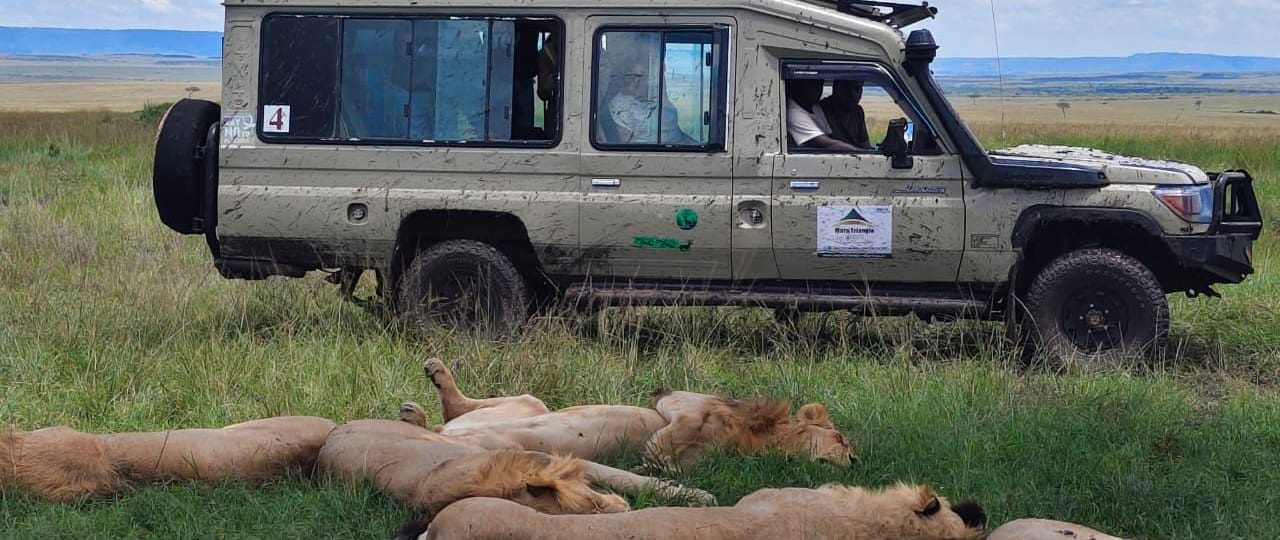
In early March, the grass is still low. This matters more than you’d think. When grass is low, animals can’t hide. Lions can’t stalk as effectively, which means they either hunt in the open (exciting for you) or they lounge around in plain sight (also exciting for you).
Predator sightings in early March are genuinely excellent. Cheetahs perch on termite mounds, scanning for prey. Leopards drape themselves over tree branches where you can actually see them. It’s like someone turned the visibility setting to high.
Late March Wildlife = Baby Boom
Late March kicks off calving season. Not the massive wildebeest calving in the Serengeti—that’s earlier. But zebras, gazelles, warthogs, and other residents start dropping their young.
This means two things.
First, your camera roll fills with ridiculous cuteness. Baby animals are everywhere, all wobbly legs and oversized ears.
Second, predators follow the food. Lions and leopards know exactly where the easy meals are. So while animals spread out more (water is everywhere now), the action concentrates around the herds with newborns.
What About the Big Five?
Rhinos? Yes. They’re always around, though they hide in bushes more than other animals. Your guide knows where to look.
Buffalo? Massive herds. You’ll smell them before you see them.
Elephants? Everywhere. Amboseli in March with Kilimanjaro in the background? Unreal.
Leopards? Tricky any time of year. But March is as good as any month.
Tell your guide exactly what you want to see on day one.
“I really want a leopard.” They’ll remember. They’ll try harder.
They’ll ask other guides.
Make your wish list known.
Where’s the Great Migration in March?
Okay, let’s clear this up once and for all.
The Great Migration is not in the Maasai Mara in March. Full stop.
So Where Is It?
In March, those millions of wildebeest and zebra are down in Tanzania. Specifically, they’re in the southern Serengeti around Ndutu, having babies. That’s the calving season—thousands of newborns dropping onto the plains every single day.
Does That Mean the Mara Is Empty?
Not even close. And this is where first-timers get confused.
The Maasai Mara has resident herds. Wildebeest and zebra that live there year-round. Not a million of them, sure. But tens of thousands. Plus elephants. Plus giraffes. Plus lions, leopards, cheetahs, hyenas, hippos, crocs, buffalo—the whole cast of characters.
The Mara without the migration is still one of the best wildlife destinations on planet Earth. It’s not a consolation prize. It’s the real deal.
River Crossings in March?
No. Those famous Mara River crossings—thousands of animals plunging into crocodile-infested water—happen later. July through October. If river crossings are your bucket-list item, March isn’t your month.
But if you want to see the Mara without 50 other vehicles surrounding every lion sighting? March is perfect.
If you’re dead set on migration, go to Tanzania in March.
If you want Kenya, focus on what Kenya does best:
incredible predators, stunning landscapes, and zero crowds.
Is March Cheaper? Let’s Talk Money.
Straight up: yes. March is cheaper.
But let’s talk about how much cheaper and why that matters.
The Shoulder Season Sweet Spot
Safari camps use a pricing system with three tiers:
- Peak season (July–October, December–January): Highest prices
- Shoulder season (March–June, November): Medium prices
- Low season (April–May, sometimes): Lowest prices
March sits right at the start of shoulder season. Many camps haven’t switched to their highest rates yet. You can save 20–30 percent compared to August prices.
What That Means for You
Twenty percent off a safari is real money. We’re talking hundreds, sometimes thousands of dollars depending on how fancy you go.
That saving could mean:
- Upgrading to a better camp
- Adding an extra night or two
- Booking a private vehicle (game changer)
- Tipping your guide properly
- Buying better souvenirs
- Taking a hot air balloon ride over the Mara
Flight Deals Too?
Often yes. March sits between holiday rushes. Christmas is done. Easter hasn’t started. Summer break is months away. Airlines sometimes drop prices to fill seats.
Check flight comparison sites. Look at Nairobi as your entry point. You might be surprised.
Book early.
Even though March is cheaper, the best-value rooms at the best camps get snapped up by repeat travelers who know the shoulder season secret.
What About Crowds? Am I Fighting for Space?
Remember those safari photos where 20 vehicles circle one poor lion?
That’s peak season. July and August. Every vehicle in the Mara descends on every sighting. Guides radio each other. “Lion sighting, grid reference 247, come quick.” Suddenly you’re in a traffic jam in the middle of the wilderness.
March Is the Opposite
Tourist numbers drop in March. Way down.
School holidays are over in most countries. The Christmas crowd has gone home. The “perfect weather” crowd hasn’t arrived yet.
This means you pull up to a leopard in a tree and you’re the only vehicle there. You watch a lioness stalk zebras with zero distractions. You sit at a hippo pool and hear nothing but grunts and splashes—no diesel engines, no chatter from other tourists.
Why That Matters
Wildlife viewing isn’t just about seeing animals. It’s about the experience of seeing them.
Being alone with a pride of lions changes something in you. You feel the moment. You hear them breathing. You see the flies buzzing around their faces. You smell the dust and the grass and the faint scent of whatever they killed last night.
That doesn’t happen with 40 other people taking selfies.
Request a private vehicle if your budget allows.
Even in March when crowds are low, having your own guide and jeep makes everything more flexible.
Stop where you want.
Stay as long as you want.
Leave when you’re ready.
Where Should I Actually Go in March?
Not all parks perform equally in March. Pick wrong and you’ll wonder what all the fuss was about. Pick right and you’ll be planning your return trip before you’ve left.
Maasai Mara National Reserve
The Mara works year-round. March is no exception.
You get the resident wildlife. You get the rolling hills and endless plains. You get those dramatic March sunsets with storm clouds building on the horizon.
Plus, the Mara has the best guides. Seriously. Guides here grow up in these villages. They know these roads, these animals, these behaviors. A great guide makes or breaks a safari, and the Mara has the best.
Amboseli National Park
Amboseli in March is something special.
The draw here is elephants—big ones, with tusks that drag the ground. And the backdrop: Mount Kilimanjaro.
In dry months, Kili often sits behind a haze of dust. In March, after rains start, the air clears. You get those postcard shots: massive elephants, acacia trees, and Africa’s highest mountain dusted with snow.
Laikipia Plateau
If you want something different, go north.
Laikipia is private conservancy land, not national park. That means fewer rules. Night drives? Allowed. Walking safaris? Allowed. Off-roading to follow a leopard? Allowed.
The landscape here is wilder—hills and valleys instead of endless plains. You’ll find unique species too: Grevy’s zebra, reticulated giraffe, Somali ostrich. And the last two northern white rhinos on Earth live here under 24-hour protection.
What About Tsavo or Samburu?
Tsavo is huge. Massive. In March, with green vegetation, animals can spread out and disappear. It’s beautiful but challenging for first-timers.
Samburu is excellent year-round but similar to Laikipia—dry country with unique species. If you’re set on Samburu, March works fine.
Don’t try to visit four parks in one week.
You’ll spend half your trip driving.
Pick one or two places and really experience them.
Quality over quantity, always.
What’s the Packing List for March?
Packing for March requires a bit of strategy. You’re preparing for two different weather patterns. But don’t overcomplicate it.
The Absolute Essentials
- Neutral clothes: Khaki, olive, beige, brown. Not white (shows dust), not black (attracts heat and tsetse flies), not bright colors (disturbs animals and annoys other viewers).
- Layers: Mornings start cool (15°C / 60°F). Days heat up (30°C / 85°F). Evenings cool down again. Long-sleeved shirt over t-shirt, fleece over that, jacket in the vehicle. Strip off as the day warms.
- Waterproof shell: Lightweight, packable. Toss it in your daypack and forget it until you need it.
- Wide-brim hat: Sun is strong. Baseball caps leave your neck exposed.
- Sunglasses: Polarized helps cut glare.
- Sturdy walking shoes: Not brand-new boots. Broken in. No blisters.
Gear Worth Bringing
- Binoculars: Your camera sees what’s far away. Your eyes need help too. Decent binoculars transform your experience.
- Camera with zoom: 200mm minimum. 400mm better. Phone cameras won’t reach across valleys.
- Power bank: Vehicle charging sometimes works, sometimes doesn’t. Portable battery guarantees your phone survives full days.
- Headlamp or small torch: Camps get dark at night. Walk to dinner without breaking your ankle.
What to Leave Home
- Expensive jewelry
- Designer handbags (dust destroys them)
- Heavy suitcases (small vehicles, limited space)
- Formal clothes (dinners are casual)
- Drone (illegal in national parks)
Pack half the clothes you think you need.
Safari camps do laundry. Really.
You hand over clothes in the morning, they come back clean and folded in the evening.
Pack light, wash along the way.
What About Bugs and Malaria?
Let’s address the elephant in the room. Mosquitoes.
March falls within rainy seasons, which means more standing water. More standing water means more mozzies.
The Malaria Reality
Malaria exists in Kenya. That’s a fact. But here’s what that means for you practically.
First, your risk depends on where you go. The Maasai Mara sits at altitude—around 1,500 meters (5,000 feet). Mosquitoes dislike altitude. They’re less common here than at the coast or in lowland areas.
Second, prevention works. Really works.
What You Should Do
- Talk to your doctor: Tell them you’re going to Kenya in March. Get proper medical advice for your situation.
- Take prophylaxis: Pills exist. They work. Take them as prescribed.
- Cover up at dawn and dusk: Long sleeves, long pants, closed shoes. This is when mozzies feed.
- Use repellent: DEET-based or Picaridin. Apply after sunscreen.
- Sleep under nets: Camps provide them. Use them.
Other Bugs?
Tsetse flies deserve mention. They bite. It stings. They’re attracted to dark colors and moving vehicles. Wear neutral, light colors and you’ll minimize encounters.
No, they don’t carry disease for humans (sleeping sickness is extremely rare in safari areas). They’re just annoying.
Buy repellent here. Seriously.
The stuff sold in African pharmacies is formulated for African bugs.
Bring sunscreen from home if you have a brand you love, but buy mozzie spray when you arrive.
Is March Good for Photography?
If you’re a photographer—or just someone who wants amazing photos—March deserves serious consideration.
The Light
March light shifts throughout the month.
Early March: clear, golden mornings. Hard light midday. Soft, golden evenings. Classic safari light.
Late March: clouds add drama. Storm light creates those moody images where sunbeams cut through dark skies. After-rain light turns everything supersaturated green. Sunsets explode with color reflecting off cloud bottoms.
The Scenes
- Wet animals shake water off their coats. Catch that.
- Mud on elephant skin adds texture.
- Puddles create reflections of animals and skies.
- Green grass makes colors pop—red birds, yellow acacias, blue skies.
- Newborns wobble through damp grass.
The Challenges
Light changes fast. Be ready. Overcast days require higher ISO settings. Rain might send you scrambling to cover your gear.
Bring a rain cover for your camera. A plastic bag works. A proper rain sleeve works better.
Shoot in RAW format.
Cloudy days and storm light mess with white balance.
RAW lets you fix everything later.
Memory cards are cheap.
Great photos are priceless.
Common March Safari Fears—Debunked
You’ve got worries. We hear them every day. Let’s kill them one by one.
“I’ll Be Stuck Indoors the Whole Time”
Nope. Game drives continue. Animals stay outside. You stay outside with them. Rain passes. Drives resume. You might get damp for 20 minutes. That’s it.
“The Roads Will Be Impassable”
Main roads in the Mara and Amboseli handle rain fine. Minor tracks can get tricky, but your guide knows which routes work. They’ve driven these roads for years. They won’t get you stuck.
“It’s Depressing Without Sunshine”
March has plenty of sunshine. Even late March gives you blue skies most of the day. Afternoon storms pass quickly, then the sun returns. You’ll get plenty of vitamin D.
“Everything Will Be Muddy and Gross”
Everything will be green and alive. Mud washes off. The transformation from dry brown to lush green is one of the most beautiful things you’ll ever witness.
Embrace the unpredictability.
The travelers who have the best March safaris are the ones who treat afternoon storms as part of the adventure, not an interruption.
How Do I Book a March Safari That Doesn’t Suck?
You’ve read this far. You’re interested. Maybe you’re even excited. Now what?
Pick the Right Operator
This matters more than where you go or when you go.
You need someone local. Someone who drives these roads. Someone who answers emails personally, not with automated templates. Someone who asks about your interests, not just your budget.
That’s us, obviously. But even if you don’t book with us, book with someone like us. Small. Local. Experienced. Avoid the big international companies that subcontract everything. You want the people running your safari to be the same people who will meet you at the airport.
Ask the Right Questions
When you contact operators, ask:
- “Have you been to the Mara in March recently?”
- “What’s your policy if weather affects game drives?”
- “Can you recommend camps with good March policies?”
- “What do you love about March safaris?”
Their answers tell you everything.
Trust Your Gut
If someone pushes you toward July even though you asked about March, hang up. If someone dismisses your concerns, move on. If someone promises things that sound too good, they probably are.
Good operators listen. They answer your actual questions. They help you make the right choice for you, not just for their commission.
Call them. Email is fine, but a phone call tells you more.
Are they knowledgeable?
Do they sound excited?
Do they ask about you?
That five-minute conversation reveals more than twenty email exchanges.
The Bottom Line: Should You Do a March Safari?
Here’s the truth.
March isn’t for everyone. If you need guarantees—guaranteed dry weather, guaranteed river crossings, guaranteed everything—pick July or August. Pay more. Deal with crowds. Get the postcard version.
But if you want something real. Something with character. Something where you might be the only vehicle watching a leopard drag its kill up a sausage tree while thunder rumbles in the distance and the whole world turns green around you…
March might be exactly your month.
The animals don’t read calendars. They don’t know it’s “shoulder season.” They’re just living their lives, raising their young, hunting their prey, surviving another year on the savannah.
And you could be there, watching it all, with a cold Tusker in your hand and dust on your boots, wondering why you waited so long.
FAQs – Quick Hits
Q: Do I need a visa?
A: Yes. Apply online for Kenya’s eVisa before you travel. Takes 10 minutes.
Q: What vaccinations do I need?
A: Yellow fever (required if coming from endemic country), typhoid, hepatitis A. Ask your doctor.
Q: Is the water safe to drink?
A: Camps provide filtered or bottled water. Drink that. Avoid tap water.
Q: Can I use credit cards?
A: In cities and lodges, yes. Carry cash (USD or local shillings) for tips and small purchases.
Q: How much should I tip?
Tipping guidelines vary. Ask your operator for current recommendations based on camp level and group size.
Ready to Talk?
We’re here. Based in Kenya. Running safaris every day of every month. March included.
Email us. Call us. Send a carrier pigeon if that’s your style.
Tell us what you want. Tell us what worries you. We’ll build a March safari that makes sense for you—no pressure, no nonsense, just straight-up advice from people who actually live here.
Drop us an email at info@maratrianglesafaris.co.ke with your questions. Or give the team a call:
+254 705 635 886
+254 768 212 702
We’re here Monday through Saturday, 8:30 am to 5:00 pm East Africa time.
But email works anytime—we’ll get back to you within 24 hours.
Tell us what you’re thinking. March?
Peak season?
A bit of both?
We’ll give you straight answers, honest advice, and a safari that’s worth every penny.
No dramas. Just Africa.
1 Comment
Please Contact our office
Email: info@mara-triangle-safaris
deals@maratrianglesafaris.co.ke
Phone: (+254) 705 635 886
(+254) 768 212 702
Venus complex, Northern bypass, 1st floor room 4107
Website: https://maratrianglesafaris.co.ke/contact/
Visit our contact page at https://maratrianglesafaris.co.ke/contact/ to get in touch.
We can’t wait to welcome you to Kenya!