

Tea Farm Tours Near Nairobi: A Perfect Half-Day Excursion (2026 Guide)
Discover the best tea farm tours near Nairobi. Visit the beautiful tea plantations of Limuru and Tigoni, enjoy tea tastings, learn how Kenyan tea is produced, and experience a relaxing half-day excursion perfect for visitors and transit travelers.
Tea Farm Tours Near Nairobi: A Perfect Half-Day Excursion (2026 Guide)-Mara Triangle Safaris
Kenya is famous for its wildlife, but there’s another treasure nestled in the cool highlands just outside Nairobi: endless rolling tea plantations. A tea farm tour near Nairobi is one of the most peaceful and rewarding half-day excursions from Nairobi you can experience.
Imagine walking through vibrant green tea fields, breathing in fresh, crisp air, and learning how the world’s finest black tea is grown and processed. Then, you sit down to a freshly brewed cup of Kenyan tea, overlooking the misty hills of Limuru. It’s a world away from the city’s hustle – yet just an hour’s drive away.
In this guide, we’ll explore the best tea farm tours near Nairobi, including the famous Kiambethu Tea Farm tour, the scenic Limuru tea farm tour, and the picturesque Tigoni tea farm tour. We’ll cover what to expect, costs, the best time to visit, how to combine your tour with other attractions, and special tips for transit travellers looking for tea farm tours from Nairobi airport.
At Mara Triangle Safaris, we offer private Nairobi tea tours with comfortable transport, flexible schedules, and expert local guides. Let’s step into the green world of Kenyan tea.
Quick Answer:
Which is the best tea farm near Nairobi?
Kiambethu Tea Farm is our top recommendation. It’s one of Kenya’s oldest tea estates, offering guided plantation walks, tea-making demonstrations, a forest walk, tea tasting, and a delicious farmhouse lunch. Tours run Thursday to Sunday at 11 AM.
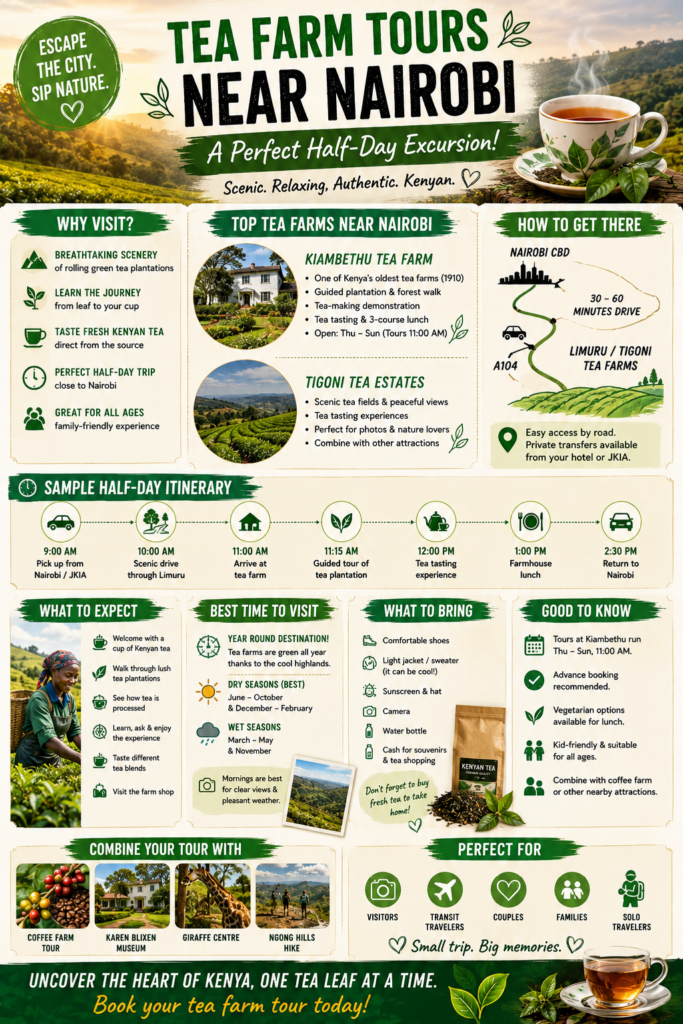
Why Visit a Tea Farm Near Nairobi?
Escape the City’s Bustle
In just 45–60 minutes, you leave Nairobi’s traffic behind and enter the cool, tranquil highlands of Limuru or Tigoni. The air is fresher, the pace slower, and the views are breathtaking.
Walk Through Endless Green Tea Fields
There’s something magical about walking between rows of perfectly manicured tea bushes. The vibrant green stretches as far as the eye can see, broken only by the occasional acacia tree or farmhouse.
Learn How Kenyan Tea Is Produced
Kenya is the world’s third-largest tea producer, and the third-largest exporter of black tea. A tea plantation tour Nairobi takes you through the entire journey: from plucking the tender leaves to withering, rolling, oxidation, drying, and finally packaging.
Enjoy Fresh Tea Tastings
You’ll taste freshly brewed Kenyan tea – often from leaves harvested that very morning. The flavour is bright, bold, and unmistakably fresh.
Perfect for Layovers and Half-Day Trips
Most tea farms are only 30–60 minutes from JKIA Airport. A half-day tea farm excursion fits easily into a 6–8 hour layover, or a relaxed morning or afternoon for visitors staying in Nairobi.
Best Tea Farms to Visit Near Nairobi
Kiambethu Tea Farm (Our Top Recommendation)
Kiambethu Tea Farm is one of Kenya’s oldest tea estates, dating back to 1910. It’s located in Limuru, about 45 minutes from Nairobi, and offers one of the most complete tea tour experiences in the country.
What to expect:
- Historic estate with beautiful colonial farmhouse
- Guided tea plantation walk – learn about tea cultivation and plucking
- Tea-making demonstration – see the withering, rolling, and oxidation process
- Indigenous forest walk – spot colobus monkeys and birdlife
- Three-course farmhouse lunch (home-cooked, delicious)
- Fresh tea tasting – compare different grades of Kenyan tea
Tour times: Thursday to Sunday, starting at 11:00 AM. Book in advance – they’re popular.
Why choose Kiambethu: It’s the most comprehensive tea experience near Nairobi. The combination of history, scenery, tea education, and a wonderful lunch makes it outstanding.
Tigoni Tea Estates
Tigoni is a beautiful area just north of Limuru, famous for its rolling tea plantations and scenic countryside. Several estates offer tours and tastings.
What to expect:
- Picturesque tea plantations – perfect for photography
- Scenic drives through the countryside
- Tea tasting experiences
- Peaceful, relaxing atmosphere
- Great cycling routes (if you have more time)
Why choose Tigoni: If you prefer a more casual, scenic experience – or want to combine tea visiting with cycling or walking – Tigoni is ideal.
Other Farms to Consider
- Kiangombe Tea Farm – smaller, more intimate experience.
- Keringet Tea Estate – offers tea tours with lunch.
- Limuru Tea Estate – traditional plantation tour.
Most visitors choose Kiambethu for the complete, historic experience, or Tigoni for a more laid‑back, scenic day.
What to Expect During a Tea Farm Tour
A typical tea farm tour Nairobi lasts about 3–4 hours and includes:
Welcome With Fresh Kenyan Tea
Upon arrival, you’ll be welcomed with a cup of freshly brewed Kenyan tea. It sets the tone for a relaxing, sensory experience.
Guided Plantation Walk
You’ll walk through the tea fields, learning about the different tea varieties, how the bushes are pruned, and how the leaves are plucked. You’ll see the “two leaves and a bud” that make the best tea.
Tea Processing Demonstration
In the processing area, you’ll see the withering troughs, rolling machines, oxidation beds, and drying ovens. Your guide explains each step and how it affects the final flavour.
Tea Tasting Session
You’ll taste several grades of tea – from light, floral first-flush to bold, malty Pekoe. You’ll learn to identify flavour notes and appreciate the complexity of Kenyan tea.
Indigenous Forest Nature Walk
At Kiambethu, you can walk through an indigenous forest – home to colobus monkeys, sykes monkeys, and many bird species. It’s a peaceful contrast to the manicured tea fields.
Farmhouse Lunch
Many tours include a farm-to-table lunch – often a three-course meal using fresh produce from the farm. It’s a highlight for many visitors.
How Kenyan Tea Is Made
Tea Cultivation
Tea is grown from seedlings in nurseries, then transplanted to fields. Kenya’s high altitude, volcanic soil, and equatorial climate create ideal growing conditions.
Harvesting Tender Leaves
Tea is hand-plucked. Workers pick the top two leaves and the bud – the most tender and flavourful parts. This is done every 7–14 days during the growing season.
Withering
The leaves are spread on withering troughs and blown with warm air. This reduces moisture content and makes the leaves pliable for rolling.
Rolling
Leaves are rolled to break the cell walls, releasing enzymes that start the oxidation process. This creates the flavour and colour of black tea.
Oxidation
Rolled leaves are spread out in a cool, humid room. They turn from green to copper-brown as they oxidise. This is where the flavour develops.
Drying
Oxidised leaves are passed through hot air dryers to stop the oxidation and lock in the flavour. The leaves turn dark brown or black.
Sorting and Packaging
Dried tea is sorted by size and grade (Pekoe, BOP, CTC, etc.). It’s then packaged and shipped to markets around the world.
📅 Best Time to Visit a Tea Farm
Dry Season (Best for Walking)
January–February and July–October are drier, with clearer skies. The farm tracks are firm, and the views are spectacular.
Rainy Season (Lush Green Views)
March–May and November bring rain, but the tea fields are at their most vibrant green. The forests are alive with bird calls. Bring a raincoat and enjoy the lushness.
Morning Departures
Most tours start around 8–9 AM to get you to the farm by 10–11 AM. Morning light is beautiful for photography, and temperatures are cool.
Photography Tips
The best photos are from the plantation edges, looking across the rolling green fields. Misty mornings add atmosphere. Close-ups of tea leaves and the farmhouse are also lovely.
Tea Farm Tour Costs (2026)
| Service | Approx Cost |
|---|---|
| Entry fee (Kiambethu) | $20–25 per person |
| Entry fee (Tigoni estates) | $10–15 per person |
| Guided plantation walk | Included |
| Tea tasting | Included |
| Farmhouse lunch | $10–20 extra (highly recommended) |
| Private transport from Nairobi | $80–150 per vehicle |
| Airport transfer (return) | $100–180 |
Payment: Most farms accept cash (KES/USD) and credit cards. Tours with Mara Triangle Safaris include transport, entry, and guided experience.
Suggested Half-Day Tea Farm Tour (Morning)
This half-day tea farm tour Nairobi is our most popular itinerary.
- 9:00 AM – Pickup from your hotel or JKIA Airport
- 10:00 AM – Scenic drive through Limuru highlands
- 10:45 AM – Arrive at Kiambethu Tea Farm
- 11:00 AM – Welcome tea, guided plantation walk
- 11:45 AM – Tea processing demonstration
- 12:15 PM – Tea tasting session
- 1:00 PM – Farmhouse lunch (3 courses)
- 2:30 PM – Return to Nairobi
Total duration: 4–5 hours. Perfect for a Nairobi layover or a relaxing morning.
Tea Farm Tours for Transit Travelers
If you’re on a layover at JKIA, a tea farm tour from airport is a calm, refreshing way to spend your time.
6‑Hour Layover
- Pickup at airport (15 min) → tea farm tour (2.5 hours) → return (15 min)
- Works well. You’ll have time for the plantation walk and tasting, but skip the lunch to save time.
8‑Hour Layover
- Full tour (3–4 hours) + lunch + return.
- Very comfortable. You can even add a quick stop at the Giraffe Centre afterwards.
12‑Hour Layover
- Tea farm tour + lunch + another attraction (Giraffe Centre or Karen Blixen Museum).
- Ideal. A full morning of relaxation and culture.
Airport Pickup and Drop‑Off
We’ll meet you at the arrivals hall with a name sign. Your driver monitors your flight, so you’re not rushed. After the tour, we’ll return you to the airport with at least 2 hours before departure.
Combine Your Tea Farm Tour With Other Attractions
A tea farm tour pairs beautifully with other Nairobi countryside tours and attractions.
Tea Farm + Coffee Farm
- Visit both a tea and coffee estate in one day.
- Compare Kenya’s two most famous agricultural exports.
- A full-day experience for enthusiasts.
Tea Farm + Giraffe Centre
- Morning tea tour → lunch → afternoon giraffe feeding.
- A relaxing, family‑friendly day.
Tea Farm + Karen Blixen Museum
- Tea tour → museum → lunch.
- History, nature, and culture in one morning.
Tea Farm + Kazuri Beads Factory
- Both in the Limuru/Karen area.
- Tea → beads → lunch.
- A diverse cultural experience.
Tea Farm + Ngong Hills
- Morning hike → lunch → afternoon tea tour.
- Active and serene combined.
Tea Farm vs Coffee Farm Tours
| Factor | Tea Farm Tour | Coffee Farm Tour |
|---|---|---|
| Process | Leaves → withering → rolling → oxidation → drying | Cherries → washing → fermentation → drying → roasting |
| Tasting | Fresh brewed tea | Coffee cupping (slurping, flavour notes) |
| Scenery | Rolling green hills, misty highlands | Rows of coffee trees, red cherries |
| Atmosphere | Serene, elegant, relaxed | Interactive, educational, energetic |
| Best time | Year‑round (leaves harvested continuously) | Harvest seasons (Oct–Dec, May–Jun) |
| Ideal for | Relaxation, photography, families | Coffee lovers, hands‑on learners |
Which one should you choose?
If you want a peaceful, scenic morning with tea and a farmhouse lunch, choose a tea tour.
If you’re passionate about coffee and want a sensory, interactive experience, choose a coffee tour.
Many travellers do both, they complement each other perfectly.
Photography Tips
Endless Tea Plantations
- Use a wide-angle lens to capture the rolling green hills.
- Morning mist adds mood and depth.
Tea Pickers at Work
- Ask permission before photographing workers – they’re usually happy.
- Capture the hands and the tea baskets.
Historic Farmhouse
- The colonial‑style farmhouses are photogenic – white walls, red roofs, verandas.
Misty Morning Landscapes
- Limuru is often misty in the early morning. This makes for atmospheric, dreamy shots.
Tea Cup Close-Ups
- Macro shots of tea leaves, steam rising from a cup, or the colourful tea tins.
✅ Travel Tips for First‑Time Visitors
- Wear comfortable walking shoes – you’ll walk on farm tracks and possibly forest trails.
- Carry a light jacket – Limuru is about 7,200 ft. It’s cooler than Nairobi.
- Bring a camera – the plantations are stunning.
- Book early – Kiambethu tours are popular and limited.
- Arrive on time – tours start at 11 AM; don’t be late.
- Buy premium Kenyan tea to take home – it’s fresh, high quality, and a perfect souvenir.
🏆 Why Book a Tea Farm Tour with Mara Triangle Safaris?
- Convenient hotel and airport pickups – ideal for tea farm tours from JKIA Airport.
- Private half-day excursions – just your group, no minibus crowds.
- Flexible itineraries – add other attractions or adjust timings.
- Experienced local guides – knowledgeable about tea, history, and the region.
- Perfect for layovers – we know exactly how much time you need.
- Easy combination with Nairobi attractions – Giraffe Centre, Karen Blixen Museum, Kazuri Beads, and Ngong Hills.
Let us handle the transport and timing – you just relax and enjoy the tea.
❓ Frequently Asked Questions (Tea Farm Tours)
Q1: Which is the best tea farm near Nairobi?
Kiambethu Tea Farm is our top recommendation. It offers the most complete experience: plantation walk, processing demo, forest walk, tea tasting, and lunch.
Q2: How long does a tea farm tour take?
The tour itself is about 2–3 hours. With transport from Nairobi, allow 4–5 hours total (half-day).
Q3: Is lunch included?
At Kiambethu, a farmhouse lunch is offered (optional but highly recommended). Other farms may not include it – check when booking.
Q4: Can I buy tea directly from the farm?
Yes – most farms have a shop selling freshly packaged Kenyan tea. It’s a great souvenir.
Q5: Are tea tastings included?
Yes – all tea tours include a tasting session. You’ll sample several grades and learn to identify flavours.
Q6: Is the tour suitable for children?
Yes – children enjoy the plantation walk and the monkeys in the forest. The lunch is family-friendly.
Q7: Can I visit during a layover?
Absolutely – we offer tea farm tours for transit travelers from JKIA. You need at least 6 hours between flights.
Q8: What should I wear?
Casual, comfortable clothing. Layers are a good idea – it’s cooler in Limuru. Closed‑toe shoes for walking. A light jacket is recommended.
Q9: What is the best time of year to visit a tea farm?
Year-round! Tea is harvested continuously. Dry months (Jan–Feb, Jul–Oct) have better walking conditions; rainy months (Mar–May, Nov) are lush and green.
Q10: Can I combine a tea farm with other attractions?
Yes – it’s easy to add the Giraffe Centre, Karen Blixen Museum, Kazuri Beads, or a coffee farm tour.