
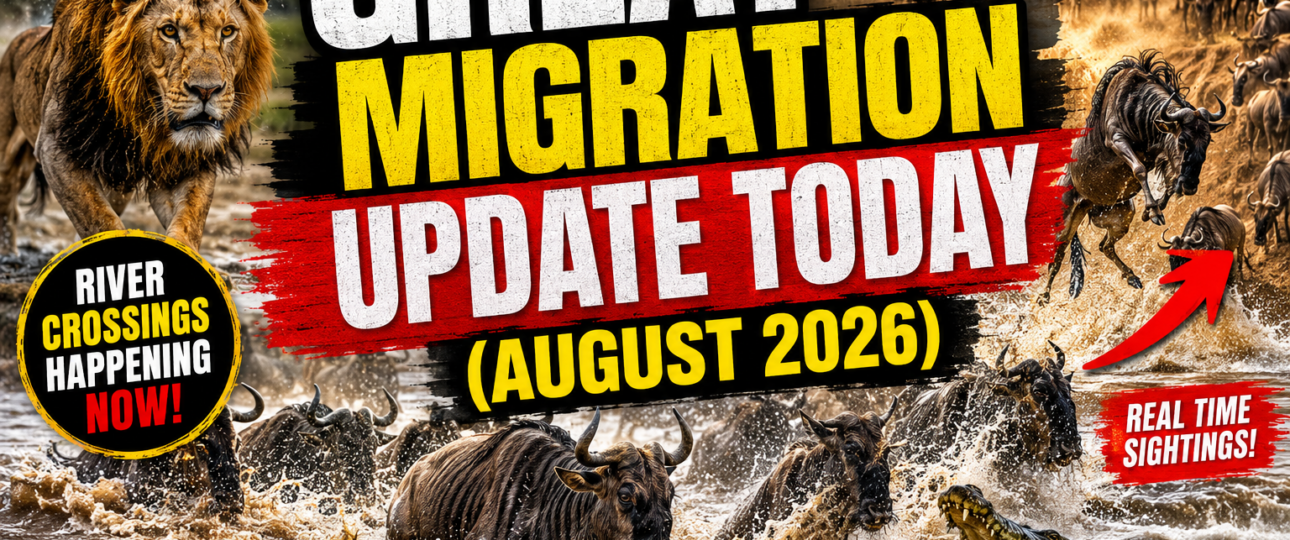
Great Migration Update Today (August 2026) | Latest Mara River Crossing News
Great Migration Update Today (August 2026): Where the Wildebeest Are Right Now
Looking for the latest Great Migration Update Today? August is one of the most exciting months to witness the world’s largest wildlife migration. Millions of wildebeest, zebras, and gazelles are spread across the Mara Triangle, the Masai Mara National Reserve, and Northern Serengeti, creating incredible opportunities for river crossings, predator encounters, and unforgettable safari experiences.
This live-style guide provides an overview of current migration patterns, likely herd locations, river crossing conditions, wildlife sightings, and safari planning tips for travelers visiting Kenya during August 2026.
Great Migration Update Today
Today’s Great Migration update: During August, large herds of wildebeest continue moving between the Serengeti and Kenya’s Masai Mara. The Mara Triangle remains one of the best places to witness dramatic Mara River crossings, predator activity, and excellent Big Five game viewing. Morning and late afternoon game drives generally provide the highest chances of seeing active wildlife.
📍 GEO Location Snapshot
- Country: Kenya
- Primary Destination: Mara Triangle Conservancy
- Nearby Destination: Masai Mara National Reserve
- Cross-border Migration: Northern Serengeti, Tanzania
- County: Narok County
- Peak Season: July – October
- Main Wildlife: Wildebeest, Zebra, Gazelles, Lions, Leopards, Cheetahs, Crocodiles, Elephants, Buffalo, Hippos
Today’s Great Migration Overview
The Great Migration August 2026 continues to deliver spectacular wildlife experiences across Kenya. Massive herds are actively grazing throughout the Masai Mara ecosystem while thousands continue crossing the Mara River in search of fresh grass. Wildlife movements change daily depending on rainfall, grazing conditions, and predator pressure, making every safari unique.
Visitors searching for a Kenya migration safari can expect exceptional wildlife viewing, with excellent chances of witnessing river crossings alongside sightings of lions, cheetahs, leopards, elephants, buffalo, and numerous bird species.
| Today’s Highlights | Current Status |
|---|---|
| Migration Activity | Excellent |
| Mara River Crossings | Likely Throughout the Day |
| Predator Sightings | Very High |
| Big Five Viewing | Excellent |
| Photography Conditions | Excellent During Morning & Evening |
Why August Is One of the Best Months for the Great Migration
August is widely regarded as one of the finest months for a Great Migration Kenya safari. By this time, many herds have already entered the Mara ecosystem, while thousands more continue arriving from Tanzania. This creates continuous wildlife movement, frequent predator encounters, and some of the year’s most dramatic river crossings.
Travelers interested in understanding the seasonal movement should also explore our comprehensive guide on Best Time for the Great Migration Safari in Kenya, which explains how wildlife movements vary from month to month.
What Wildlife Can You Expect Today?
A wildlife safari Kenya during August offers much more than wildebeest. The abundance of prey attracts Africa’s iconic predators, making this one of the best periods for dramatic wildlife encounters.
- ✔ Massive wildebeest herds
- ✔ Plains zebras
- ✔ Thomson’s and Grant’s gazelles
- ✔ Lions following migration routes
- ✔ Leopards resting near riverine forests
- ✔ Cheetahs hunting on open plains
- ✔ Nile crocodiles waiting near river crossings
- ✔ Hippos in the Mara River
- ✔ African elephants
- ✔ Cape buffalo
If you’re deciding between wildlife experiences, our guide on Great Migration vs Big Five Safari explains which adventure best suits your travel goals.
Book Your Great Migration Safari
Experience the world’s greatest wildlife spectacle with experienced local safari guides. Whether you’re planning a luxury safari, family holiday, photography expedition, or private game drive, we’ll help you find the best locations for unforgettable wildlife encounters.
Contact Mara Triangle SafarisWhere Are the Wildebeest Today? (August 2026)
One of the most common questions travelers ask before booking a Great Migration safari is, “Where are the wildebeest today?” While wildlife movements change daily depending on rainfall, grazing conditions, predator activity, and river levels, August consistently places large concentrations of wildebeest across the Mara Triangle, central Masai Mara, and the Northern Serengeti.
Rather than remaining in one location, the herds move continuously throughout the ecosystem. This is why experienced local safari guides are invaluable—they monitor fresh tracks, recent sightings, weather conditions, and crossing behavior to position guests in the best possible viewing areas.
Where Are the Wildebeest Today?
During August, the highest concentrations of wildebeest are typically found throughout the Mara Triangle, the Mara River corridor, Paradise Plains, Lookout Hill, Musiara, and parts of the Northern Serengeti. Daily herd movements depend on fresh grazing, rainfall, and predator pressure, so no two game drives are ever the same.
📍 Migration Hotspots in August
- Mara Triangle Conservancy – Excellent migration activity
- Mara River Corridor – Prime river crossing locations
- Lookout Hill – Large grazing herds
- Paradise Plains – Predator-rich open grasslands
- Musiara Area – Wildlife concentration zone
- Sand River – Herd movement between Kenya and Tanzania
- Northern Serengeti – Continuous migration movement
| Location | Migration Activity | River Crossing Chance | Predator Sightings | Photography |
|---|---|---|---|---|
| Mara Triangle | ★★★★★ | ★★★★★ | ★★★★★ | Excellent |
| Lookout Hill | ★★★★★ | ★★★★☆ | ★★★★★ | Excellent |
| Paradise Plains | ★★★★★ | ★★★☆☆ | ★★★★★ | Excellent |
| Mara River | ★★★★★ | ★★★★★ | ★★★★★ | World Class |
| Sand River | ★★★★☆ | ★★★★☆ | ★★★★☆ | Excellent |
| Northern Serengeti | ★★★★★ | ★★★★★ | ★★★★☆ | Excellent |
Mara Triangle
The Mara Triangle safari remains one of the most rewarding areas to experience the Great Migration today. This protected conservancy offers expansive open plains, fewer safari vehicles than many other sections of the ecosystem, and outstanding opportunities to witness river crossings and predator interactions.
Large herds frequently graze throughout the Triangle before moving toward the Mara River. Visitors often encounter elephants, buffalo, giraffes, lions, cheetahs, and hyenas in the same game drive, making it one of Kenya’s finest wildlife destinations.
If you’re looking for accommodation nearby, explore our guide to the best camps and lodges in Mara Triangle to choose the ideal base for your safari.
Lookout Hill
Lookout Hill offers panoramic views over vast sections of the migration route and is one of the most scenic places for observing thousands of wildebeest spread across the plains. It also provides an excellent vantage point for photographers hoping to capture the scale of the migration.
Because predators regularly patrol nearby grazing areas, sightings of lions, cheetahs, and hyenas are common throughout August.
Paradise Plains
Paradise Plains is renowned for its open grasslands, making wildlife easier to spot throughout the day. Wildebeest herds often spend extended periods grazing here before moving toward nearby river crossing points.
The area is particularly famous for cheetah sightings because the open landscape allows these fast predators to hunt effectively.
Mara River Corridor
The Mara River crossing remains the highlight of every Great Migration August 2026 safari. Thousands of wildebeest gather along the riverbanks before making the dangerous decision to cross crocodile-filled waters.
Some crossings involve only a few hundred animals, while others can include several thousand moving almost simultaneously. Timing is unpredictable, which makes every crossing especially thrilling.
To better understand this incredible wildlife event, read our complete guide about the interesting facts about the wildebeest migration.
Where Can You See Mara River Crossings?
The best locations to witness Mara River crossings include the Mara Triangle, the Mara River corridor, and sections near Lookout Hill and Sand River. Crossing activity depends entirely on wildlife behavior, making every safari unique.
Sand River
Located near the Kenya–Tanzania border, Sand River serves as one of the migration’s important travel corridors. Wildebeest frequently move between Northern Serengeti and the Masai Mara through this region, creating excellent opportunities for observing large moving herds.
Northern Serengeti
Across the border in Tanzania, Northern Serengeti continues to host significant migration activity during August. Many herds move back and forth depending on grazing availability and river conditions, meaning visitors combining Kenya and Tanzania safaris enjoy exceptional wildlife viewing throughout the season.
If you’re still deciding where to travel, our comparison of Great Migration vs Big Five Safari can help you select the perfect itinerary.
📍 Best Areas for Wildlife Viewing This Week
- ✔ Mara Triangle Conservancy
- ✔ Mara River crossing points
- ✔ Paradise Plains
- ✔ Lookout Hill
- ✔ Musiara Marsh
- ✔ Sand River
- ✔ Northern Serengeti migration route
Every safari is different because the migration never follows a fixed timetable. Experienced guides monitor daily wildlife reports, recent sightings, weather conditions, and herd movements to maximize your chances of witnessing unforgettable river crossings and predator action.
Follow the Great Migration With Local Experts
Whether you’re planning your first safari or returning to witness another spectacular migration season, our experienced guides know where to position you for the best wildlife encounters throughout the Mara ecosystem.
From dramatic Mara River crossings to incredible Big Five safari Kenya experiences, we’ll help you make the most of your adventure.
Plan Your Great Migration SafariMara River Crossing Update Today (August 2026)
The Mara River crossing today remains the most anticipated event of the Great Migration Kenya. Every day, thousands of wildebeest gather along the steep riverbanks before making the dangerous decision to cross into new grazing areas. Although crossings cannot be predicted with certainty, August consistently offers some of the highest chances of witnessing this spectacular wildlife event.
Unlike a scheduled event, a wildebeest crossing today depends entirely on natural behaviour. Herds may wait for several hours—or even days—before suddenly charging into the river together. This unpredictability is what makes every crossing one of Africa’s greatest wildlife spectacles.
Are Mara River Crossings Happening Today?
Yes. August is one of the peak months for Mara River crossings. While no crossing can be guaranteed at a specific time, large herds continue moving between the Masai Mara and Northern Serengeti, creating excellent opportunities to witness river crossings throughout the migration season.
📍 Primary Mara River Crossing Zones
- Main Destination: Mara Triangle Conservancy
- River: Mara River
- County: Narok County, Kenya
- Nearby Ecosystem: Masai Mara National Reserve
- Connected Region: Northern Serengeti, Tanzania
- Best Months: July, August, September and early October
- Safari Type: Great Migration Safari Kenya
Why Do Wildebeest Cross the Mara River?
The migration is driven by one simple objective—survival. More than 1.5 million wildebeest, accompanied by hundreds of thousands of zebras and gazelles, constantly search for fresh pasture and water. As grazing areas become exhausted, the herds move across the ecosystem, eventually reaching the Mara River.
Crossing the river is extremely risky. Fast-moving currents, steep riverbanks and enormous Nile crocodiles make every crossing dangerous. Yet the instinct to continue the migration is stronger than the risks, producing one of the most dramatic wildlife events on Earth.
To understand the remarkable journey these animals undertake each year, explore our guide on Interesting Facts About the Wildebeest Migration.
What Happens During a Mara River Crossing?
A typical crossing unfolds in several stages. Hundreds or even thousands of wildebeest gather near the riverbank, pacing back and forth while searching for a safe place to enter the water. The herd often hesitates for long periods before one animal makes the first leap. Within seconds, the rest of the herd follows in an explosive rush.
As the animals struggle through the river, crocodiles lie in wait while lions and hyenas patrol nearby exit points. The scene is dramatic, emotional and unforgettable, making it one of the main reasons travellers book a Masai Mara safari package during the migration season.
| River Crossing Stage | What Visitors Can Expect |
|---|---|
| Herd Gathering | Large numbers of wildebeest assemble near the riverbank. |
| Waiting Period | The herd hesitates while searching for a safe crossing point. |
| Mass Crossing | Thousands may enter the river within minutes. |
| Predator Activity | Crocodiles, lions and hyenas take advantage of the chaos. |
| Post Crossing | The herd regroups before continuing toward fresh grazing. |
Quick Answer: Can You Predict a River Crossing?
No. Wildebeest crossings are completely natural events. Experienced safari guides monitor herd movements, weather, grazing conditions and recent sightings to improve the chances of being in the right place at the right time, but no operator can guarantee an exact crossing time.
Best Time of Day to Watch a Mara River Crossing
Visitors often ask whether mornings or afternoons are better for river crossings. The reality is that crossings can happen at any time of the day. However, early morning and late afternoon usually provide cooler temperatures, more active wildlife and softer light for photography.
| Time of Day | Wildlife Activity | Photography | River Crossing Potential |
|---|---|---|---|
| 6:30 AM – 9:30 AM | Excellent | ★★★★★ | High |
| 9:30 AM – Noon | Good | ★★★★☆ | Moderate |
| Noon – 3:00 PM | Moderate | ★★★☆☆ | Possible |
| 3:00 PM – Sunset | Excellent | ★★★★★ | High |
Monthly Mara River Crossing Guide
| Month | Crossing Likelihood | Visitor Numbers | Weather |
|---|---|---|---|
| July | High | High | Dry Season Begins |
| August | Very High | Peak Season | Cool, Dry and Clear |
| September | Very High | High | Dry with Warm Afternoons |
| Early October | Moderate to High | Moderate | Occasional Short Rains |
📍 Best Places to Watch River Crossings
- Mara Triangle crossing points
- Lookout Hill region
- Paradise Plains access routes
- Main Mara River corridor
- Sand River migration route
- Northern Serengeti crossing areas
Planning Your Great Migration Safari
The best way to maximise your chances of witnessing a Mara River crossing today is by spending several days in the ecosystem rather than taking a rushed visit. A 4–5 day itinerary allows guides to adapt to changing herd movements and increases opportunities to enjoy both river crossings and outstanding Big Five safari Kenya experiences.
If you’re planning your holiday, our guide to the Best Time for the Great Migration Safari in Kenya explains how wildlife movements change throughout the season, while our Great Migration FAQs answer the most common traveller questions before booking.
Witness the Mara River Crossing With Expert Local Guides
Join Mara Triangle Safaris for an unforgettable journey into the heart of the Great Migration. Our experienced guides track daily herd movements to give you the best opportunity to witness dramatic river crossings, predator encounters and incredible wildlife photography moments.
Whether you’re planning a luxury safari, private tour, family holiday or photography expedition, we’ll help you design the perfect migration itinerary.
Book Your Great Migration Safari TodayWeather Conditions During the Great Migration Today
Weather plays an important role in the Great Migration today. During August, the Masai Mara enjoys cool mornings, pleasant afternoons and generally dry conditions, making it one of the best months for a Kenya wildlife safari. Comfortable temperatures encourage wildlife to remain active throughout much of the day, increasing opportunities to witness predator hunts, river crossings and large grazing herds.
The dry season also means shorter grass across much of the Mara ecosystem, making it easier to locate animals and enjoy unobstructed photography during game drives.
What Is the Weather Like During the Great Migration?
August is one of the driest and most comfortable months to visit the Masai Mara. Visitors can expect cool mornings, warm afternoons and little rainfall. These excellent weather conditions contribute to outstanding wildlife viewing and make August one of the best months for a Great Migration safari in Kenya.
📍 August Weather Overview
- Destination: Mara Triangle Conservancy
- Region: Masai Mara Ecosystem
- County: Narok County
- Morning Temperature: 10°C – 14°C
- Afternoon Temperature: 22°C – 27°C
- Rainfall: Low
- Road Conditions: Generally Excellent
- Safari Season: Peak Migration Season
| Weather Factor | August Conditions |
|---|---|
| Morning | Cool with occasional mist |
| Afternoon | Sunny and pleasant |
| Rainfall | Low |
| Road Conditions | Excellent for game drives |
| Wildlife Viewing | Outstanding |
| Photography | Excellent natural lighting |
Today’s Wildlife Highlights
Although the migration is famous for wildebeest, visitors on a Mara Triangle safari are treated to one of Africa’s richest wildlife experiences. August is an exceptional month for predator sightings because abundant prey attracts lions, leopards, cheetahs and hyenas throughout the ecosystem.
Many travellers are surprised to discover that a Great Migration Kenya safari also offers incredible opportunities to see elephants, buffalo, giraffes, hippos, crocodiles and more than 500 bird species.
| Wildlife | Likelihood of Sighting | Best Habitat |
|---|---|---|
| Wildebeest | ★★★★★ | Open Plains & Mara River |
| Zebra | ★★★★★ | Grasslands |
| Lions | ★★★★★ | Throughout the Mara Triangle |
| Leopards | ★★★★☆ | Riverine Forests |
| Cheetahs | ★★★★★ | Paradise Plains |
| Elephants | ★★★★★ | Woodlands & River Areas |
| Hippos | ★★★★★ | Mara River |
| Nile Crocodiles | ★★★★★ | River Crossing Points |
| Buffalo | ★★★★★ | Throughout the Reserve |
| Hyenas | ★★★★★ | Migration Routes |
Can You See the Big Five During the Great Migration?
Yes. One of the biggest advantages of visiting during the Great Migration August 2026 season is that you can combine spectacular wildebeest migration viewing with excellent opportunities to see the Big Five—lion, leopard, elephant, buffalo and rhinoceros—on the same safari.
Birdlife During August
Beyond mammals, August is a rewarding time for bird enthusiasts. Eagles soar above the plains, vultures gather near predator activity, while secretary birds, kori bustards, crowned cranes and colourful bee-eaters add another dimension to every game drive.
Birdwatchers often enjoy incredible photographic opportunities thanks to the clear skies and soft morning light that characterize August.
Photography Conditions Today
The combination of dry landscapes, dramatic clouds, golden morning light and active wildlife makes August one of the best months for wildlife photography. Early morning game drives produce soft lighting, while late afternoons create beautiful golden-hour images across the Mara plains.
Photographers should always carry extra batteries, memory cards and a telephoto lens to capture wildlife safely without disturbing the animals.
📍 Top Wildlife Photography Locations
- Mara River Crossing Points
- Mara Triangle Open Plains
- Paradise Plains
- Lookout Hill
- Riverine Forests
- Sand River Area
Planning Your Safari Around Today’s Conditions
To enjoy the best wildlife experiences, plan both morning and afternoon game drives. Wildlife activity is generally highest during these cooler periods, while experienced guides can adjust routes based on fresh sightings, weather patterns and recent herd movements.
If you’re planning your first migration adventure, our detailed guide on Safari with Kids offers useful advice for families, while travellers looking for accommodation can browse our recommendations for the Best Camps and Lodges in Mara Triangle.
Experience Africa’s Greatest Wildlife Spectacle
From spectacular Mara River crossings to unforgettable Big Five safari Kenya encounters, every day brings a new adventure during the Great Migration. Let our experienced local guides create a safari tailored to your interests, budget and travel dates.
Request Your Free Safari QuoteBest Areas to Visit Today During the Great Migration
The Great Migration today offers exceptional wildlife viewing across the entire Masai Mara ecosystem. However, different areas provide different experiences depending on your interests. Whether you’re hoping to witness a dramatic Mara River crossing, photograph predators, or simply enjoy vast herds grazing across the plains, choosing the right location can make your safari even more rewarding.
📍 Best Places to Visit Today
- Mara Triangle – Best overall migration experience.
- Mara River – Highest chance of witnessing river crossings.
- Paradise Plains – Excellent cheetah sightings.
- Lookout Hill – Outstanding panoramic photography.
- Sand River – Active migration corridor.
- Riverine Forests – Prime leopard habitat.
| Traveller Type | Recommended Area | Why Visit? |
|---|---|---|
| First-Time Visitors | Mara Triangle | Excellent all-round wildlife viewing. |
| Wildlife Photographers | Mara River & Lookout Hill | River crossings and dramatic landscapes. |
| Families | Mara Triangle | Comfortable game drives with diverse wildlife. |
| Big Five Enthusiasts | Mara Triangle | Excellent opportunities to spot all Big Five animals. |
| Birdwatchers | Riverine Areas | Rich birdlife throughout the dry season. |
Planning Your Great Migration Safari This Week
If you are planning a Great Migration safari in Kenya, August is one of the best months to travel. Wildlife is abundant, weather conditions are favourable, and river crossings are at their peak. Booking a safari lasting at least four or five days gives you the flexibility to follow the movement of the herds and significantly improves your chances of witnessing multiple unforgettable wildlife encounters.
Accommodation also fills quickly during this period. We recommend securing your preferred lodge or camp well in advance, especially if you plan to stay close to the Mara River crossing areas.
| Safari Planning | Recommendation |
|---|---|
| Recommended Stay | 4–5 Days |
| Game Drives | Morning & Afternoon |
| Photography | Telephoto Lens & Spare Batteries |
| Packing | Warm Jacket, Neutral Clothing, Hat & Sunscreen |
| Booking Time | As Early As Possible During Peak Season |
Useful Resources for Planning Your Safari
To help you prepare for your safari, we have created a collection of detailed guides covering every aspect of the Great Migration and the Mara Triangle experience.
- Best Time for the Great Migration Safari in Kenya
- Great Migration FAQs
- Great Migration vs Big Five Safari
- Interesting Facts About the Wildebeest Migration
- Best Camps and Lodges in Mara Triangle
- Safari with Kids
Frequently Asked Questions
Is the Great Migration happening today?
Yes. During August, millions of wildebeest, zebras and gazelles are spread across the Masai Mara ecosystem and Northern Serengeti, making it one of the best times to experience the Great Migration.
Where is the best place to see the Great Migration today?
The Mara Triangle, Mara River corridor, Paradise Plains and Lookout Hill remain among the best places to witness the migration and enjoy excellent wildlife viewing.
Can I see a Mara River crossing every day?
River crossings occur regularly during peak season, but they are unpredictable. Spending several days in the Mara significantly increases your chances of witnessing this spectacular event.
Can I see the Big Five during the migration?
Yes. Alongside the migration, visitors frequently see lions, elephants, buffalo, leopards and, with a little luck, black rhinos, making August ideal for a combined Big Five safari Kenya experience.
How many days do I need for the Great Migration?
A four to five-day safari is recommended, giving your guide enough time to track wildlife movements and maximise opportunities for river crossings and predator sightings.
Is August better than September?
Both months are exceptional. August generally offers larger numbers of arriving herds, while September often provides continued river crossings with slightly fewer visitors later in the month.
Is the Mara Triangle worth visiting?
Absolutely. The Mara Triangle is renowned for excellent wildlife densities, well-managed conservation, fewer vehicles in many areas and superb opportunities to witness the Great Migration.
Conclusion
The Great Migration Update Today confirms that August remains one of the most exciting times to visit Kenya. From spectacular wildebeest migration updates and thrilling Mara River crossings to unforgettable encounters with the Big Five, every game drive offers something different.
Because wildlife moves freely across the ecosystem, every safari is unique. Travelling with experienced local guides ensures you have the best opportunity to follow the herds, discover hidden wildlife hotspots and experience one of the greatest natural spectacles on Earth.
Start Planning Your Great Migration Adventure
Ready to experience the world’s greatest wildlife migration? Let Mara Triangle Safaris create a personalised itinerary that matches your interests, travel dates and budget. Whether you’re planning a family holiday, luxury safari, private tour or photography expedition, we’re here to help.
Our knowledgeable guides track daily wildlife movements to maximise your chances of witnessing Mara River crossings, predator action and unforgettable Big Five sightings.
Contact Mara Triangle Safaris TodayGreat Migration at a Glance
Planning a Great Migration safari in Kenya? Here’s a quick summary of everything you need to know before visiting the Mara Triangle during the peak migration season.
📍 Great Migration Quick Facts
| Topic | Information |
|---|---|
| Destination | Mara Triangle Conservancy, Masai Mara National Reserve, Kenya |
| Country | Kenya |
| Connected Ecosystem | Northern Serengeti, Tanzania |
| Peak Migration Months | July to October |
| Best Month | August |
| Main Attraction | Mara River Crossings |
| Estimated Wildebeest | More than 1.5 Million |
| Other Migrating Animals | Zebras, Thomson’s Gazelles, Grant’s Gazelles |
| Big Five Available? | Yes |
| Recommended Safari Length | 4–5 Days |
| Nearest Airport | Ol Kiombo Airstrip and Mara Serena Airstrip |
| Nearest Major City | Nairobi |
| Road Travel Time | Approximately 5–6 Hours from Nairobi |
| Ideal Game Drives | Morning and Afternoon |
Quick Answers About the Great Migration
What Is the Great Migration?
The Great Migration is the world’s largest annual land migration, where more than 1.5 million wildebeest, accompanied by hundreds of thousands of zebras and gazelles, travel between Tanzania’s Serengeti and Kenya’s Masai Mara in search of fresh grazing.
Where Does the Great Migration Take Place?
The migration takes place across the Serengeti-Mara ecosystem, including the Mara Triangle, Masai Mara National Reserve and Northern Serengeti.
Why Is the Mara Triangle Famous?
The Mara Triangle is famous for spectacular Mara River crossings, excellent Big Five sightings, fewer vehicles in many wildlife viewing areas and outstanding conservation management.
When Is the Best Time to Visit?
August is widely regarded as one of the best months because large herds occupy the Mara ecosystem and river crossings occur frequently throughout the migration season.
Can You See the Big Five During the Migration?
Yes. Alongside millions of migrating animals, visitors regularly encounter lions, elephants, buffalo, leopards and, with some luck, black rhinos.
Why Book Your Safari in the Mara Triangle?
Why Travellers Choose Mara Triangle Safaris
- ✔ Experienced local safari guides.
- ✔ Daily tracking of migration movements.
- ✔ Private and customised safari itineraries.
- ✔ Luxury, mid-range and budget safari options.
- ✔ Family-friendly safari packages.
- ✔ Photography-focused game drives.
- ✔ Convenient departures from Nairobi.
- ✔ Access to the best Mara River crossing areas.
Our local guides continuously monitor wildlife movement to position guests where migration activity is strongest. Whether you’re interested in witnessing dramatic river crossings, photographing predators or enjoying an unforgettable Kenya wildlife safari, every itinerary is tailored to maximise your experience.
Continue Planning Your Safari
Explore our detailed guides to learn more about the Great Migration and planning your safari.
| Planning Guide | Why Read It? |
|---|---|
| Best Time for the Great Migration Safari in Kenya | Learn the best months for wildlife viewing. |
| Great Migration vs Big Five Safari | Compare two unforgettable safari experiences. |
| Great Migration FAQs | Answers to the most common traveller questions. |
| Interesting Facts About the Wildebeest Migration | Discover fascinating migration facts. |
| Best Camps and Lodges in Mara Triangle | Choose the perfect accommodation. |
| Safari with Kids | Helpful advice for families visiting the Mara. |
Ready to Witness the Great Migration?
Experience one of the greatest natural spectacles on Earth with Mara Triangle Safaris. From thrilling Mara River crossings and incredible predator sightings to expertly guided game drives, we’ll help you create memories that last a lifetime.
Contact our safari specialists today to start planning your personalised Great Migration safari in Kenya.
Get Your Free Safari QuoteGreat Migration Statistics & Facts
The Great Migration is widely regarded as the largest annual land migration on Earth. Every year, millions of animals travel across the Serengeti-Mara ecosystem in search of fresh grazing and water, creating one of Africa’s greatest wildlife spectacles. Below are some fascinating facts that highlight why a Great Migration safari in Kenya remains one of the world’s most sought-after wildlife experiences.
📍 Great Migration by the Numbers
| Statistic | Fact |
|---|---|
| Total Wildebeest | More than 1.5 million |
| Zebras | Approximately 200,000 |
| Gazelles | Over 350,000 |
| Total Distance Travelled | Up to 800 kilometres annually |
| Ecosystem Size | Approximately 30,000 square kilometres |
| Countries | Kenya and Tanzania |
| Peak Kenya Season | July to October |
| Peak River Crossing Months | August and September |
| Main River | Mara River |
| Top Safari Destination | Mara Triangle Conservancy |
Why the Great Migration Is Unique
| Feature | Why It Matters |
|---|---|
| Annual Circular Migration | Animals continuously move between Kenya and Tanzania following seasonal rainfall. |
| Mara River Crossings | Among the most dramatic wildlife events anywhere in the world. |
| Predator Density | High concentrations of lions, leopards, cheetahs and hyenas follow the migrating herds. |
| Big Five Opportunities | Visitors can enjoy the migration while also searching for the Big Five. |
| Photography | Excellent opportunities for wildlife, landscape and action photography. |
| Family Safaris | Suitable for families, couples, photographers and first-time safari travellers. |
How Many Animals Take Part in the Great Migration?
Every year, the migration includes more than 1.5 million wildebeest, approximately 200,000 zebras and over 350,000 gazelles, making it the largest terrestrial wildlife migration on the planet.
How Far Do the Wildebeest Travel?
The migrating herds travel up to 800 kilometres each year as they move between the Serengeti in Tanzania and the Masai Mara in Kenya, following seasonal rainfall and fresh grazing.
Why Is August One of the Best Months?
August combines large concentrations of wildebeest with frequent Mara River crossings, excellent weather, outstanding predator activity and exceptional opportunities to enjoy a Kenya wildlife safari.
Fast Facts About a Great Migration Safari
- ✔ One of the Seven Natural Wonders of Africa.
- ✔ One of the world’s largest wildlife migrations.
- ✔ More than two million animals move through the ecosystem each year.
- ✔ The Mara River is famous for dramatic crocodile encounters.
- ✔ The Mara Triangle offers some of the best wildlife viewing in Kenya.
- ✔ Visitors can combine the migration with an unforgettable Big Five safari Kenya.
- ✔ August offers excellent weather for game drives and photography.
- ✔ Morning and afternoon game drives provide the best wildlife viewing opportunities.
If you’re planning your adventure, explore our Best Time for the Great Migration Safari in Kenya guide, discover the Best Camps and Lodges in Mara Triangle, or contact our safari specialists to start planning your personalised itinerary.