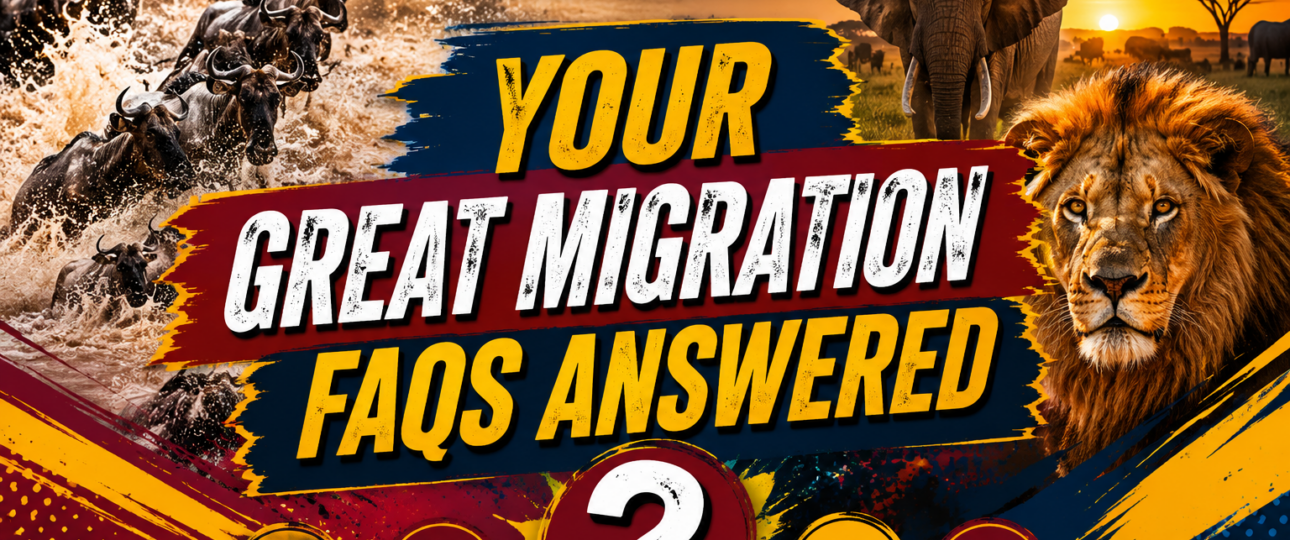
Great Migration FAQs (2026): 50+ Expert Answers About Kenya’s Wildebeest Migration
Planning a Great Migration safari? Discover answers to 50+ frequently asked questions about the Mara River crossings, best months, safari costs, wildlife, accommodation, and travel tips.
Great Migration FAQs (2026): 50+ Expert Answers About Kenya’s Wildebeest Migration–Mara Triangle Safaris
If you’re planning a Great Migration safari in Kenya, you’ve probably got plenty of questions and that’s completely normal.
After all,
witnessing the world’s greatest wildlife spectacle is a once-in-a-lifetime experience for many travelers.
From the best time to visit and where to see the famous Mara River crossings to how much a safari costs and..
what animals you can expect to see, there’s a lot to consider.
The good news?
You’re in the right place.
This comprehensive Great Migration FAQ answers the most common questions using insights…
from local safari experts who spend every season in the Mara Triangle,
helping you plan an unforgettable adventure with confidence
📚 Great Migration FAQs at a Glance
💡 Tip: Jump to the category that interests you most, or read through all 50 expert answers to plan your perfect Great Migration safari.
About the Great Migration
1. What is the Great Migration?
The Great Migration is the world’s largest land animal migration, involving more than 1.5 million wildebeest, alongside hundreds of thousands of zebras and gazelles, moving continuously between Tanzania’s Serengeti and Kenya’s Masai Mara in search of fresh grass and water.
But here’s what surprises many first-time visitors: the migration isn’t a single event or a one-way journey. Instead, it’s a year-round circular movement driven by rainfall and grazing conditions. As the seasons change, the animals instinctively follow the rains, creating one of nature’s most remarkable wildlife spectacles.
The highlight for many visitors is when the herds reach Kenya’s Mara Triangle, where they face the dramatic challenge of crossing the crocodile-filled Mara River between July and October.
2. Why does the Great Migration happen?
Simply put, the migration is all about survival.
The vast herds constantly search for nutritious grass and reliable water sources. As rainfall patterns shift across the Serengeti-Mara ecosystem, the animals move with them. This endless journey ensures they have enough food to sustain themselves while giving birth to the next generation.
And there’s more.
The migration also plays a vital role in maintaining the health of the ecosystem. By grazing different regions throughout the year, wildebeest naturally fertilize the land and help preserve the balance between grasslands, predators, and other wildlife species.
Without this incredible movement, East Africa’s ecosystem would look very different.
3. How many animals take part in the Great Migration?
The numbers are truly astonishing.
Every year, the migration includes approximately:
- Over 1.5 million wildebeest
- More than 400,000 zebras
- Around 300,000 Thomson’s gazelles
- Thousands of Grant’s gazelles, elands, topi, and other grazing animals
Together, these enormous herds create wildlife scenes unlike anywhere else on Earth. In some places, the lines of animals stretch all the way to the horizon, making it almost impossible to see where they begin or end.
It’s this sheer scale that makes the Great Migration in Kenya one of Africa’s most sought-after safari experiences.
4. Where does the Great Migration take place?
The migration takes place across the vast Serengeti-Mara ecosystem, which spans northern Tanzania and southwestern Kenya.
The journey typically begins in the southern Serengeti, where thousands of wildebeest calves are born between January and March. As the dry season approaches, the herds gradually move north through central and northern Serengeti before crossing into Kenya.
This is where the excitement reaches another level.
Between July and October, many of the herds arrive in the Mara Triangle and other parts of the Masai Mara National Reserve, where they encounter the legendary Mara River crossings before eventually returning south as the short rains begin.
5. What makes the Mara Triangle so special during the Great Migration?
If your dream is to experience the migration at its very best, the Mara Triangle deserves serious consideration.
Located on the western side of the Masai Mara ecosystem, the Mara Triangle is famous for its breathtaking landscapes, lower vehicle density, excellent wildlife management, and access to several major Mara River crossing points.
Here’s why many experienced safari travelers choose it:
- Fewer safari vehicles around wildlife sightings
- Outstanding opportunities to witness Mara River crossings
- Excellent populations of lions, leopards, cheetahs, elephants, crocodiles, buffalo, and black rhinos
- Spectacular scenery that’s ideal for wildlife photography
- Highly experienced local guides who understand animal movements and seasonal patterns
These advantages make the Mara Triangle one of Kenya’s premier destinations for a Great Migration safari, especially if you’re looking for a more exclusive and rewarding wildlife experience.
6. Is the Great Migration only about wildebeest?
Not at all—and this is one of the biggest misconceptions.
While wildebeest are undoubtedly the stars of the show, the migration creates extraordinary opportunities to see a wide variety of African wildlife.
During your safari, you could also encounter:
- Massive herds of zebras and gazelles
- Lions following the migrating animals
- Leopards resting in riverine forests
- Cheetahs hunting on the open plains
- Nile crocodiles waiting along the Mara River
- African elephants roaming the savannah
- Hippos inhabiting rivers and pools
- Buffalo, giraffes, hyenas, jackals, and countless bird species
In fact, many visitors leave talking just as much about the predators and other wildlife as they do about the migration itself.
7. Is the Great Migration worth seeing?
Absolutely.
Few wildlife experiences can match the scale, excitement, and unpredictability of the Great Migration. One moment you may be watching thousands of wildebeest grazing peacefully across the plains. The next, you’re witnessing a dramatic river crossing as crocodiles wait below and lions patrol the riverbanks.
Yet the migration isn’t only about action.
There are also peaceful moments—elephants feeding beneath acacia trees, giraffes browsing quietly, cheetahs scanning the horizon, and unforgettable African sunsets that remind you why the Masai Mara is considered one of the world’s greatest safari destinations.
If you’re looking for a safari that combines incredible wildlife, stunning scenery, and unforgettable memories, the Great Migration is one of the finest experiences you can have.
8. Can I book a Great Migration safari with local experts?
Yes—and doing so often makes all the difference.
Booking with experienced local operators means you’ll benefit from expert guides who spend the migration season tracking wildlife movements every day. They understand where the herds are gathering, which areas are most active, and how to position you for the best possible wildlife sightings while respecting conservation guidelines.
Whether you’re looking for an affordable Great Migration safari package from Nairobi, a tailor-made family adventure, or a luxury photography safari, local knowledge can significantly enhance your experience.
Most importantly, you’ll enjoy personalized service, flexible itineraries, and expert guidance from people who know the Mara Triangle better than anyone.
Timing & Seasons
9. When is the best time to see the Great Migration in Kenya?
If your goal is to witness the Great Migration in Kenya, the best time to visit is between July and October. During these months, millions of wildebeest, zebras, and gazelles move into the Masai Mara, creating unforgettable wildlife experiences across the Mara Triangle.
However, each month offers something unique. July marks the arrival of the first large herds, August is famous for dramatic Mara River crossings, September combines excellent wildlife viewing with slightly fewer crowds, while early October often provides fantastic sightings before the herds begin moving south again.
In short, if you want the best balance of wildlife, photography, and river crossings, plan your safari between late July and late September.
10. When do the wildebeest reach the Mara Triangle?
Most wildebeest begin arriving in the Mara Triangle during July, although the exact timing changes every year.
Here’s why.
The migration doesn’t follow a calendar—it follows the rain. If rainfall arrives earlier or later than expected, the herds adjust their movements accordingly. That’s why no two migration seasons are ever exactly the same.
By August, large numbers of wildebeest have usually entered Kenya, making the Mara Triangle one of Africa’s most exciting safari destinations.
💬 Chat on WhatsApp11. When do the famous Mara River crossings happen?
This is one of the questions every safari traveler asks.
The spectacular Mara River crossings generally occur between July and October, with the highest number of dramatic crossings taking place during August and September.
Even so, it’s important to understand that crossings cannot be scheduled.
Some days several crossings happen, while on others the herds may gather near the river for hours—or even days—before deciding to cross. This unpredictability is exactly what makes witnessing a crossing so thrilling.
Patience often rewards visitors with one of the greatest wildlife spectacles on Earth.
12. Can anyone predict a river crossing?
The honest answer is no.
Although experienced safari guides closely monitor herd movements and know the most active crossing points, nobody can accurately predict the exact day or time a crossing will happen.
Several factors influence herd behavior, including:
- Rainfall
- River water levels
- Predator activity
- Noise and movement within the herd
- Grazing conditions
Sometimes thousands of wildebeest gather at the riverbank before suddenly turning away. Other times they plunge into the river within minutes.
That’s part of the magic—you never know exactly when nature will put on its next incredible show.
13. Which month offers the highest chance of seeing a river crossing?
If witnessing a Mara River crossing is at the top of your bucket list, August generally offers the highest probability.
During August:
- Large herds have already reached Kenya.
- River crossings occur more frequently.
- Predator activity is at its peak.
- Wildlife concentrations are exceptional.
September is another excellent choice, especially if you’d like slightly quieter safari conditions while still enjoying fantastic migration sightings.
14. Is July too early for the Great Migration?
Not at all.
In fact, July is one of the most exciting months because it’s when anticipation begins building across the Masai Mara.
Early in the month, you’ll often see advancing herds entering Kenya. By mid to late July, river crossings may begin, particularly if weather conditions are favorable.
Another advantage?
Wildlife viewing is already outstanding, and you’ll enjoy excellent opportunities to see lions, elephants, cheetahs, giraffes, buffalo, and other iconic African animals.
15. Is October still a good month to visit?
Absolutely.
Although many people focus on August and September, early October can be one of the best-kept secrets for a Great Migration safari.
Many herds remain in the Mara Triangle, predator activity continues, and the landscape often looks greener following the first light rains.
Better still, visitor numbers typically begin to decline compared to the peak season, giving you a more relaxed safari experience while still enjoying excellent wildlife viewing.
16. How long does the Great Migration stay in Kenya?
The migration doesn’t arrive all at once—and it doesn’t leave all at once either.
Most herds spend approximately three to four months within Kenya before gradually returning south toward Tanzania as rainfall patterns change.
Because different herds move independently, wildlife viewing remains excellent throughout much of the migration season.
This means visitors arriving in late July, August, September, or early October all have excellent opportunities to experience different stages of the migration.
17. How many days should I stay for the best experience?
If you’re investing in a once-in-a-lifetime safari, it’s worth giving yourself enough time.
Here’s a useful guide:
- 3 days: Good introduction but limited flexibility.
- 4 days: Better wildlife viewing with more game drives.
- 5 days: The sweet spot for most visitors.
- 6–7 days: Excellent for photographers and wildlife enthusiasts.
- 8+ days: Ideal for combining multiple safari areas.
Many experienced guides recommend five days because it provides enough flexibility to follow herd movements and significantly improves your chances of witnessing a memorable Mara River crossing.
18. Should I book my Great Migration safari early?
Definitely.
The Great Migration is Kenya’s busiest safari season, and accommodation in prime wildlife areas often fills 12 to 18 months in advance.
Booking early gives you several advantages:
- Greater choice of camps and lodges
- Better package prices
- More availability for experienced guides
- Flexible travel dates
- Better chances of staying close to active migration areas
If you’re planning a Great Migration safari in 2026, the sooner you reserve your trip, the better your options are likely to be.
Wildlife & River Crossings
19. What animals can I see during the Great Migration?
The Great Migration is about much more than wildebeest. While over 1.5 million wildebeest dominate the landscape, they’re joined by hundreds of thousands of zebras and gazelles, creating one of the greatest wildlife spectacles on Earth.
But that’s only the beginning.
As you explore the Mara Triangle, you’ll also have excellent opportunities to see lions, leopards, cheetahs, elephants, giraffes, buffalo, hippos, Nile crocodiles, hyenas, jackals, warthogs, and more than 500 bird species.
In other words, a Great Migration safari in Kenya is one of the most rewarding wildlife experiences anywhere in Africa.
20. Will I see lions during the Great Migration?
Almost certainly.
The Masai Mara is famous for its healthy lion population, and the migration provides an abundance of prey. As millions of grazing animals move through the reserve, lion prides follow closely behind, taking advantage of the opportunity to hunt.
You may witness lions:
- Resting beneath acacia trees
- Stalking wildebeest across the plains
- Hunting zebras
- Feeding after a successful hunt
- Protecting their cubs near den sites
The Mara Triangle is widely regarded as one of the best places in Africa to see wild lions in their natural habitat.
💬 Chat on WhatsApp21. Where can I see crocodiles during the Great Migration?
One of the best places to see Nile crocodiles is the legendary Mara River.
Some of these enormous reptiles grow to more than five meters (16 feet) long and have waited patiently along the riverbanks for decades. During migration season, they become one of the most talked-about attractions as they lie in wait for animals attempting to cross.
Although crocodile attacks receive much attention, many wildebeest successfully make it across the river. Watching this dramatic interaction between predator and prey is an unforgettable part of any Great Migration safari.
22. Can I see elephants during the Great Migration?
Absolutely.
Large herds of African elephants live in the Mara Triangle throughout the year, so your chances of seeing them are excellent regardless of when you visit during the migration season.
You’ll often find elephants:
- Walking across the open plains
- Drinking from the Mara River
- Feeding beneath acacia trees
- Crossing seasonal streams
- Protecting playful calves within family groups
Seeing elephants sharing the landscape with thousands of migrating wildebeest creates spectacular photography opportunities and unforgettable safari memories.
23. Are leopards easy to spot?
Leopards are naturally elusive, but the Mara Triangle offers some of the best opportunities in Kenya to find them.
Unlike lions, leopards prefer solitude and spend much of the day resting in trees or hidden within riverine forests. Experienced local guides know where these secretive cats are frequently seen and often monitor recent sightings to improve your chances.
If you’re patient, you may even witness a leopard carrying its prey into a tree to protect it from hyenas and lions.
24. Can I see cheetahs during the Great Migration?
Yes—and the migration is one of the best times to do so.
Cheetahs thrive on the open plains where they can use their incredible speed to hunt gazelles and young wildebeest.
Unlike lions, cheetahs rely on daylight and open visibility to hunt, making early morning and late afternoon excellent times to search for them.
Watching the world’s fastest land animal sprint across the savannah is a safari highlight you’ll never forget.
25. Can I see rhinos during the Great Migration?
Yes, although sightings are less common than elephants or lions.
The Mara Triangle is one of the few areas within the greater Masai Mara where black rhinos are seen relatively regularly thanks to ongoing conservation efforts and effective protection by the Mara Conservancy.
Spotting one is always special because black rhinos are among Africa’s most endangered mammals.
If you’re fortunate enough to encounter one, your guide will ensure you observe it from a respectful distance without disturbing its natural behavior.
Book Your Great Migration Safari Today
Let our local safari experts create an unforgettable Great Migration adventure tailored to your budget. From affordable safaris from Nairobi to exclusive Mara Triangle experiences, we’ll help you enjoy Africa’s greatest wildlife spectacle.
🦁 Book Your Safari Now- ✔ Expert local guides who know where to find the wildlife.
- ✔ Comfortable budget accommodation in the Mara Triangle.
- ✔ Shared safari vehicles with guaranteed window seats.
- ✔ Flexible itineraries designed to maximize wildlife sightings.
Contact Mara Triangle Safaris
📱 WhatsApp: +254 705 635 886 | +254 768 212 702
✉️ Email: info@maratrianglesafaris.co.ke | deals@maratrianglesafaris.co.ke
26. Are hippos active during the migration?
Very much so.
Large pods of hippos spend most daylight hours submerged in the Mara River, sharing the water with crocodiles and migrating wildebeest.
As evening approaches, they leave the river to graze on nearby grasslands before returning at dawn.
Their enormous size, loud vocalizations, and surprisingly active behavior make them one of the Mara’s most fascinating animals to observe.
27. Which predators follow the Great Migration?
The migration attracts nearly every major predator in the ecosystem because it provides an abundance of food.
During your safari, you may encounter:
- African lions
- Leopards
- Cheetahs
- Nile crocodiles
- Spotted hyenas
- Black-backed jackals
- Bat-eared foxes
- Martial eagles and other birds of prey
This remarkable predator activity is one of the reasons the Great Migration in Kenya is considered one of the world’s greatest wildlife spectacles.
28. Is every game drive exciting during the Great Migration?
While every safari is different, the answer is usually yes.
One drive might include elephants bathing in the river, another could feature lions resting after a hunt, while the next may lead you to thousands of wildebeest gathering at a crossing point.
And here’s the beauty of it.
Even on quieter days, the scenery, birdlife, giraffes, zebras, antelopes, and breathtaking landscapes ensure there’s always something memorable to experience.
Nature doesn’t follow a schedule—but that’s exactly what makes every game drive unique.
29. Will I definitely see a Mara River crossing?
No safari company can honestly guarantee a river crossing.
The herds decide when—and if—to cross based on rainfall, water levels, predator pressure, and their own unpredictable behavior.
However, staying for five days or more with experienced local guides greatly improves your chances because you’ll have more opportunities to visit active crossing points as herd movements change.
Remember, even if you don’t witness a crossing, the migration offers extraordinary wildlife viewing every single day.
30. Why is the Mara Triangle one of the best places for wildlife viewing?
The Mara Triangle combines everything safari travelers hope for.
You’ll enjoy abundant wildlife, stunning landscapes, excellent conservation, knowledgeable local guides, and lower vehicle density than many other parts of the reserve.
That means more relaxed wildlife encounters, better photography opportunities, and a more authentic safari experience.
Whether you’re hoping to see lions, elephants, crocodiles, leopards, cheetahs, black rhinos, or the spectacular Great Migration, the Mara Triangle consistently ranks among Kenya’s finest wildlife destinations.
💬 Chat on WhatsAppSafari Planning & Booking
31. How many days do I need for a Great Migration safari?
One of the most common questions travelers ask is how long they should stay. While it’s possible to enjoy the Great Migration in just a few days, giving yourself more time significantly improves your overall experience.
Here’s a simple guide:
- 3 days: Perfect if you’re short on time but expect a fast-paced itinerary.
- 4 days: A good balance between wildlife viewing and budget.
- 5 days: The sweet spot for most visitors and our recommended itinerary.
- 6–7 days: Excellent for photographers and wildlife enthusiasts.
- 8+ days: Ideal if you’d like to combine the Mara Triangle with other Kenyan safari destinations.
If witnessing a Mara River crossing is your main goal, a five-day Great Migration safari offers the best balance between time, value, and flexibility.
32. Should I drive or fly from Nairobi?
The answer depends on your budget, schedule, and travel style.
A road safari from Nairobi is the most affordable option and allows you to enjoy Kenya’s changing landscapes along the way. The journey typically takes five to six hours.
A fly-in safari, on the other hand, takes approximately 45 to 60 minutes and maximizes your time in the reserve.
Choose a road safari if you:
- Want the most affordable package
- Enjoy road trips
- Have flexible travel time
Choose a fly-in safari if you:
- Want more time for game drives
- Prefer greater comfort
- Are celebrating a honeymoon or special occasion
Both options offer incredible wildlife experiences once you arrive in the Mara Triangle.
33. What is included in a Great Migration safari package?
Although packages vary slightly, most Great Migration safari packages include everything you need for a stress-free adventure.
Typical inclusions are:
- Accommodation
- Game drives
- Professional safari guide
- Safari vehicle
- Meals
- Bottled drinking water
- Park entry arrangements
- Airport or hotel transfers where applicable
Some packages also include domestic flights, cultural village visits, bush breakfasts, sundowners, or hot air balloon safaris.
Before booking, always check exactly what’s included so there are no surprises.
34. How much does a Great Migration safari cost?
The cost depends on several factors, including travel dates, accommodation, transport, and the length of your safari.
Generally speaking:
- Budget safaris offer excellent value using comfortable tented camps.
- Mid-range safaris combine comfort with outstanding wildlife experiences.
- Luxury safaris include premium lodges, fly-in transfers, and exclusive services.
Traveling during peak migration season usually costs more because accommodation demand is highest.
Booking early often gives you access to better prices and a wider choice of camps.
35. Are affordable Great Migration safari packages available?
Absolutely.
You don’t need to spend a fortune to enjoy the Great Migration.
Many travelers choose affordable Great Migration safari packages from Nairobi, which combine road transfers with comfortable camps and professionally guided game drives.
These packages still provide excellent opportunities to witness:
- Mara River crossings
- Lions
- Elephants
- Cheetahs
- Leopards
- Crocodiles
- Thousands of migrating wildebeest
Affordable doesn’t mean compromising on unforgettable wildlife experiences.
36. When should I book my safari?
The earlier, the better.
The Great Migration is Kenya’s busiest safari season, and many popular camps begin filling up 12 to 18 months before arrival.
Booking early gives you:
- Better accommodation choices
- More competitive prices
- Preferred travel dates
- Greater itinerary flexibility
- Access to experienced guides
If you’re planning a safari during August or September, securing your reservation well in advance is strongly recommended.
37. Which accommodation should I choose?
The right accommodation depends on your budget and travel style.
You can choose from:
- Budget tented camps
- Mid-range safari camps
- Luxury tented lodges
- Boutique safari camps
- Exclusive private camps
Many visitors prefer staying inside or close to the Mara Triangle, allowing quicker access to prime wildlife viewing areas and major Mara River crossing locations.
Choosing accommodation near the migration can reduce travel time and maximize your game drives.
38. Is the Mara Triangle better than other parts of the Masai Mara?
Many experienced safari travelers believe so.
The Mara Triangle is renowned for:
- Lower vehicle density
- Outstanding wildlife sightings
- Excellent conservation management
- Beautiful landscapes
- Well-maintained roads
- Access to famous river crossing points
These advantages create a more peaceful and rewarding safari experience, especially during the busy migration season.
For visitors seeking exceptional wildlife with fewer crowds, the Mara Triangle is often the preferred choice.
39. Can I customize my Great Migration safari?
Yes.
One of the biggest advantages of booking with a local safari company is flexibility.
Your itinerary can usually be customized to include:
- More game drives
- Luxury or budget accommodation
- Family-friendly schedules
- Photography-focused safaris
- Birdwatching
- Cultural experiences
- Hot air balloon safaris
- Nairobi excursions
- Beach extensions after your safari
A tailor-made itinerary ensures your safari matches both your interests and your budget.
40. Why book with local safari experts?
Here’s where local knowledge makes a real difference.
Experienced guides spend every migration season tracking wildlife movements throughout the Mara Triangle. They understand changing weather patterns, active river crossings, predator behavior, and the best locations for unforgettable sightings.
By booking with local experts, you’ll benefit from:
- Personalized safari planning
- Up-to-date migration information
- Experienced professional guides
- Flexible itineraries
- Excellent local knowledge
- Outstanding customer support before and during your trip
Most importantly, you’ll have a team committed to helping you experience the very best of the Great Migration in Kenya.
💬 Chat on WhatsAppTravel Tips, Photography & Family FAQs
41. Is the Great Migration safe for tourists?
Yes, the Great Migration is considered very safe for visitors when you travel with a licensed safari operator and follow your guide’s instructions. Professional guides are trained to read animal behavior, maintain safe viewing distances, and position safari vehicles responsibly.
That said, remember that you’re visiting a wild environment. Always stay inside your safari vehicle unless your guide tells you it’s safe to get out, avoid feeding wildlife, and follow park regulations at all times. By respecting nature and listening to your guide, you’ll enjoy an exciting and safe Great Migration safari in Kenya.
42. Can children go on a Great Migration safari?
Absolutely. The Great Migration is an incredible experience for families and children with an interest in wildlife and nature.
Many safari camps welcome families and offer larger tents, family rooms, and child-friendly activities. Children often enjoy spotting elephants, lions, giraffes, zebras, and hippos while learning about Africa’s unique ecosystems.
If you’re traveling with young children, choose a family-friendly itinerary with shorter game drives and comfortable accommodation to ensure everyone has an enjoyable experience.
43. What should I pack for a Great Migration safari?
Packing smart will make your safari much more comfortable.
Essentials include:
- Neutral-colored clothing (khaki, olive green, beige)
- Lightweight long-sleeved shirts
- Comfortable walking shoes
- A warm fleece or jacket for early morning drives
- Wide-brimmed hat
- Sunglasses
- Sunscreen
- Insect repellent
- Camera and extra memory cards
- Binoculars
- Power bank
- Personal medications
A small soft-sided bag is often recommended, especially if you’re taking a domestic flight to the Mara Triangle.
44. Which camera is best for photographing the Great Migration?
You don’t need expensive equipment to capture incredible safari memories, but having the right camera certainly helps.
Many photographers use DSLR or mirrorless cameras paired with telephoto lenses between 100–400 mm or 200–600 mm for wildlife.
If you’re using a smartphone, don’t worry. Modern phones take excellent landscape and close-range wildlife photos, especially during the golden light of early morning and late afternoon.
The most important ingredient isn’t your camera—it’s patience.
45. Can I use a drone during my safari?
No.
Drone flights are generally prohibited within the Masai Mara National Reserve and the Mara Triangle unless you have special authorization from the relevant authorities.
The restrictions help protect wildlife from unnecessary disturbance and preserve the natural safari experience for everyone.
Instead, enjoy capturing the migration from ground level, where many of Africa’s most iconic wildlife photographs are taken.
46. What is the weather like during the Great Migration?
The migration season generally coincides with Kenya’s dry season, making it one of the best times for wildlife viewing.
Typical conditions include:
- Cool mornings
- Warm, sunny afternoons
- Clear skies
- Minimal rainfall during July and August
- Occasional short showers from late September into October
Temperatures are usually comfortable throughout the day, making game drives enjoyable from sunrise until sunset.
47. Will I have mobile phone coverage and internet?
Yes, although coverage varies depending on your location.
Most safari camps provide Wi-Fi in their main lounge or reception areas, and mobile networks cover many parts of the Masai Mara.
However, signal strength can be weaker in remote areas of the Mara Triangle.
Many visitors actually enjoy disconnecting for a few days and fully immersing themselves in the incredible wildlife experience.
48. What makes the Mara Triangle different from other safari destinations?
The Mara Triangle offers a unique combination of spectacular wildlife, exceptional conservation, and fewer safari vehicles compared to many other parts of the reserve.
Visitors appreciate:
- Outstanding Great Migration sightings
- Lower vehicle density
- Expert local guides
- Excellent road network
- Beautiful landscapes
- Reliable sightings of lions, elephants, crocodiles, cheetahs, leopards, and black rhinos
These qualities make the Mara Triangle one of Kenya’s premier safari destinations for both first-time visitors and seasoned wildlife enthusiasts.
49. What is the biggest mistake travelers make when planning a Great Migration safari?
The most common mistake is waiting too long to book.
Because the Great Migration is one of Africa’s most popular wildlife events, the best camps, experienced guides, and preferred travel dates often sell out months in advance.
Another mistake is trying to fit everything into a very short itinerary. While three days can provide a fantastic introduction, staying five days or longer gives you much more flexibility to follow herd movements, enjoy relaxed game drives, and increase your chances of witnessing a spectacular Mara River crossing.
Planning ahead almost always leads to a better safari experience.
50. What’s the best way to experience the Great Migration?
The best way to experience the Great Migration is to combine excellent planning with expert local knowledge.
Choose a safari that gives you enough time in the Mara Triangle, travel during the peak migration season between July and October, stay in accommodation close to the wildlife, and explore with experienced local guides who understand herd movements and animal behavior.
Most importantly, come with realistic expectations. Nature is wonderfully unpredictable, and every safari is different. Whether you witness a dramatic river crossing, a pride of lions on the hunt, a herd of elephants at sunset, or thousands of wildebeest stretching across the plains, you’ll leave with memories that last a lifetime.
If you’re ready to experience one of the world’s greatest wildlife spectacles, Mara Triangle Safaris can help you plan a tailor-made Great Migration safari that matches your interests, travel style, and budget. From affordable Great Migration safari packages from Nairobi to customized luxury adventures, you’ll be guided by local experts who know the Mara Triangle inside and out. Your unforgettable Kenyan safari begins here.
Final Thoughts
Planning a Great Migration safari doesn’t have to be complicated. With the right information and guidance from experienced local safari experts, you can confidently choose the best time to visit, the ideal safari package, and the perfect place to stay. Whether you’re dreaming of watching thousands of wildebeest cross the Mara River, photographing lions on the hunt, spotting elephants beneath acacia trees, or simply soaking in the beauty of the Mara Triangle, the experience is unlike anything else on Earth.
The key is to plan ahead, allow enough time for game drives, and travel with knowledgeable guides who understand the ever-changing movements of the migration. Every safari is unique, and while nature never follows a script, that’s exactly what makes each day so exciting.
If you’re ready to experience one of Africa’s greatest wildlife spectacles, Mara Triangle Safaris is here to help. From affordable Great Migration safari packages from Nairobi to tailor-made luxury adventures, our local experts will help you create an unforgettable journey that’s perfectly suited to your interests, schedule, and budget.
Your Great Migration adventure starts here.
📖 Continue Exploring the Great Migration
Ready to Experience Africa’s Greatest Wildlife Spectacle?
You’ve planned the journey—now it’s time to make it happen. Whether you’re dreaming of the legendary Mara River crossings, incredible Big Cat encounters, or unforgettable wildlife photography in the Mara Triangle, our local safari experts are here to create a safari that’s perfectly tailored to you. From affordable packages to luxury adventures, we’ll help you experience the Great Migration at its absolute best.
- ✔ Local safari experts with years of Mara Triangle experience.
- ✔ Affordable, mid-range, and luxury Great Migration safari packages.
- ✔ Comfortable accommodation carefully selected for location and value.
- ✔ Professional guides who maximize your chances of unforgettable wildlife sightings.
- ✔ Flexible itineraries tailored to your travel style and budget.
- ✔ Personalized support before, during, and after your safari.
📱 WhatsApp: +254 705 635 886 | +254 768 212 702
✉️ Email: info@maratrianglesafaris.co.ke | deals@maratrianglesafaris.co.ke