
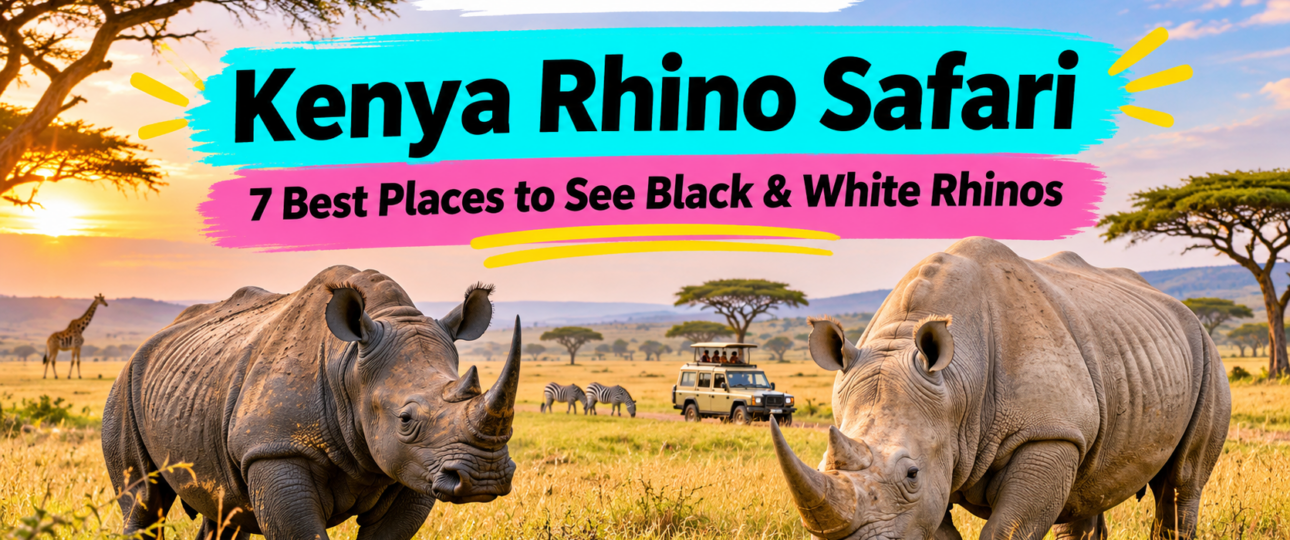
Kenya Rhino Safari: 7 Best Places to See Black & White Rhinos
Kenya Rhino Safari: 7 Best Places to See Black & White Rhinos
Seeing a rhino in the wild can become one of the most memorable moments of a Kenya safari.
But rhinos are not evenly distributed across Kenya’s safari parks. Some destinations have dedicated protected sanctuaries, while in other areas rhinos roam across enormous landscapes and can be much harder to locate.
If rhinos are high on your wildlife wish list, choosing the right destination matters.
This Kenya rhino safari guide compares seven of the best places to look for black and white rhinos, including Ol Pejeta, Lewa-Borana, Lake Nakuru, Meru, Tsavo West, Nairobi National Park and Loisaba.
Where is the best place to see rhinos in Kenya?
For travelers whose main priority is rhinos, Ol Pejeta Conservancy, Lewa-Borana, Lake Nakuru National Park and Meru National Park are among the strongest options.
Ol Pejeta combines major black-rhino conservation with southern white rhinos and the world’s last two northern white rhinos. Lake Nakuru is especially convenient for travelers following a Rift Valley itinerary.
However, all rhinos are wild animals. No ethical safari operator can guarantee a sighting.
🦏 Want Rhinos to Be a Priority on Your Kenya Safari?
Tell Mara Triangle Safaris that rhinos are high on your wildlife list. We can build an itinerary around strong rhino destinations while still including elephants, predators, rare northern species and different landscapes.
Plan My Rhino Safari →Black Rhino vs White Rhino: What Is the Difference?
Black Rhino
Black rhinos are generally more associated with browsing. Their upper lip is pointed and hooked, helping them pull leaves and twigs from shrubs.
- Usually smaller than white rhinos.
- Often found in thicker bush.
- Can be more difficult to spot.
- Critically endangered.
White Rhino
White rhinos are generally larger and have a broad, square-shaped mouth adapted for grazing grass.
- Often use more open grassland.
- Can sometimes occur in small groups.
- Usually easier to photograph in open areas.
- Kenya protects important southern white rhino populations.
7 Best Places for a Kenya Rhino Safari
1. Ol Pejeta Conservancy — Best Overall Rhino Safari
For many travelers, Ol Pejeta Conservancy is the strongest all-round rhino destination in Kenya.
Located in Laikipia, Ol Pejeta is one of East Africa’s most important black-rhino strongholds. It protects both black and southern white rhinos and is also home to Najin and Fatu, the world’s last two northern white rhinos.
Ol Pejeta works particularly well for visitors who want rhinos but do not want the entire safari to revolve around a single species.
The conservancy also supports:
- Lions.
- Elephants.
- Buffalo.
- Leopards.
- Cheetahs.
- Grevy’s zebra.
- Giraffes.
- Wild dogs.
Another major attraction is the Sweetwaters Chimpanzee Sanctuary, which makes Ol Pejeta especially appealing to families and conservation-focused travelers.
First-time rhino safaris, families, conservation travelers and visitors wanting both rhinos and the Big Five.
Explore our Ol Pejeta Conservancy Guide or compare it with Lewa in our Ol Pejeta vs Lewa Safari Guide .
2. Lewa-Borana — Best for Private Conservation Safari
The connected Lewa-Borana landscape is one of Kenya’s greatest rhino conservation success stories.
Lewa reports that the combined landscape now protects more than 280 rhinos, with both black and white rhinos present.
The landscape is also important for endangered Grevy’s zebra and offers excellent opportunities to see:
- Elephants.
- Lions.
- Buffalo.
- Giraffes.
- Grevy’s zebra.
- Rhinos.
Because much of the experience takes place within private conservancy land, travelers may find fewer vehicles around wildlife than in some busy national parks.
Luxury safari travelers, couples, photographers and visitors interested in conservation-led tourism.
Explore Lewa Wildlife Conservancy and our Laikipia Safari Guide .
3. Lake Nakuru National Park — Best Rhino Stop on a Rift Valley Safari
Lake Nakuru is one of the easiest rhino destinations to add to a classic road itinerary from Nairobi.
The park became Kenya’s first government-managed rhino sanctuary in 1987 and today protects both black and white rhinos.
Its relatively compact size can make wildlife searching feel more focused than in Kenya’s enormous wilderness parks.
Beyond rhinos, Lake Nakuru offers:
- Buffalo.
- Giraffes.
- Lions.
- Leopards.
- Waterbuck.
- Baboons.
- Approximately 450 recorded bird species.
- Scenic viewpoints.
- Makalia Falls.
Short Kenya safaris, families, Rift Valley itineraries and travelers combining Naivasha and Nakuru.
Read our Lake Nakuru National Park Guide and Lake Nakuru vs Lake Naivasha comparison .
4. Meru National Park — Best for Rhinos Without the Crowds
Meru is one of the most underrated rhino destinations in Kenya.
Kenya Wildlife Service reports that the park’s dedicated 44-square-kilometre rhino sanctuary protects more than 150 black and white rhinos.
That is impressive on its own, but Meru’s real advantage is that the rhino experience sits inside a much larger, wild and relatively quiet national park.
You can also search for:
- Elephants.
- Lions.
- Buffalo.
- Leopards.
- Grevy’s zebra.
- Reticulated giraffe.
- Gerenuk.
- Beisa oryx.
Experienced safari travelers, photographers and visitors who want rhinos with fewer vehicles around them.
Explore Meru National Park or read our Meru vs Samburu comparison .
5. Tsavo West National Park — Best for Rhino Conservation Scale
Tsavo West has become one of the most important rhino conservation landscapes in Africa.
In September 2026, Kenya expanded the protected rhino sanctuary to approximately 3,200 square kilometres.
The larger landscape gives eastern black rhinos much more room to breed, establish territories and move naturally.
But travelers need realistic expectations.
A huge protected landscape is excellent for conservation, yet it can make individual rhinos harder to find.
Tsavo West therefore works best for travelers who want:
- Rhino conservation.
- Elephants.
- Big Five wildlife.
- Mzima Springs.
- Volcanic scenery.
- Shetani Lava Flow.
- A larger wilderness experience.
Wilderness lovers, repeat safari travelers and visitors combining safari with Kenya’s coast.
Read our Tsavo West National Park Safari Guide .
6. Nairobi National Park — Best for a Short Rhino Safari
You do not need a long multi-day journey to look for rhinos in Kenya.
Nairobi National Park, just outside the capital, has long played an important role in protecting endangered rhinos.
Kenya Wildlife Service lists both black and white rhinos among the species protected within the park.
The biggest advantage is accessibility.
Travelers can take a morning game drive and still return to a Nairobi hotel, airport transfer or another activity later in the day.
Other wildlife includes:
- Lions.
- Buffalo.
- Giraffes.
- Zebra.
- Hyenas.
- Antelope.
- More than 400 recorded bird species.
Layovers, short stays, business travelers, families and anyone with only half a day or one day available.
Read our Nairobi National Park Day Trip Guide .
7. Loisaba Conservancy — Best Emerging Rhino Destination
Loisaba is becoming one of the most interesting new rhino destinations in Laikipia.
The 58,000-acre conservancy now contains a secure 45,000-acre rhino sanctuary.
Black rhinos were reintroduced as part of Kenya’s national rhino recovery programme, and southern white rhinos were later added.
The conservancy now protects both species, making it a valuable new addition to Kenya’s rhino tourism map.
Loisaba is particularly attractive because rhinos are only one part of the experience.
The wider landscape supports:
- Elephants.
- Lions.
- Leopards.
- Wild dogs.
- Grevy’s zebra.
- Reticulated giraffes.
- Excellent scenery.
Conservation travelers, luxury safari visitors and people who have already visited Kenya’s better-known parks.
Loisaba fits naturally into a wider itinerary using our Laikipia Safari Guide .
Kenya Rhino Safari Comparison
| Destination | Rhino Experience | Best For | Suggested Stay |
|---|---|---|---|
| Ol Pejeta | Black, southern white and northern white rhinos | Best overall | 2–3 nights |
| Lewa-Borana | Strong black and white rhino population | Luxury and conservation | 2–3 nights |
| Lake Nakuru | Black and white rhinos | Rift Valley road safari | 1–2 nights |
| Meru | Large protected rhino sanctuary | Quiet wilderness | 2–3 nights |
| Tsavo West | Major eastern black rhino landscape | Conservation and wilderness | 2–3 nights |
| Nairobi National Park | Black and white rhinos | Half-day or one-day safari | Half day–1 day |
| Loisaba | Black and southern white rhinos | New conservation safari | 2–3 nights |
Which Rhino Destination Should You Choose?
| Your Priority | Best Match |
|---|---|
| Most complete rhino experience | Ol Pejeta |
| Luxury private conservancy | Lewa-Borana |
| Short Rift Valley itinerary | Lake Nakuru |
| Fewer crowds | Meru |
| Large wilderness | Tsavo West |
| Only one day available | Nairobi National Park |
| Emerging conservation destination | Loisaba |
Can You Guarantee a Rhino Sighting?
No.
Rhinos are wild animals, and sightings depend on:
- Vegetation.
- Weather.
- Animal movement.
- Time of day.
- Size of the protected area.
- Tracking information available to guides.
Some fenced or intensively monitored sanctuaries can improve your chances, but responsible guides should never promise a guaranteed wild-rhino sighting.
Best Time for a Kenya Rhino Safari
Rhinos can be seen throughout the year.
The dry seasons can make some wildlife easier to locate because vegetation may be lower and animals may concentrate around reliable water sources.
However, the green seasons can offer:
- Beautiful landscapes.
- Excellent photography.
- Fewer visitors in some areas.
- Young wildlife.
- Strong birding.
What is the best month to see rhinos in Kenya?
There is no single rhino month.
Your choice of destination is usually more important than the month. Rhinos live in these protected landscapes throughout the year.
Kenya Rhino Safari for Families
A rhino-focused itinerary can work extremely well for families, especially when the journey includes different activities rather than repeated long game drives.
Strong family combinations include:
- Ol Pejeta + Lake Naivasha.
- Lake Nakuru + Naivasha.
- Nairobi National Park + Ol Pejeta.
- Lewa + Samburu.
- Meru + Samburu.
Parents can also read our Kenya Safari With Kids Guide .
Best Rhino Safari Itineraries
3-Day Short Rhino Safari
Nairobi → Lake Nakuru → Lake Naivasha → Nairobi
Ideal for travelers with limited time who want rhinos, boat safaris and Rift Valley scenery.
5-Day Conservation Safari
Nairobi → Ol Pejeta → Laikipia → Nairobi
Best for travelers who want rhinos, chimpanzees, conservation experiences and northern wildlife.
7-Day Northern Kenya Rhino Safari
Nairobi → Ol Pejeta → Lewa → Samburu → Nairobi
This combines strong rhino viewing with the Special Five, elephants and classic northern Kenya landscapes.
7-Day Quiet Wilderness Safari
Nairobi → Meru → Ol Pejeta → Aberdare → Nairobi
A good choice for travelers who want less crowded safari regions.
7-Day Coast & Rhino Safari
Kenyan Coast → Tsavo West → Amboseli → Nairobi
Combines a beach holiday, the expanded Tsavo rhino landscape, elephants and Kilimanjaro scenery.
What Else Can You Combine With a Rhino Safari?
For elephants and Kilimanjaro views, add Amboseli National Park .
For the Special Five and northern Kenya scenery, add our Samburu Safari Guide .
For walking, boat safaris and hippos, add the Lake Naivasha Safari Guide .
For a safari that avoids relying on Masai Mara, explore our Kenya Safari Without Masai Mara Guide .
Rhino Safari Photography Tips
- Carry a telephoto lens rather than asking the guide to get too close.
- Photograph rhinos at eye level where safe and possible from the vehicle.
- Look for environmental images that show the rhino inside its habitat.
- Early morning and late afternoon usually provide softer light.
- Do not request that a guide block an animal’s path.
- Never leave your vehicle unless you are in an area where walking is specifically permitted.
How Much Does a Kenya Rhino Safari Cost?
The price depends on the destination, transport, accommodation and whether you use public parks or private conservancies.
Major cost factors include:
- Park or conservancy fees.
- Private safari vehicle.
- Accommodation level.
- Road versus fly-in transport.
- Number of travelers.
- Length of stay.
- Private conservation experiences.
Read our Kenya & Tanzania Safari Cost Guide for broader budgeting advice.
Continue Planning Your Kenya Safari
Kenya Rhino Safari FAQs
Where is the best place to see rhinos in Kenya?
Ol Pejeta, Lewa-Borana, Lake Nakuru and Meru are among the strongest rhino safari destinations. The best choice depends on your route, budget and the rest of your Kenya itinerary.
Where can you see black rhinos in Kenya?
Black rhinos occur in protected landscapes including Ol Pejeta, Lewa-Borana, Lake Nakuru, Meru, Tsavo, Nairobi National Park, Loisaba and other conservation areas.
Where can you see white rhinos in Kenya?
Southern white rhinos can be seen in several protected areas including Ol Pejeta, Lewa-Borana, Lake Nakuru, Meru, Nairobi National Park and Loisaba.
Where are the last northern white rhinos?
The last two known northern white rhinos, Najin and Fatu, live under protection at Ol Pejeta Conservancy in Kenya.
Can you see rhinos at Lake Nakuru?
Yes. Lake Nakuru is an important sanctuary for both black and white rhinos and is one of the easiest rhino destinations to include on a Rift Valley road safari.
Can you see rhinos in Nairobi National Park?
Yes. Nairobi National Park protects rhinos and is one of the most practical places for travelers with only a few hours or one day available.
Can you see rhinos in Meru National Park?
Yes. Meru has a dedicated rhino sanctuary protecting both black and white rhinos.
Does Tsavo West have rhinos?
Yes. Tsavo West protects eastern black rhinos and its rhino sanctuary was significantly expanded in 2026. The large wilderness can make sightings less predictable.
Are rhino sightings guaranteed?
No. Rhinos are wild animals and no responsible safari operator should guarantee a sighting.
What is the difference between black and white rhinos?
Black rhinos generally have a pointed, hooked upper lip for browsing shrubs, while white rhinos have a broader square mouth adapted for grazing grass. Both species are grey in colour.
How many days do you need for a rhino safari?
Two or three nights in a strong rhino destination such as Ol Pejeta, Lewa or Meru usually provides a relaxed experience. Lake Nakuru or Nairobi National Park can be visited on shorter itineraries.
Is a Kenya rhino safari good for children?
Yes. Destinations such as Ol Pejeta, Lake Nakuru and Nairobi National Park work especially well for families, particularly when combined with varied activities.
Can Mara Triangle Safaris arrange a rhino-focused safari?
Yes. Mara Triangle Safaris can build private Kenya itineraries around Ol Pejeta, Lewa, Lake Nakuru, Meru, Laikipia, Tsavo and other rhino conservation areas.
Final Answer: Where Should You Go for a Kenya Rhino Safari?
If seeing rhinos is one of your biggest safari priorities, do not leave the experience entirely to chance.
Build your itinerary around a destination where rhino conservation is a major part of the landscape.
Ol Pejeta is our strongest all-round choice because it combines black rhinos, southern white rhinos, the last northern white rhinos and a wider Big Five safari.
Lewa-Borana is excellent for a private conservation-focused safari, while Lake Nakuru is easy to include on a Rift Valley route.
For travelers wanting fewer crowds, Meru is one of Kenya’s most underrated choices.
And following the major 2026 expansion, Tsavo West has become even more important to the future of eastern black rhino conservation.
The best safari is not about collecting sightings. It is about spending enough time in the right habitat, with a knowledgeable guide, while respecting the animals and the conservation work that keeps them safe.
🦏 Plan a Kenya Rhino Safari With Mara Triangle Safaris
Tell us whether your priority is black rhinos, white rhinos, family travel, photography, luxury conservancies or a wider Kenya wildlife itinerary.
We can combine the strongest rhino destinations with Samburu, Amboseli, Lake Naivasha, Aberdare, Tsavo and other Kenya safari regions.
Start Planning My Rhino Safari →