
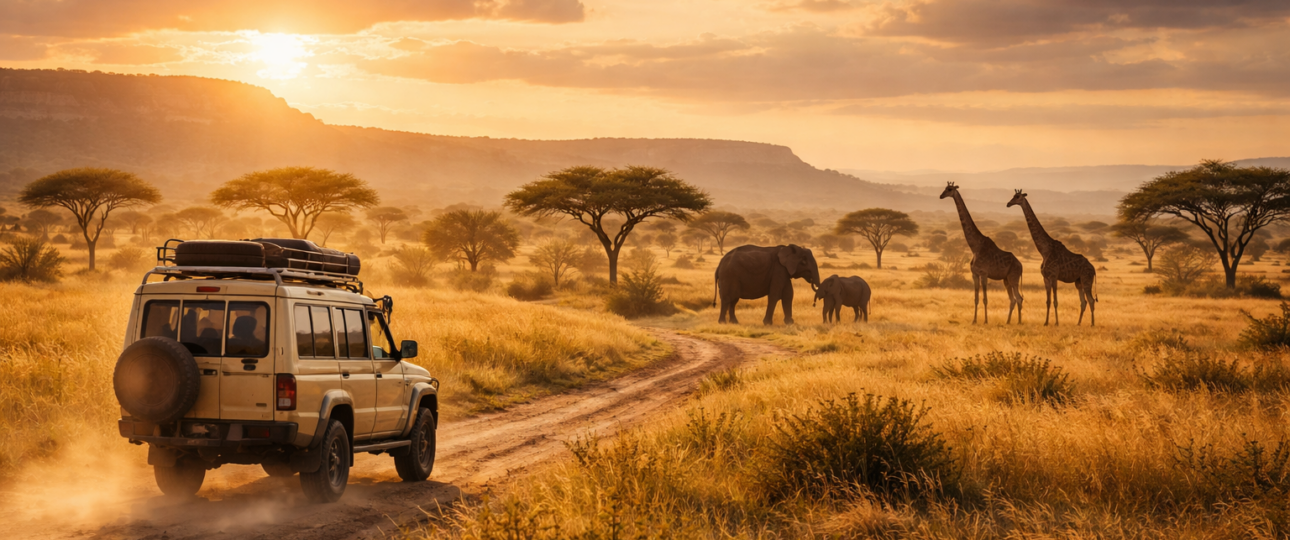
Self-Drive Safari Masai Mara (2026): Complete Guide + Map Tips for First-Time Visitors
Planning a self-drive safari in the Masai Mara? Our 2026 guide covers routes, costs, vehicle requirements, navigation tips, and safety advice. Start your adventure the right way.
“`htmlKey Takeaways
- A self-drive safari gives you freedom and flexibility – but only if you’re prepared. Navigation, road conditions, and wildlife spotting are your biggest challenges.
- The Mara Triangle is the best zone for self-drive, with better roads, clearer boundaries, and fewer crowds.
- You need a 4×4 vehicle – a normal car won’t survive the tracks. Rent a Land Cruiser or safari van.
- Download offline maps and carry a printed backup – Google Maps often fails inside the reserve.
- Stay in your vehicle at all times, carry extra fuel, and inform your lodge of your plans. The Mara is wild.
Self-Drive Safari Masai Mara 2026: Complete Guide + Map Tips | Mara Triangle Safaris
Right then. You’re thinking about doing it yourself.
Driving through the Masai Mara in your own vehicle. No guide. No schedule. Just you, the savannah, and the wildlife.
Sounds incredible because it is.
But here’s the reality: the Masai Mara is not your typical road trip. The roads are rough. Navigation is tricky. And the wildlife doesn’t follow a map.
We’ve guided thousands of travellers and seen plenty of self-drivers succeed – and some struggle. This guide gives you everything you need to plan a safe, efficient, and unforgettable self-drive safari. Routes, maps, costs, vehicle advice, and insider tips.
Let’s get you ready to hit the tracks. 🚙
Is a Self-Drive Safari in Masai Mara Worth It?
Yes – but only if you’re prepared.
| Pros | Cons |
|---|---|
| Full freedom to explore at your own pace | Navigation can be confusing |
| Lower cost than guided safaris | Limited wildlife tracking knowledge |
| Flexible schedule – stop where you want | Rough road conditions |
| Sense of adventure and accomplishment | Higher risk of getting lost or stuck |
For experienced travellers who enjoy a challenge, a self-drive safari is an incredible adventure. For first‑time Africa visitors or those who want maximum wildlife sightings, a guided safari often makes more sense.
Pro Tip: If you’re unsure, consider a mix
book a guided safari for a day or two,
then use a self-drive vehicle for exploring on your own terms.
“Speak to a Safari Expert Today”
📩 info@maratrianglesafaris.co.ke
📞 +254 705 635 886 / +254 768 212 702
👉 Fast responses. Trusted advice. Stress-free planning.
Best Areas for Self-Drive in Masai Mara
Not all parts of the reserve are equally suited for self-drive.
1. Mara Triangle (BEST OPTION)
The Mara Triangle is the most recommended zone for self-drive.
- Why? Clearly defined boundaries, better road conditions, fewer crowds, and easier navigation.
- Entry gate: Oloololo Gate.
- Tip: The Mara Triangle has a single entry gate and a simple road network – it’s hard to get lost.
👉 If you’re new to self-drive safaris, start here.
2. Central Masai Mara
This area has higher wildlife density but a more complex network of tracks.
- Why? You’re close to the main action, but you need better navigation skills.
- Entry gates: Talek Gate or Sekenani Gate.
- Tip: Stick to main tracks and use landmarks (rivers, hills) to orient yourself.
Avoid the eastern sector near the Olare Orok Conservancy boundary
the tracks there can be confusing and
often lead to dead ends.
Entry Gates for Self-Drive Safaris
Your gate choice depends on where you’re staying.
| Gate | Location | Best For |
|---|---|---|
| Oloololo Gate | Western side, Mara Triangle access | Self-drivers staying in the Mara Triangle |
| Talek Gate | Central-east | Access to central and eastern areas |
| Sekenani Gate | South-east | Main entrance for most lodges outside the reserve |
Pro Tip: If you’re staying in the Mara Triangle,
use Oloololo Gate.
It’s well‑marked and gives you direct access to the best‑maintained roads.
Best Vehicles for a Self-Drive Safari
You cannot use a normal car here.
The roads inside the reserve are unpaved, often muddy, and can be rutted. A standard sedan will get stuck or damaged.
Recommended vehicles:
- 4×4 Land Cruiser (preferred)
- 4×4 Safari Van (common rental in Kenya)
- High‑clearance 4×4 SUV (e.g., Toyota Land Cruiser Prado, Nissan Patrol)
Avoid:
- Small cars (Toyota Vitz, Honda Fit, etc.)
- 2WD vehicles
- Low‑clearance vehicles
Rent from a reputable company in Nairobi or Narok.
Ask specifically for a vehicle with high ground clearance and
a spare tyre in good condition.
Self-Drive Safari Costs (Breakdown)
| Item | Estimated Cost | Notes |
|---|---|---|
| Vehicle rental | $80–$200 per day | 4×4 Land Cruiser or safari van; longer rentals often cheaper per day |
| Park fees (non‑resident) | $80–$100 per day | Per person; payable at the gate or online in advance |
| Fuel | Variable | Expect to drive 100–200 km per day inside the reserve; fill up in Narok or before entering |
| Accommodation (per night) | $100–$600+ | Budget camping to luxury lodges |
| Food and supplies | $30–$80 per day | Self‑catering vs. lodge meals |
Total daily cost: $300–$1,000+ depending on choices.
👉 Self-drive is cheaper than a fully guided safari, but it’s still a significant expense – and it requires more planning.
Buy park fees online in advance
to avoid queues at the gate.
Keep your receipt (digital or printed) as proof.
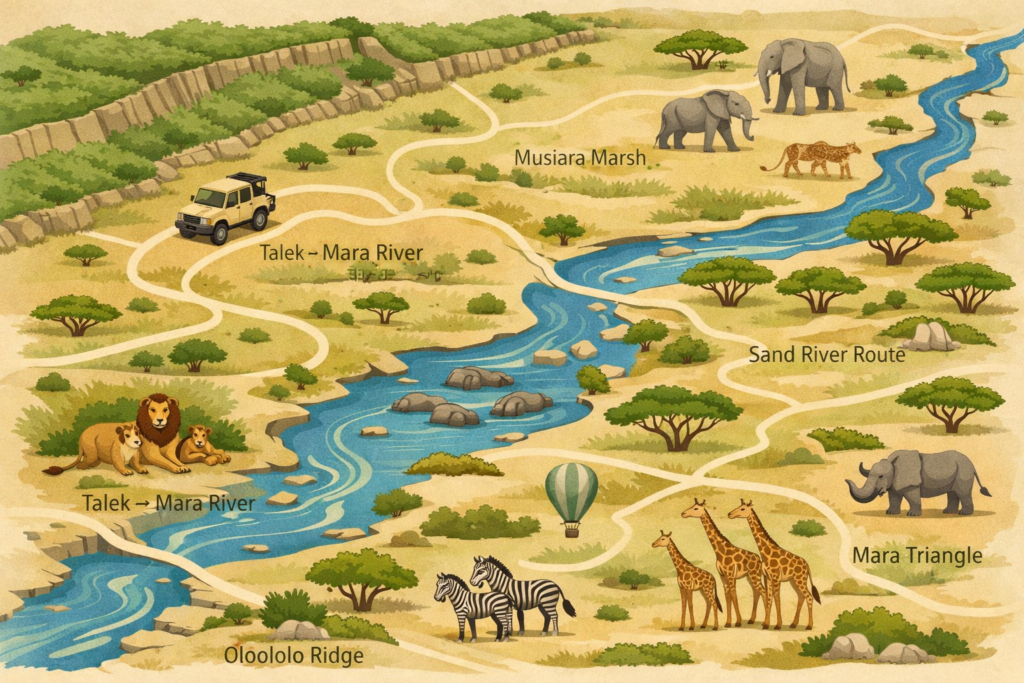
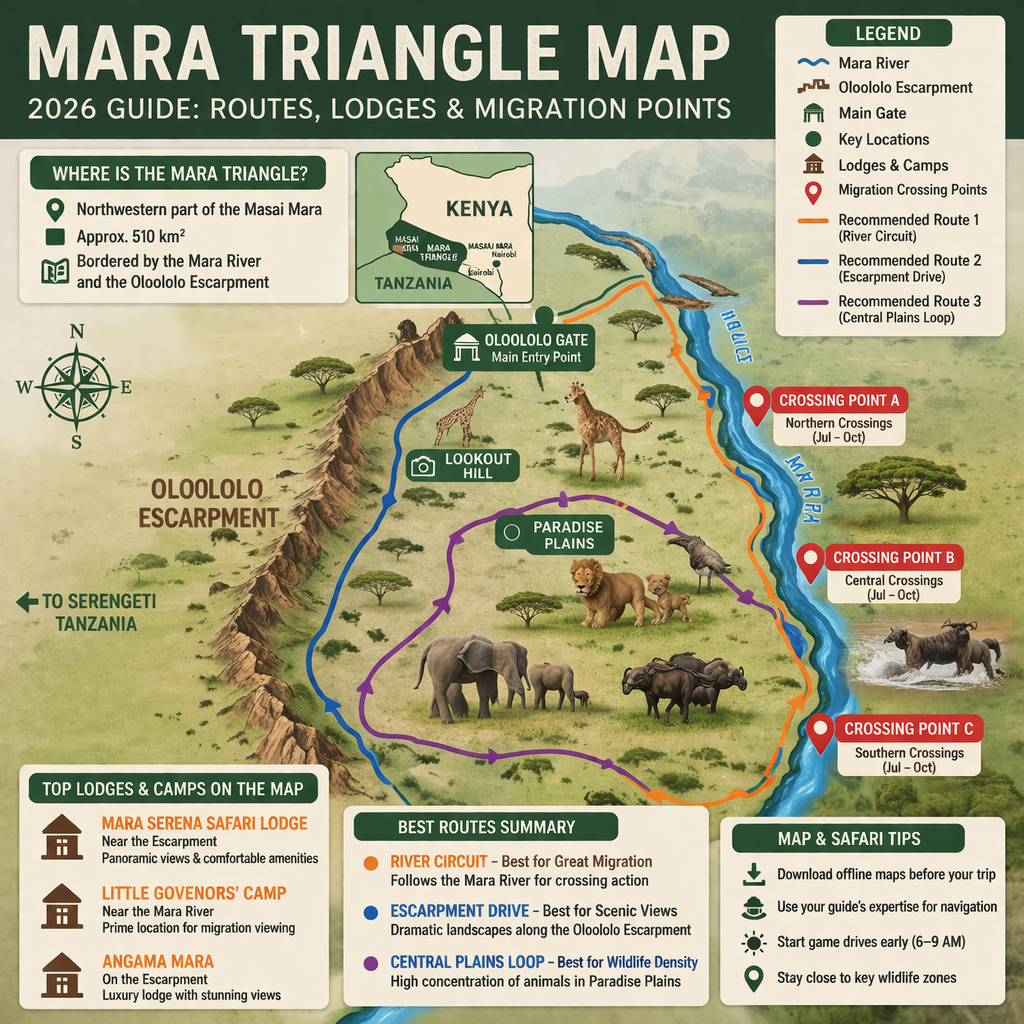
Mara Triangle Map Tips (Critical Section)
Navigation is your biggest challenge. Here’s how to master it.
Key Map Features to Know
- Mara River: The main wildlife zone – follow it for elephants, hippos, and crocodiles.
- Oloololo Escarpment: A natural boundary on the west; driving along it gives you panoramic views.
- Main tracks: Not always clearly marked – look for vehicle tracks and follow the most worn ones.
- Airstrips: Useful landmarks; there are several inside the Triangle.
Essential Navigation Tips
- Download offline maps. Google Maps works poorly inside the reserve. Use maps.me or Guru Maps and download the area beforehand.
- Use multiple references. Combine a printed safari map, a GPS app, and lodge directions. Don’t rely on a single source.
- Follow main tracks. If you’re unsure, stay on tracks that are clearly used. Avoid unexplored routes unless you’re confident.
- Use landmarks. Rivers, hills, gates, and airstrips help you orient yourself. Take note of their relative positions.
- Ask at your lodge. The staff and other guests are excellent sources of current road conditions and wildlife sightings.
Think of navigation as part of the adventure.
It’s not a city; there are no street signs. Embrace the challenge,
but don’t be afraid to turn around if you’re uncertain.
Best Self-Drive Routes in Masai Mara
Route 1: Mara River Drive (Top Priority)
- Start: Oloololo Gate (Mara Triangle)
- Head: East towards the Mara River
- What to expect: Hippos, crocodiles, elephants, and during migration (July–October), thousands of wildebeest crossing.
Why it’s great: The river is a natural highway – follow it and you’ll see wildlife consistently.
Route 2: Central Plains Loop
- Start: Talek Gate or Sekenani Gate
- Explore: The open plains between the river and the escarpment
- What to expect: Lions, cheetahs, large herds of zebra and wildebeest, elephants.
Why it’s great: High density of predators; you’ll often find lions resting on termite mounds.
Route 3: Escarpment Route
- Drive along the Oloololo Escarpment (western edge)
- What to expect: Breathtaking views of the whole Mara, fewer vehicles, occasional leopards.
Why it’s great: Photographers love the light at sunrise and sunset; also a good place for birdwatching.
Combine these routes over 2–3 days.
Start with the Mara River Drive, then explore the central plains,
and take an afternoon on the escarpment for sunset.
Best Time for a Self-Drive Safari
| Season | Months | Conditions | Suitability for Self-Drive |
|---|---|---|---|
| Dry | June – October | Good roads, easy navigation | ✅ Excellent |
| Wet | March – May | Muddy tracks, risk of getting stuck | ⚠️ Challenging – avoid if inexperienced |
| Shoulder | November – February | Roads fair, some showers | ✅ Good, with caution |
Beginners should avoid the rainy season. The roads become slippery, and you could easily get stuck. If you must go, take a 4×4 with proper off‑road tyres and recovery gear.
The Mara Triangle’s roads are better maintained than other areas,
making it the best choice
even during light rains.
Safety Tips for Self-Drive Safaris
This section is critical. Read it twice.
🚨 Always
- Stay inside your vehicle at all times – no getting out, even for a photo.
- Carry extra fuel – petrol stations are few and far between inside the reserve.
- Inform your lodge of your planned route and expected return time.
- Keep emergency contacts handy: your lodge, a trusted 4×4 recovery service, and the Mara Triangle headquarters.
- Drive slowly – animals can appear suddenly, and the roads are rough.
🚫 Never
- Drive off-road – it’s illegal and damages the environment.
- Approach wildlife too closely – keep a safe distance; animals are wild and unpredictable.
- Travel at night – the gates close and it’s extremely dangerous due to animals on the road.
- Leave your engine running if you’re stationary for long – it disturbs wildlife and wastes fuel.
Respect the “right of way.”
If an animal is on the road, wait.
They will move when they’re ready.
Honking or speeding up is a recipe for disaster.
Self-Drive vs Guided Safari (Honest Comparison)
| Feature | Self-Drive | Guided Safari |
|---|---|---|
| Cost | Lower (save on guide fees) | Higher (guide fee included) |
| Flexibility | High – stop anywhere, any time | Medium – you can request stops |
| Wildlife spotting | Lower – you’re on your own | Much higher – guides know where to look |
| Navigation | Challenging | Easy – guide handles it |
| Safety | Medium – you’re responsible | High – experienced guide ensures protocols |
| Adventure factor | High – it’s all on you | Medium – still exciting, but less independent |
If wildlife sightings are your priority → guided wins.
If adventure and independence are your priority → self-drive wins.
Many travellers do a mix
hire a guide for a day to learn the area,
then use your vehicle for the rest of the trip.
Common Mistakes to Avoid
- Relying only on Google Maps. It often shows roads that don’t exist and fails offline. Use dedicated offline maps.
- Driving too fast. You’ll miss wildlife and risk damaging your vehicle. Stick to 20–30 km/h on dirt tracks.
- Not planning routes. Without a plan, you’ll waste time and fuel. Decide your morning and afternoon routes in advance.
- Underestimating distances. The Mara is large; driving from one end to the other can take 2–3 hours. Allow plenty of time.
- Forgetting a printed map. Electronics fail. A simple printed map can be a lifesaver.
- Leaving without enough water, food, or fuel. Pack for a full day.
At the start of each day,
check your fuel and tell someone your plan.
If you don’t return by a certain time,
they can alert the authorities.
Who Should Do a Self-Drive Safari?
Ideal for:
- Experienced travellers comfortable with rough roads
- Adventurous explorers who enjoy a challenge
- Budget‑conscious visitors who want to save on guide fees
- Repeat visitors who already know the area
Not ideal for:
- First‑time Africa travellers
- Those who prefer luxury and convenience
- People unfamiliar with 4×4 driving
- Anyone who doesn’t want to handle navigation
If you’re not sure, start with a short self-drive in the Mara Triangle.
It’s the easiest zone.
If you love it,
explore more.
If you struggle, you can always join a guided drive from your lodge.
Plan Your Safari with Our Resources
To complete your planning, check out these guides:
- Mara Triangle Map: Complete Guide to Locations & Airstrips – essential for navigation
- Mara Triangle Lodges Guide (2026) – where to stay based on your route
- Is a Maasai Mara Safari Worth It? – costs and value breakdown
- Best Time to Visit Masai Mara – align your trip with road conditions
Ready to Hit the Tracks?
A self-drive safari in the Masai Mara is one of the most rewarding travel experiences you can have – if you do it right.
The key is preparation. The right vehicle. A solid map. A realistic route. And a healthy respect for the wild.
Here’s what we need from you:
Tell us your dates, your vehicle type, and where you’d like to stay. We’ll help you choose a lodge with good access, and we’re always available for advice on routes and conditions.
Because that’s what we do at Mara Triangle Safaris. Even if you’re driving yourself, we’re here to help you plan a safe, unforgettable adventure.
Let’s Start Planning
The easiest way to start? Head over to our contact page.
Drop us an email at info@maratrianglesafaris.co.ke with your questions. Or give the team a call:
+254 705 635 886
+254 768 212 702
We’re here Monday through Saturday, 8:30 am to 5:00 pm East Africa time. Email works anytime – we’ll get back within 24 hours.
Tell us what you’re after. We’ll give you straight answers, honest advice, and help you make your self-drive safari a success.
More Reading from Mara Triangle Safaris
| Article | What You’ll Find |
|---|---|
| Safari Travel Insurance: What You Need and Why | Essential coverage for medical evacuation, trip cancellation, and gear. |
| How to Choose the Best Flights for Your Safari | Nairobi vs. Kilimanjaro, baggage limits, and booking tips. |
| Vaccinations for Safari: What You Need to Know Before You Go | Yellow fever, malaria pills, and travel clinic advice. |
| The Ultimate A‑Z Safari Animal Guide | 100+ animals from aardvark to zebra. Photos, facts, and a printable checklist. |