
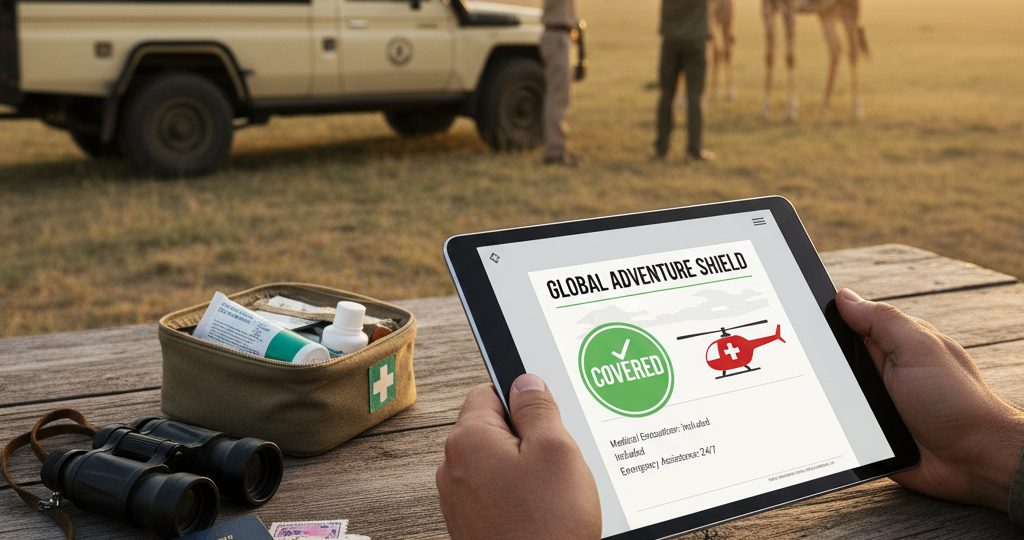
Do You Need Travel Insurance for a Kenya Safari?
Going on safari? Learn what travel insurance covers, from medical evacuation to trip cancellation. Essential advice for Kenya and Tanzania travelers. Compare policies and find the best coverage.
Do You Need Travel Insurance for a Kenya Safari? | Mara Triangle Safaris 2026 Guide
Key Takeaways
- Medical evacuation is the most critical coverage—ensure at least $100,000–$200,000 for helicopter evacuation from remote camps.
- Adventure activities like light aircraft flights, hot air balloon rides, and walking safaris must be explicitly covered.
- Trip cancellation protects your investment if you need to cancel before departure.
- Pre‑existing conditions must be declared; otherwise claims will be denied.
- Buy insurance as soon as you book your safari—don’t wait until the last minute.
Right then. Let’s talk about the boring but absolutely vital stuff.
You’ve booked your flights. You’ve picked your camps. You’ve been dreaming of lions and sunsets for months. The only thing left is to pack your bags and go.
Except there’s one more thing.
Travel insurance.
Nobody wants to think about it. It’s not exciting. It’s not a fun conversation. But here’s the honest truth: a safari isn’t a trip to the local beach. You’re going somewhere remote. Sometimes there are no hospitals for hours. A twisted ankle in the bush is a very different proposition than a twisted ankle in London.
We’ve been guiding safaris for decades. We’ve seen the best‑case scenarios and the worst. And we can tell you without hesitation: travel insurance isn’t a nice‑to‑have. It’s a must‑have.
But not all policies are created equal. You need the right coverage for safari. This guide will tell you exactly what to look for, what to avoid, and why spending a few extra dollars upfront could save you thousands (and a world of stress) later.
No fluff. Just the straight goods. Let’s get you covered. 🛡️
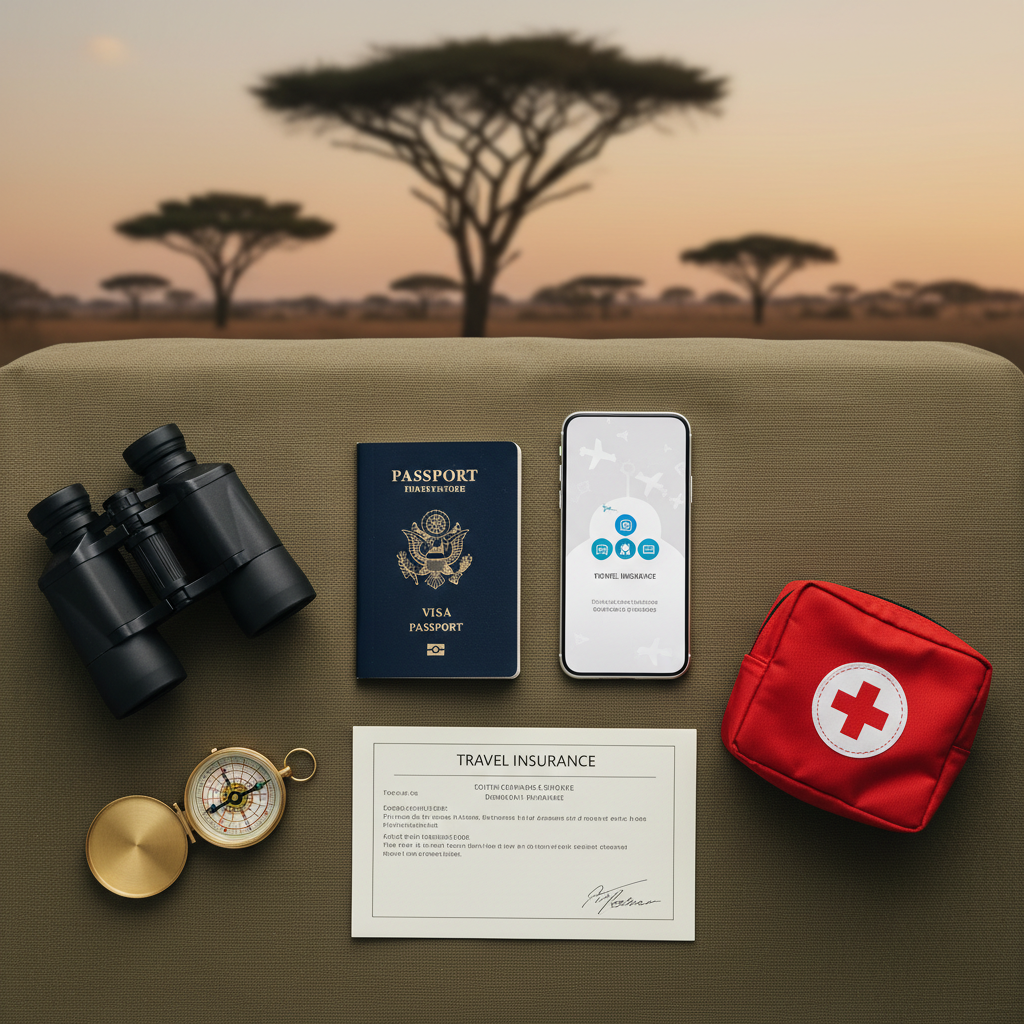
Why Travel Insurance Is Non‑Negotiable for a Safari
Here’s the thing.
You’re not staying at a Hilton in a city centre. A safari takes you into remote areas. The Maasai Mara, the Serengeti, Amboseli—these places are wild. That’s why you’re going. But it also means that if something goes wrong, help isn’t around the corner.
Medical emergencies. What if you have a heart attack or a severe allergic reaction? The nearest hospital might be hours away. A helicopter medical evacuation could cost $20,000–$50,000. Without insurance, you’re paying that yourself.
Trip cancellation. What if you break a leg two days before departure? Or a family emergency forces you to cancel? You could lose thousands in non‑refundable flights and camp bookings.
Lost luggage or gear. Your camera, binoculars, medication—if they go missing, you need to replace them fast.
Travel delays. Missed connections, airline strikes, weather. Insurance covers extra accommodation and meals.
We’ve had clients who thought “it won’t happen to me.” And then it did. One traveler needed emergency evacuation from a remote camp. Another’s camera gear was stolen in transit. Both were grateful they had insurance.
Pro Tip: Buy your insurance as soon as you book your trip.
If you wait, you’re not covered for pre‑existing conditions or
cancellations that happen before you buy.
What Your Safari Insurance Must Cover
Not all policies are the same. A basic “cancel for any reason” policy from a budget provider might leave you exposed. Here’s what to check before you buy.
Medical Evacuation (The Big One)
This is the non‑negotiable. Your policy must include emergency medical evacuation coverage of at least $100,000. Ideally $200,000–$500,000.
Why? Because if you’re in a remote camp and need hospital care, you’ll be airlifted. That helicopter isn’t cheap. We’ve seen bills exceeding $30,000 for a short flight to Nairobi.
What to look for: “Emergency medical evacuation” listed explicitly. No cap below $100,000.
Medical Coverage
Standard medical expenses (doctor visits, hospital stays, medication) should be covered up to at least $50,000–$100,000. Check that it includes any existing medical conditions you have. You may need to declare them or pay extra.
What to look for: “Emergency medical expenses” with a high limit. “Pre‑existing condition” coverage if relevant.
Trip Cancellation & Interruption
If you have to cancel before you go, or cut your trip short, this covers your non‑refundable costs. Look for coverage equal to the total cost of your trip.
What to look for: “Trip cancellation” and “trip interruption” with no low caps. Check that it covers “any reason” cancellation if you want flexibility.
Baggage & Personal Effects
Your camera, lenses, binoculars—these add up. Most policies have a per‑item limit (often $500–$1,000). If you’re carrying expensive gear, you may need to purchase additional coverage or a separate camera insurance policy.
What to look for: “Baggage” coverage with sufficient per‑item limits. “Theft” and “damage” both included.
Travel Delay & Missed Connection
Flights get delayed. Roads get muddy. If you miss your connection or your safari start because of a delay, this covers extra accommodation, meals, and transport to catch up.
What to look for: “Travel delay” with a reasonable per‑hour payout (e.g., $100–$200 per day after 6–12 hours).
Adventure Activities
Here’s a sneaky one. Many standard policies exclude “hazardous activities.” On a safari, you might be in a small plane (light aircraft), on a hot air balloon, or on a walking safari. Check that these are covered.
What to look for: “Air travel” (including light aircraft), “hot air ballooning,” “walking safaris” explicitly included.
Pro Tip: Call the insurer and say,
“I’m going on safari in Kenya and Tanzania.
I’ll be taking light aircraft flights, game drives, and possibly a balloon ride. Is that covered?”
Get it in writing.
What Travel Insurance Typically Does NOT Cover
Know the exclusions. These are the common gaps.
| Exclusion | Why It Matters |
|---|---|
| Pre‑existing conditions | If you don’t declare them, any related claim will be denied. Be honest. |
| High‑risk activities | Some policies exclude “motorised safaris” or “off‑road driving.” Check. |
| Drunk or reckless behaviour | If you’re injured while intoxicated, you’re not covered. |
| Unattended baggage | Leave your camera on a camp chair and it’s stolen? Probably not covered. |
| Civil unrest or war | Rare, but check if you’re covered if travel advice changes. |
| Pandemic‑related cancellation | Some policies exclude COVID‑19 cancellations. Check. |
Pro Tip: Read the fine print. Seriously.
Or ask us
we’ve helped many clients understand policy wording.
How to Choose the Right Policy
There are dozens of insurers. Here’s how to narrow them down.
Step 1: Look for Specialised “Safari” or “Adventure” Policies
Some insurers offer policies designed for Africa. They understand the risks and usually include the necessary coverage. Companies like World Nomads, Allianz (with adventure add‑ons), and some specialist travel insurers in the UK/Australia are good places to start.
Step 2: Check the Medical Evacuation Limit
Again, $100,000 minimum. $200,000+ is better. Some policies have $1 million coverage. That’s peace of mind.
Step 3: Verify Light Aircraft Coverage
Most safaris involve small planes (Cessnas, etc.) between camps. Some standard policies exclude them. Look for “air travel” or “light aircraft” explicitly covered.
Step 4: Compare Annual vs. Single‑Trip
If you travel more than once a year, an annual multi‑trip policy can be cheaper. But make sure the trip length limit covers your safari (often 30–45 days per trip).
Step 5: Use a Reputable Comparison Site
In the UK, Compare the Market or MoneySuperMarket. In Australia, Compare the Market or Finder. In the US, Squaremouth or InsureMyTrip. Filter by “adventure” or “extreme sports” to get the right category.
Pro Tip: Don’t just go for the cheapest.
A cheap policy often has low limits or exclusions.
Spend a little more to be properly covered.
Real‑Life Scenarios: Why Insurance Matters
Scenario 1: Medical Evacuation
A client in his 60s experienced chest pains at a camp in the Mara. The camp nurse suspected a heart attack. A helicopter evacuated him to Nairobi within 90 minutes. The bill: $35,000. His insurance covered every cent. He recovered, and he still talks about how grateful he was.
Scenario 2: Lost Camera Gear
Another traveler had her camera bag with a $4,000 lens stolen from the airport luggage belt. Her insurance covered the full replacement cost. Without it, she’d have been shooting with her phone for the entire safari.
Scenario 3: Trip Cancellation
A couple booked a luxury safari months in advance. Two weeks before departure, the husband broke his leg playing football. They had to cancel. Their insurance reimbursed 100% of the non‑refundable payments—over $12,000.
Scenario 4: Missed Connection
A flight from London to Nairobi was delayed 24 hours due to a strike. The family missed their first night’s accommodation and their scheduled flight to the Mara. Insurance covered the extra hotel night, meals, and rebooking fees.
These are not rare stories. They happen every year. Having the right policy turns a disaster into a mere inconvenience.
Pro Tip: Keep digital copies of your policy,
emergency contact numbers,
and your insurer’s 24‑hour helpline in your phone and on paper.
If something happens, you don’t want to be scrambling for details.
Frequently Asked Questions
Is travel insurance mandatory for a safari?
Not legally, but practically, yes. Most safari camps and lodges will not turn you away without it, but we strongly recommend it. Some countries may require proof of coverage for visa purposes, but for Kenya/Tanzania, it’s not a visa requirement.
What is the best travel insurance for safari in Kenya and Tanzania?
There’s no single “best,” but look for policies that include medical evacuation, light aircraft coverage, and trip cancellation. Popular choices among our clients include World Nomads, Allianz (with adventure pack), and True Traveller (UK). We can’t endorse any one, but those have worked well for many.
How much does travel insurance for a safari cost?
For a 10–14 day trip, expect to pay $80–$200 per person for a good policy. Annual multi‑trip policies often cost $200–$400. It’s a small fraction of your total trip cost.
Does my credit card provide enough travel insurance?
Some premium credit cards offer travel insurance, but they often have low limits and exclusions. Check carefully. Most do not cover medical evacuation to the level you need. It’s safer to buy a separate policy.
Will my insurance cover me if I go on a hot air balloon safari?
Only if the policy explicitly includes “hot air ballooning.” Many do, but some exclude it. If you’re planning a balloon ride (and you should—it’s spectacular), check that it’s covered.
What if I have a pre‑existing medical condition?
You must declare it when buying the policy. The insurer may charge a small extra premium or exclude that condition. If you don’t declare it, any related claim will be rejected. Be honest—it’s better to pay a bit more than to be uninsured.
Do I need insurance for my camera gear?
If your gear is expensive, check the per‑item limit. Many policies cap individual items at $500–$1,000. For professional gear, you may need a separate camera insurance policy. Home contents insurance sometimes covers theft away from home—check yours.
Can I buy insurance after I’ve already started my trip?
Generally, no. You need to buy it before you depart. A few insurers allow purchase if you’re already abroad, but they may exclude pre‑trip events and have waiting periods. Buy before you go.
What if my flight is delayed and I miss my safari start?
Most policies cover “travel delay” that pays for accommodation and meals after a certain number of hours (often 6–12). They may also cover the cost of catching up to your itinerary. Keep receipts.
Does travel insurance cover COVID‑19?
Many policies now include COVID‑19 coverage for medical expenses and cancellation if you test positive before travel. But it varies. Check the policy wording. If you’re concerned, look for “pandemic” or “epidemic” coverage.
Ready to Book Your Safari? Get Covered First
You’ve done the hard work. You’ve chosen your destination, picked your camps, and you’re ready to experience Africa’s wildlife.
Now, take five minutes to sort your insurance. It’s the final piece of the puzzle. The one thing that turns a dream trip into a worry‑free adventure.
If you’re not sure which policy to pick, we’re happy to help. We’ve seen what works and what doesn’t. Just ask.
Because that’s what we do at Mara Triangle Safaris. We’re not just here to book your safari. We’re here to make sure you’re fully prepared—so you can focus on the lions, the sunsets, and the memories.
Let’s Start Planning
The easiest way to start? Head over to our contact page.
Drop us an email at info@maratrianglesafaris.co.ke with your questions. Or give the team a call:
+254 705 635 886
+254 768 212 702
We’re here Monday through Saturday, 8:30 am to 5:00 pm East Africa time. Email works anytime—we’ll get back within 24 hours.
Tell us what you’re after. We’ll give you straight answers, honest advice, and a safari worth every penny.
More Reading from Mara Triangle Safaris
| Article | What You’ll Find |
|---|---|
| The Ultimate A‑Z Safari Animal Guide | 100+ animals from aardvark to zebra. Photos, facts, and a printable checklist. |
| Safari Animals 101: The Ultimate Guide for First-Timers | What you’ll actually see, where, and when. Perfect for planning. |
| How to See Africa’s Most Iconic Animal Families on Safari | Lion cubs, elephant calves, and wild dog pups—where and when. |
| Nocturnal Safari Animals: The Secret World of Africa’s Night Shift | Discover the creatures that come alive after dark. |
| Beyond the Savanna: The Weirdest, Coolest Animals Hiding in East Africa’s Mountains, Forests, and Deserts | Pangolins, gerenuks, and okapis—the bizarre ones. |