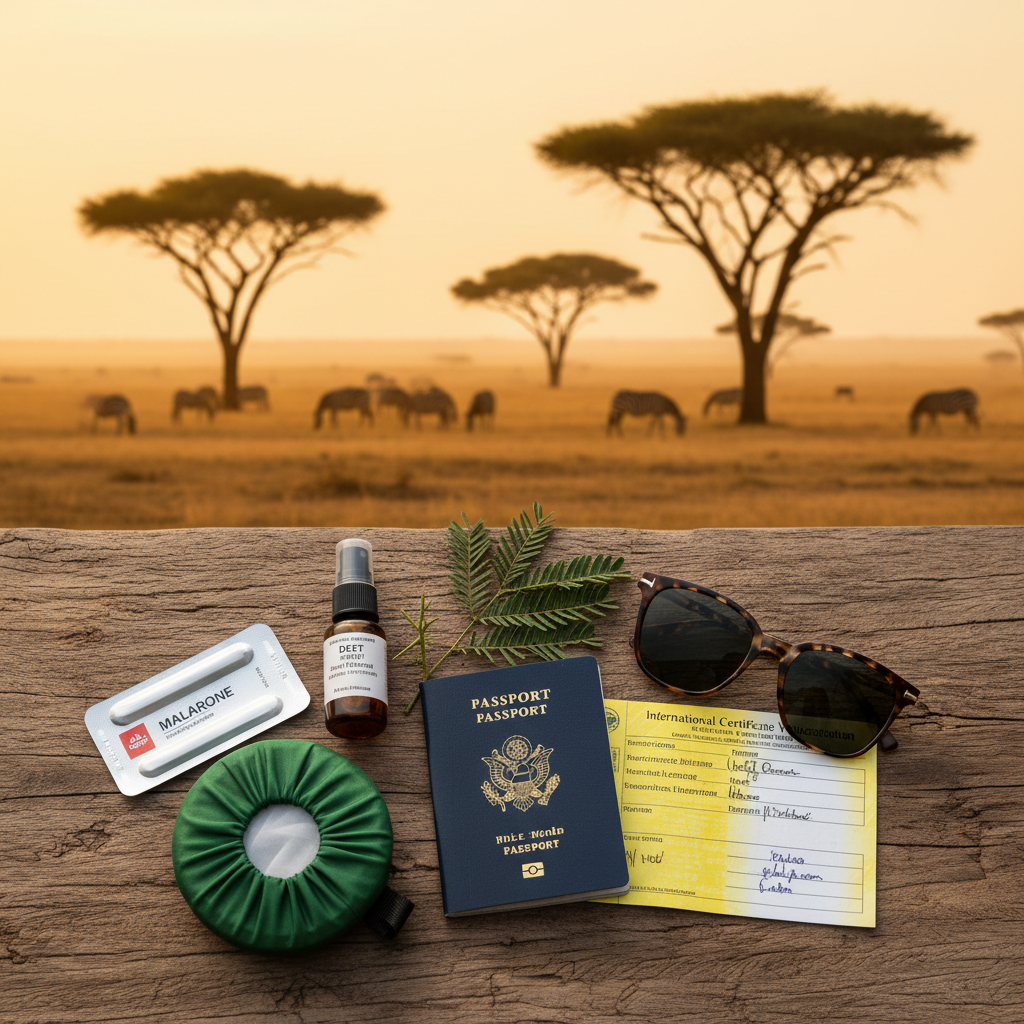
Vaccinations for Safari: What You Need to Know Before You Go
Do I need a yellow fever vaccine for Kenya? What malaria pills are best for safari? Get essential health advice for travel to Kenya and Tanzania. Stay safe on safari.
Key Takeaways
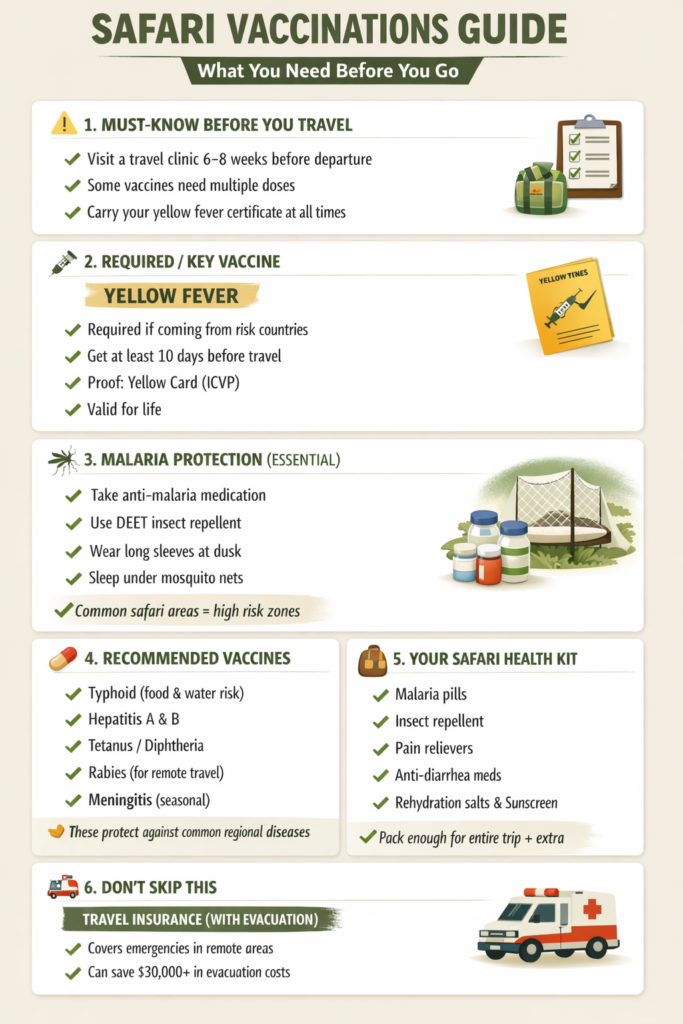
- Yellow fever vaccination is mandatory if you’re arriving from a country with yellow fever risk. Carry your yellow certificate (ICVP) at all times.
- Malaria prophylaxis is strongly recommended for most safari areas, including the Maasai Mara, Serengeti, Amboseli, and the coast. Start your pills before travel.
- Other recommended vaccines include typhoid, hepatitis A, tetanus, and sometimes rabies. Visit a travel clinic 6–8 weeks before departure.
- Insect repellent with DEET, long sleeves, and mosquito nets are your first line of defence against malaria.
- Travel insurance with medical evacuation is essential – it covers helicopter evacuation if you fall seriously ill in a remote area.
Vaccinations for Safari: Kenya & Tanzania Health Guide | Mara Triangle Safaris
Right then. You’ve sorted the flights. You’ve booked the camps. You’ve even bought travel insurance.
But there’s one more thing that catches out more travellers than you’d think.
Health.
Not the “I ate something dodgy” kind (though that can happen too). We’re talking about the vaccines, the malaria pills, and the little yellow booklet that can stop you from boarding your flight home.
Africa is incredible. It’s also a different environment. The mosquitoes are real. The sun is brutal. And some diseases that are rare in London, Sydney, or New York are still present here.
The good news? It’s all manageable. You just need to know what to do before you go.
We’ve been guiding safaris for decades. We’ve helped thousands of travellers navigate the health requirements. This guide covers everything you need to know about vaccinations, malaria prevention, and staying healthy on safari.
No scare stories. Just practical advice from people who live here.
Let’s get you ready. 🦟💊
Ready for a Safe, Stress-Free Safari?”
👉 Talk to our experts now & get personalized travel health advice
📩 info@maratrianglesafaris.co.ke
📞 +254 705 635 886 | +254 768 212 702
Quick Reference: Vaccinations for Kenya & Tanzania
| Vaccine | Recommended / Required | When to Get | Notes |
|---|---|---|---|
| Yellow Fever | Required if arriving from a yellow‑fever‑endemic country; otherwise recommended for all travellers | At least 10 days before travel | You must carry the International Certificate of Vaccination (yellow card) |
| Typhoid | Recommended | 2 weeks before travel | Food and water‑borne; common in East Africa |
| Hepatitis A | Recommended | 2–4 weeks before travel | Also food/water‑borne |
| Hepatitis B | Recommended for longer stays or potential medical contact | 1–2 months (3 doses) | Blood and bodily fluids |
| Tetanus / Diphtheria | Recommended (routine booster) | 2 weeks before travel | Should be up to date |
| Rabies | Recommended for travellers spending time in remote areas or with animals | 1 month (3 doses) | Rare but serious; pre‑exposure vaccination simplifies treatment |
| Meningitis | Recommended during dry season (Dec–June) in some regions | 2 weeks before travel | Rare on safari but advisable for some itineraries |
| Cholera | Generally not required; oral vaccine available for very high‑risk travellers | 1 week before travel | Unlikely for standard safari |
Pro Tip: Visit a travel clinic or your GP 6–8 weeks before departure.
Some vaccines (like rabies or hepatitis B) r
equire multiple doses spaced over weeks.
Yellow Fever: The Non‑Negotiable
Yellow fever is the one vaccine that can stop you at the border. Here’s what you need to know.
Do I Need a Yellow Fever Vaccine for Kenya or Tanzania?
Yes, if you are arriving from a country with yellow fever risk. This includes most of sub‑Saharan Africa and parts of South America. Even if you’re transiting through an endemic country (e.g., a layover in Nairobi from a yellow‑fever‑endemic nation), you must have the vaccine.
If you’re flying directly from the US, UK, Australia, Canada, or Europe, yellow fever vaccination is not mandatory for entry. However, it is recommended by health authorities because there is a theoretical risk in some parts of Kenya and Tanzania.
The Yellow Card (ICVP)
When you get the vaccine, you’ll receive the International Certificate of Vaccination or Prophylaxis (ICVP) – the “yellow card”. Keep it with your passport. You may be asked to show it at immigration.
What happens if I don’t have it? You could be vaccinated at the airport (if available) or denied entry. Don’t risk it.
Where to Get the Yellow Fever Vaccine
- At home: Your local travel clinic or GP.
- In Kenya: You can get it at the airport (JKIA) or the Kenya Ministry of Health. But it’s far easier to get it before you travel.
Pro Tip: The yellow fever vaccine is valid for life.
If you’ve had it before, you don’t need a booster. Keep your yellow card safe
it’s as important as your passport for re‑entry
if you’re coming from an endemic area.
Malaria: Prevention & Pills
Malaria is the most common serious disease for travellers in East Africa. But it’s entirely preventable if you take the right precautions.
Do I Need Malaria Pills for Safari?
Yes, for most safari destinations. The risk is highest in:
- The Maasai Mara and surrounding areas
- The Serengeti and Ngorongoro Crater
- Amboseli and Tsavo
- The coast (Mombasa, Diani, Zanzibar)
Nairobi itself has a lower risk because of its altitude, but many travellers transit through Nairobi and then head to malarial areas.
Types of Malaria Prophylaxis
| Medication | How It Works | Side Effects | Regimen |
|---|---|---|---|
| Malarone (atovaquone/proguanil) | Kills parasites in the liver | Generally well tolerated; occasional nausea, headache | Start 1–2 days before travel, daily during, and 7 days after |
| Doxycycline | Antibiotic that suppresses growth | Sun sensitivity, stomach upset; may cause thrush | Start 1–2 days before, daily during, and 4 weeks after |
| Lariam (mefloquine) | Kills parasites in the blood | Potential neuropsychiatric side effects (vivid dreams, anxiety) | Start 1–2 weeks before, weekly during, and 4 weeks after |
Which one is best? Most doctors and travel clinics recommend Malarone for short trips because it has fewer side effects and a shorter post‑travel course. Doxycycline is also widely used but can cause sun sensitivity—a problem on safari. Lariam is generally avoided unless you have no other option.
Other Malaria Prevention
Pills are your backup. Your first line of defence is:
- Insect repellent with at least 30% DEET or Picaridin. Apply to exposed skin.
- Long sleeves and trousers at dawn and dusk (when mosquitoes are most active).
- Mosquito nets provided by your camp. Ensure they’re tucked in.
- Air‑conditioned or screened rooms where possible.
Pro Tip: Start your malaria pills before you travel.
For Malarone, start 1–2 days before.
For doxycycline, start 1–2 days before.
If you forget a dose, take it as soon as you remember but don’t double up.
Other Recommended Vaccinations
Beyond yellow fever and malaria, there are several vaccines that protect against diseases you can encounter in East Africa.
Typhoid
Spread through contaminated food and water. Typhoid is still common in East Africa. The vaccine is recommended for all travellers.
- Shot: Given 2 weeks before travel.
- Oral: 4 capsules over 1 week.
Hepatitis A
Also food‑ and water‑borne. Highly recommended. The vaccine is given in two doses 6 months apart, but one dose provides good protection for your trip.
Hepatitis B
Spread through blood and bodily fluids. Recommended if you might have medical treatment, get a tattoo, or have close contact with locals. Three doses over 1–2 months.
Tetanus, Diphtheria, Polio
Ensure your routine vaccines are up to date. A booster every 10 years is recommended.
Rabies
Rabies is present in East Africa, especially in stray dogs and bats. If you’ll be spending time in remote areas, or if you’re a keen hiker, the pre‑exposure rabies vaccine is a good idea. It requires three doses over one month. Even with the vaccine, you’ll still need post‑exposure treatment if bitten, but it buys you time.
Meningococcal Meningitis
There is a “meningitis belt” in parts of sub‑Saharan Africa. If you’re travelling during the dry season (December–June) to northern Kenya or Tanzania, vaccination may be recommended.
Pro Tip: Schedule your travel clinic appointment at least
6–8 weeks before departure.
Some vaccines need multiple doses spaced out, a
nd the yellow fever vaccine takes 10 days to become effective.
What to Pack for Health
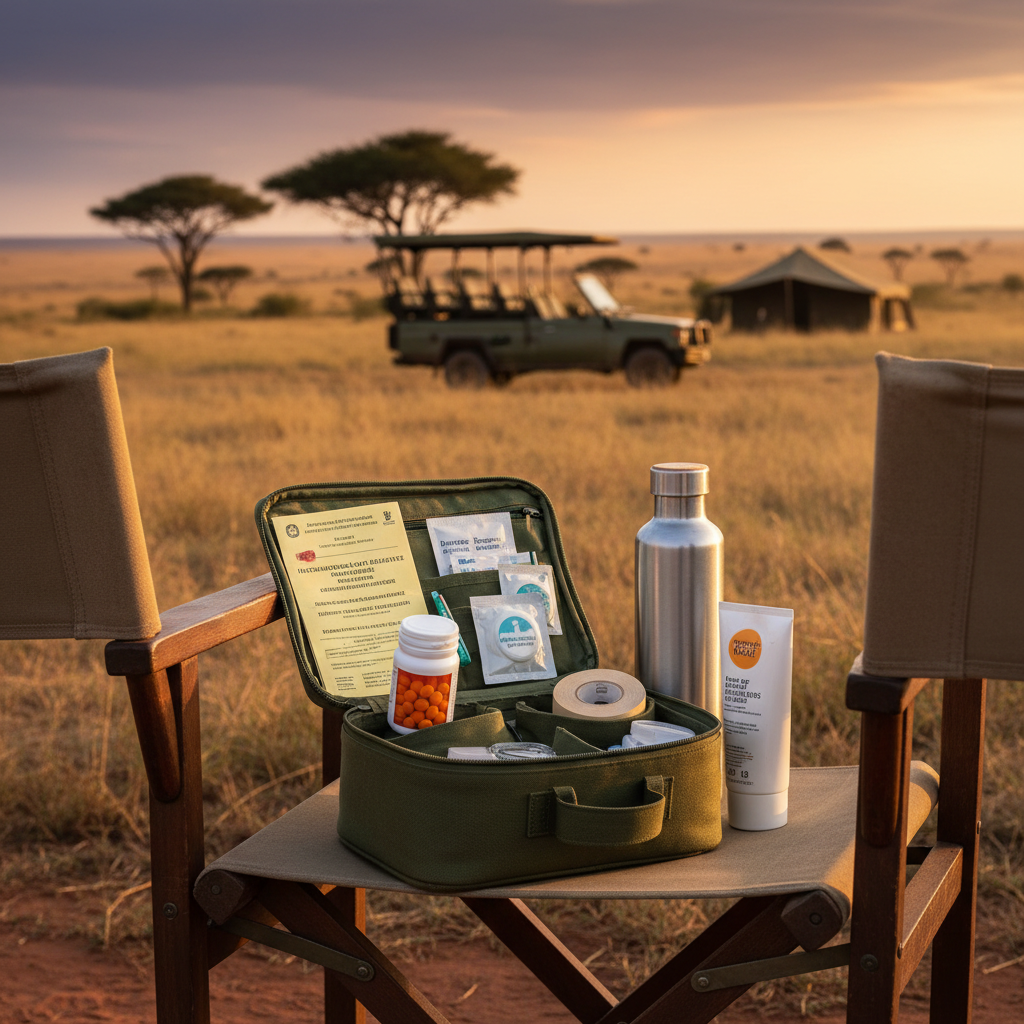
Your safari health kit should be more than just malaria pills. Here’s a checklist.
| Item | Why |
|---|---|
| Malaria prophylaxis | Enough for your entire trip plus post‑travel period |
| Insect repellent | DEET or Picaridin; at least 30% DEET for daytime |
| Antihistamines | For allergic reactions or insect bites |
| Oral rehydration salts | For dehydration or diarrhoea |
| Antidiarrhoeal medication | Loperamide (Imodium) for short‑term relief |
| Antibiotics | Prescribed by your doctor for travellers’ diarrhoea if needed |
| Paracetamol / ibuprofen | Pain relief, fever |
| Plasters / bandages | Minor cuts |
| Antiseptic wipes | Cleaning wounds |
| Sun cream | High SPF; the sun is strong |
| Lip balm with SPF | Chapped lips are common |
| Hand sanitiser | Use before eating |
| Reusable water bottle | Stay hydrated; camps provide filtered water |
| Yellow fever card | Keep with passport |
| Prescription medication | Enough for the trip plus extra in case of delays; keep in original packaging |
Pro Tip: If you have any pre‑existing conditions,
carry a copy of your prescription and a letter from your doctor.
This is especially important for insulin,
asthma inhalers, or any controlled medication.
Medical Facilities on Safari
You’re not going to find a hospital on every corner. But camps are prepared.
What to Expect at Camps
- Most luxury and mid‑range camps have a first‑aid kit and a trained staff member.
- Many have a radio or satellite phone for emergencies.
- In the Mara, there are airstrips – a medical evacuation flight can get you to Nairobi within an hour.
Emergency Evacuation
If you have a serious medical emergency, you’ll be evacuated by air. This is why travel insurance with medical evacuation coverage is non‑negotiable. We’ve seen it happen – and the bills can exceed $30,000.
Nearest Hospitals
- Nairobi: Nairobi Hospital, Aga Khan Hospital – both world‑class.
- Arusha: Aga Khan Hospital, Arusha Lutheran Medical Centre.
- Masai Mara: A small clinic in Talek; serious cases go to Nairobi.
- Serengeti: Clinics in Seronera; serious cases go to Arusha or Nairobi.
Pro Tip: Save emergency contacts in your phone.
Include your insurer’s 24‑hour number and our local number.
If something happens,
we can help coordinate.
Frequently Asked Questions
Do I need a yellow fever vaccine for Kenya if I’m coming from the US?
No, it’s not mandatory. However, it is recommended by health authorities because there is a theoretical risk. If you have a layover in a yellow‑fever‑endemic country (e.g., transiting through Addis Ababa or Nairobi from a risk area), you will need it.
Do I need a yellow fever vaccine for Tanzania?
Same as Kenya. Not mandatory if arriving directly from a non‑endemic country, but recommended. If you’re coming from a risk country, it’s required.
Is the yellow fever vaccine valid for life?
Yes, as of 2016, the WHO considers one dose to provide lifelong immunity. Keep your yellow card as proof.
Can I get yellow fever vaccine at Nairobi airport?
Yes, there’s a clinic at Jomo Kenyatta International Airport. But it’s much easier to get it before you travel.
Do I need malaria pills for the Masai Mara?
Yes. The Mara has a significant malaria risk. Use prophylaxis and insect repellent.
Can I get malaria in Nairobi?
The risk is low due to altitude, but it’s not zero. If you’re staying in Nairobi and not going to malarial areas, you may not need prophylaxis – but consult your doctor.
What are the side effects of Malarone?
Most people tolerate Malarone well. Occasional nausea, headache, or vivid dreams. Take with food to reduce nausea.
Is doxycycline better than Malarone for safari?
Both work. Doxycycline is cheaper but can cause sun sensitivity – a real issue on safari. Malarone is often preferred for short trips. Your doctor will advise.
Do I need a typhoid vaccine for safari?
Yes, it’s recommended. Typhoid is still present in East Africa and spreads through contaminated food or water.
Do I need a rabies vaccine for safari?
If you’ll be in remote areas, or if you’re a hiker, it’s a good idea. Pre‑exposure vaccination buys you time to seek treatment if bitten.
What should I do if I’m bitten by a mosquito?
Nothing unusual. Just keep taking your malaria pills. If you develop fever, chills, or flu‑like symptoms after returning, see a doctor and tell them you’ve been in a malaria zone.
What’s in a safari first aid kit?
Insect repellent, malaria pills, oral rehydration salts, antidiarrhoeal, antihistamines, painkillers, plasters, antiseptic wipes, sun cream, and any personal medication.
Can I drink tap water on safari?
No. Camps provide bottled or filtered water. Use it for drinking and brushing teeth.
What if I forget my malaria pills?
If you miss a dose, take it as soon as you remember. Don’t double up. If you’ve missed several days, contact your doctor.
How do I prevent altitude sickness?
If you’re going to high altitudes (e.g., Ngorongoro Crater rim, Mount Kenya), acclimatise slowly, drink plenty of water, avoid alcohol, and consider medication (acetazolamide) if recommended by your doctor.
Ready to Book Your Safari? Get Healthy First
You’ve sorted your flights, your insurance, and now your health. The only thing left is to go.
Here’s what we need from you:
Tell us your travel dates, any pre‑existing conditions, and whether you’re concerned about specific health risks. We’ll ensure your camps have the facilities you need and can advise on the best routes.
Because that’s what we do at Mara Triangle Safaris. We’re not just booking agents. We’re your partners in planning a safe, healthy, and unforgettable African adventure.
Let’s Start Planning
The easiest way to start? Head over to our contact page.
Drop us an email at info@maratrianglesafaris.co.ke with your questions. Or give the team a call:
+254 705 635 886
+254 768 212 702
We’re here Monday through Saturday, 8:30 am to 5:00 pm East Africa time. Email works anytime—we’ll get back within 24 hours.
Tell us what you’re after. We’ll give you straight answers, honest advice, and a safari worth every penny.
More Reading from Mara Triangle Safaris
| Article | What You’ll Find |
|---|---|
| Safari Travel Insurance: What You Need and Why | Essential coverage for medical evacuation, trip cancellation, and gear. |
| How to Choose the Best Flights for Your Safari | Nairobi vs. Kilimanjaro, baggage limits, and booking tips. |
| Kenya eVisa Guide: How to Get Yours Fast | Step‑by‑step application tips and common mistakes to avoid. |
| The Ultimate A‑Z Safari Animal Guide | 100+ animals from aardvark to zebra. Photos, facts, and a printable checklist. |