
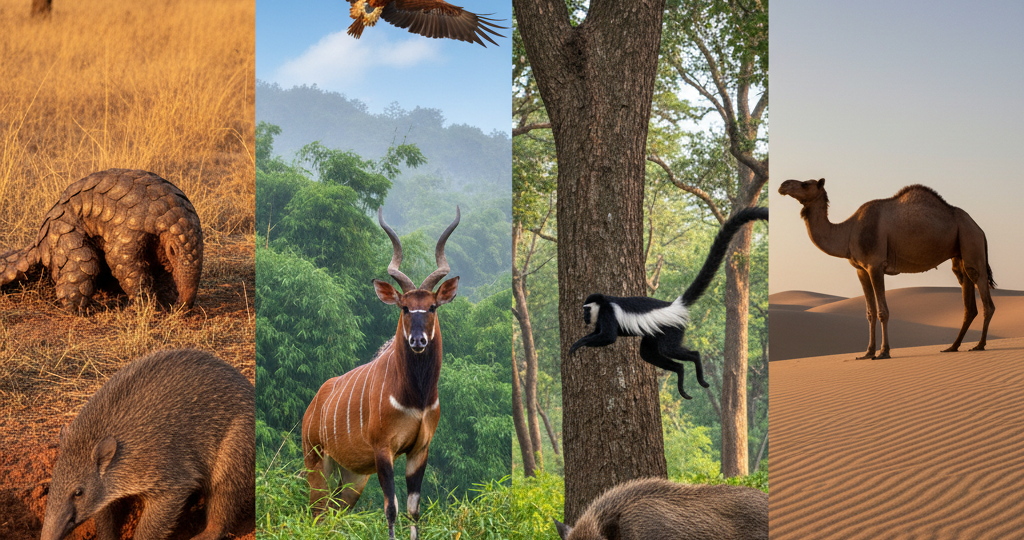
Beyond the Savanna: The Weirdest, Coolest Animals Hiding in East Africa’s Mountains, Forests, and Deserts
Lions and elephants are just the start. Discover the weirdest, coolest animals hiding in East Africa’s mountains, forests, and deserts. Pangolins, aardvarks, and more.
Weirdest Animals in East Africa: Savanna, Mountains, Forests & Deserts: Mara Triangle Safaris
Right then. You know about lions.
You’ve seen the elephant documentaries. The zebra migrations. The giraffes that seem to photoshop themselves into every safari brochure.
But here’s a question nobody asks until they’ve been on a few game drives:
Where do the weirdos live?
The creatures that look like leftovers from a mad scientist’s experiment. The ones that come out when everyone else is asleep. The animals that evolved so strangely they seem to belong on another planet.
Here’s the thing. Most safari-goers stick to the savanna. They see the Big Five, tick the boxes, and go home happy.
But East Africa has mountains. Ancient forests. Deserts that look like another world entirely. And each of those places is packed with animals so bizarre they’ll make your friends back home say, “Wait, that’s real?”
We’ve spent decades guiding safaris through Kenya and Tanzania. We’ve chased pangolins at midnight. We’ve watched gerenuks stand on their hind legs like furry giraffes. We’ve spotted antelope in deserts that haven’t seen rain in years.
This guide is your backstage pass to the weirdest, coolest animals you never knew existed. Savanna, mountains, forests, deserts—we’re covering them all.
Buckle up. Things are about to get strange. 🦎
Quick Guide to East Africa’s Wild Habitats
| Habitat | Where to Find It | Weird Factor |
|---|---|---|
| Savanna | Maasai Mara, Serengeti, Amboseli | ★★★★☆ (classic weirdos like pangolin) |
| Mountains | Mt. Kenya, Aberdares, Kilimanjaro | ★★★☆☆ (rare, shy species) |
| Forests | Kakamega, Arabuko‑Sokoke, Arusha | ★★★★☆ (primates, bizarre birds) |
| Deserts & Arid Lands | Samburu, Chalbi, Laikipia | ★★★★★ (survival adaptations on steroids) |
To see the widest variety of weird animals, don’t just stay in the savanna.
A safari that includes a private conservancy, a forest reserve,
or a northern desert camp will double your chances of encountering the bizarre.
Savanna’s Strangest: The Night Shift and the Underground
The savanna is the star of most safaris. But the weirdest animals here are the ones you don’t see during the day. They’re the night shift—creatures that emerge when the sun goes down.
Pangolin – The Walking Pinecone
Let’s start with the holy grail. The pangolin looks like a reptile wearing a suit of armour made from pinecones. It’s covered in overlapping scales, walks on its hind legs, and curls into a perfect ball when threatened.
Weirdest fact: Pangolins are the most trafficked mammal in the world—not for their meat, but for their scales, which are made of the same stuff as human fingernails. Seeing one in the wild is a once‑in‑a‑lifetime event.
Where to look: Night drives in the Mara or private conservancies like Ol Pejeta. They’re nocturnal, solitary, and incredibly shy.
Aardvark – The Original Burrower
If a pig, a rabbit, and an anteater had a baby, it would look like an aardvark. This strange creature has a pig‑like snout, rabbit‑like ears, and a kangaroo‑like tail. It digs burrows so efficiently that other animals—warthogs, hyenas, even pangolins—move in after it leaves.
Weirdest fact: An aardvark can dig faster than three men with shovels. It uses its powerful claws to tear open termite mounds, then laps up the insects with a sticky tongue nearly 30 centimetres long.
Where to look: Night drives in arid areas. They’re solitary and roam huge territories, so sightings are pure luck.
Honey Badger – The Fearless Weirdo
The honey badger doesn’t care. It’ll take on a lion, a leopard, or a cobra without hesitation. Its skin is so thick that bee stings and porcupine quills barely penetrate. It’s also one of the smartest animals in Africa—known to open gates, escape enclosures, and use tools.
Weirdest fact: Honey badgers have a mutualistic relationship with a bird called the honeyguide. The bird leads them to beehives; the badger breaks the hive open; they both feast on honey and larvae.
Where to look: Dawn and dusk drives. They’re active during the day in cooler seasons but mostly nocturnal.
Aardwolf – The Termite‑Eating Hyena
It looks like a miniature striped hyena, but it’s a total pacifist. The aardwolf doesn’t scavenge or hunt large prey. It eats termites—up to 300,000 in a single night. Its weak jaws and tiny teeth are built for insects, not bones.
Weirdest fact: Aardwolves use their sticky tongue to lap up termites without destroying the mound. They return night after night to the same termite highways.
Where to look: Dry savanna and grasslands. They’re most active on warm, still nights.
Bat‑eared Fox – Ears the Size of Its Head
If you’ve ever seen a cartoon drawing of a fox with comically oversized ears, you’ve seen a bat‑eared fox. Those ears aren’t just for show—they can hear termites moving underground from metres away.
Weirdest fact: Bat‑eared foxes live in family groups that often share burrows with aardvarks. They follow the herds of large grazers because the animals kick up insects.
Where to look: Open plains, especially in the Serengeti and northern Kenya.
If you want to see savanna weirdos, book night drives.
Most of these animals are strictly nocturnal.
A good guide will know where to look for burrows and termite mounds.
Mountain Mysteries: Life on the Roof of Africa
East Africa’s mountains are like islands in the sky. Isolated, cool, and full of animals found nowhere else. You’re not likely to drive up a mountain on a standard safari, but many private conservancies border these highlands.
Mountain Bongo – The Ghost Antelope
The mountain bongo is one of the rarest large mammals in Africa. It’s a chestnut‑coloured antelope with brilliant white stripes that seem to glow in the forest gloom. Only a few hundred remain in the wild, hiding in the bamboo forests of Mt. Kenya and the Aberdares.
Weirdest fact: Bongos have a “trumpeting” call that sounds more like a trumpet than an antelope. They’re incredibly shy and almost impossible to see without dedicated tracking.
Where to look: Mt. Kenya, Aberdare National Park. Your best chance is at special conservation areas like the Solio Ranch or Ol Pejeta, which have breeding programmes.
Giant Forest Hog – The World’s Largest Wild Pig
Imagine a pig the size of a small cow, covered in black bristles, with a massive, warty face. That’s the giant forest hog. It’s rarely seen because it lives in dense forest and moves mostly at night.
Weirdest fact: Giant forest hogs are so shy that scientists didn’t even confirm their existence in the wild until the 1900s, despite locals knowing about them for centuries.
Where to look: Kakamega Forest, Aberdares, and the forested slopes of Mt. Kenya. Dawn drives along forest edges sometimes reveal them.
Lammergeier (Bearded Vulture) – The Bone‑Eating Bird
This massive vulture doesn’t just scavenge—it specialises in bone. It drops bones from great heights to shatter them, then swallows the sharp fragments. Its stomach acid is so strong it can dissolve bone in 24 hours.
Weirdest fact: Lammergeiers dye their feathers with iron oxide from red soil, giving their head and chest a striking rusty colour. It’s a status symbol.
Where to look: High mountains like Mt. Kenya and Kilimanjaro. They’re rare in the Mara but occasionally seen on the escarpment.
Mountain Gorilla – The Gentle Giant (Tanzania)
While mountain gorillas are more associated with Uganda and Rwanda, Tanzania has a small population in the Mahale Mountains. These gentle giants share 98% of our DNA and live in close family groups led by a silverback male.
Weirdest fact: Gorillas build fresh nests every night—on the ground or in trees—and never use the same nest twice. Infants sleep with their mothers until they’re about three years old.
Where to look: Mahale Mountains National Park and Gombe Stream in western Tanzania. It’s a different kind of safari, usually combined with a trip to the coast.
Mountain wildlife is elusive.
Don’t expect to “drive up” and see them.
Ask us about walking safaris in forested conservancies
they’re the best way to encounter these creatures.
Forest Oddities: Where Primates and Weird Birds Rule
East Africa’s forests are pockets of green that hide some of the most bizarre animals on the continent. They’re not on the typical safari circuit, but they’re worth the detour.
Colobus Monkey – The Thumbless Acrobat
Black‑and‑white colobus monkeys look like they’re wearing a dramatic cape. They have no thumbs—a specialised adaptation for swinging through trees at high speed. They spend almost their entire lives in the canopy, rarely descending to the ground.
Weirdest fact: Colobus monkeys are folivores—they eat leaves. To digest all that cellulose, they have a multi‑chambered stomach that ferments plant matter, similar to a cow’s rumen.
Where to look: Kakamega Forest, Arabuko‑Sokoke Forest, Arusha National Park.
Okapi – The Forest Giraffe
If you could cross a giraffe with a zebra and then shrink it down to the size of a horse, you’d get an okapi. It has a long, prehensile tongue like a giraffe, and zebra‑like stripes on its hindquarters. It’s the only living relative of the giraffe.
Weirdest fact: The okapi was unknown to Western science until 1901. It lives only in the dense rainforests of Central Africa—but you can sometimes see them in the forested border areas of western Tanzania.
Where to look: Western Tanzania near the DRC border. It’s a specialised destination, but we can arrange it.
Forest Elephant – Smaller, Hairier, Wilder
The African forest elephant is a separate species from the savanna elephant. It’s smaller, with straighter tusks, rounder ears, and a hairier body. It lives in dense forest and has a much more secretive lifestyle.
Weirdest fact: Forest elephants are crucial for seed dispersal. Many tree species in African forests depend entirely on elephants to eat their fruit and spread their seeds.
Where to look: Kakamega Forest, and the forests around Mt. Kenya and the Aberdares.
Giant Forest Genet – The Spotted Tree‑Cat
Genets are cat‑like but related to mongooses. The giant forest genet is the largest of the genets, with a long ringed tail and a spotted coat that helps it blend into the dappled forest light. It’s strictly nocturnal and almost never seen by day visitors.
Weirdest fact: Genets have retractable claws like cats, but they can also climb down trees headfirst like squirrels. Their ankle joints rotate 180 degrees.
Where to look: Night walks in forested areas like Kakamega or the forest camps around Mt. Kenya.
Forest safaris are usually walking safaris.
Come prepared with sturdy boots and a sense of adventure.
The guides know every trail, and the sounds of the forest are unlike anything you’ll hear on the savanna.
Desert Survivors: Life on the Edge
Northern Kenya and northern Tanzania are where the savanna turns into desert. The landscapes are harsh—but the animals that live here have evolved some of the most bizarre adaptations on earth.
Gerenuk – The Giraffe Gazelle
The gerenuk stands on its hind legs to reach high branches that other antelopes can’t reach. Its neck is long, its legs are long, and it looks like it’s constantly stretching for a better view. Males have lyre‑shaped horns.
Weirdest fact: Gerenuks can go their entire lives without drinking water. They get all the moisture they need from the leaves they browse.
Where to look: Samburu, Meru, and the dry northern plains. They’re common in the right habitat.
Grevy’s Zebra – The Stripey Extravaganza
Grevy’s zebras are larger than the common Burchell’s zebra, with narrower stripes, huge rounded ears, and a white belly. They’re the most primitive of the zebras, and they’re endangered.
Weirdest fact: Grevy’s zebras have a unique vocalisation—a “hi‑ha” sound that resembles a donkey braying mixed with a horse whinny. They also have an unusual social structure: stallions hold territories, not harems.
Where to look: Samburu, Laikipia, and the dry north.
Beisa Oryx – The Desert Unicorn
The oryx has long, straight horns that look like a unicorn’s fantasy. It’s built for extreme heat—it can raise its body temperature to avoid sweating, conserving precious water. Its pale coat reflects sunlight, and it can go weeks without drinking.
Weirdest fact: In Arab folklore, the oryx was the model for the unicorn. Europeans brought oryx horns back from Africa, claiming they were unicorn horns with magical properties.
Where to look: Samburu, Tsavo East, and the dry northern rangelands.
Somali Ostrich – The Blue‑Legged Giant
The Somali ostrich is a separate species from the common (Masai) ostrich. It has blue‑grey legs (the Masai has pink legs), a longer neck, and a more dramatic appearance. It’s adapted to arid environments and can go without water longer than its southern cousin.
Weirdest fact: Male Somali ostriches have a bright blue patch on their neck that becomes more vivid during mating season. They perform elaborate dances to attract females.
Where to look: Samburu and the dry north. You’ll often see them striding across the plains.
Sand Gazelle – The Nomad
There are several small gazelle species in the desert, including the slender‑horned gazelle and the dorcas gazelle. They can shrink their heart and liver to conserve water, and they can go their entire lives without drinking, getting moisture from dew and plants.
Weirdest fact: These gazelles can survive for months with no standing water. Their kidneys are incredibly efficient, producing highly concentrated urine.
Where to look: Dry northern Kenya. They’re not common on typical safari routes, but private conservancies often have small populations.
Northern Kenya is off the beaten path,
but it’s where you’ll find the highest concentration of “weird” adaptations.
A safari to Samburu or Laikipia will expose you to species you won’t see anywhere else.
Coolest Adaptations: How They Survive the Extreme
Weird animals have weird superpowers. Here are a few of the coolest adaptations you’ll see in East Africa.
| Animal | Adaptation | Why It’s Cool |
|---|---|---|
| Pangolin | Armour‑like scales | Rolls into an impenetrable ball |
| Aardvark | Digs faster than three men with shovels | Creates burrows used by dozens of other species |
| Honey Badger | Thick, loose skin | Bites and stings barely penetrate; can twist inside its own skin to fight back |
| Gerenuk | Stands on hind legs | Reaches leaves 2 metres above its head |
| Oryx | Raises body temperature | Avoids sweating, loses almost no water |
| Grevy’s Zebra | Highly efficient kidneys | Can go longer without water than any equine |
| Lammergeier | Strong stomach acid | Digests bones completely, absorbs calcium |
When you’re on safari, ask your guide to explain animal adaptations.
The stories behind the weird features are often more fascinating than the animals themselves.
Animal Numbers: Population Facts You Won’t Believe
Numbers tell the story of rarity. Here’s a quick look at some of the weirdest animals and how many are left.
| Animal | Estimated Population | Status |
|---|---|---|
| Pangolin | Unknown (critically endangered) | The most trafficked mammal in the world |
| Mountain Bongo | Less than 100 in the wild | Critically endangered |
| African Wild Dog | ~6,600 | Endangered |
| Grevy’s Zebra | ~2,500 | Endangered |
| Black Rhino | ~5,600 | Critically endangered |
| Giant Forest Hog | Unknown but declining | Near threatened |
| Aardwolf | Stable, but rarely seen | Least concern |
Why numbers matter:
Seeing a pangolin or a wild dog isn’t just a great sighting it’s a privilege.
Many of these animals are disappearing.
Supporting responsible tourism helps protect their habitats.
Frequently Asked Questions
What is the weirdest animal in Africa?
The pangolin takes the crown. It looks like a pinecone with legs, walks on its hind feet, and curls into a ball when threatened. Plus, it’s the most trafficked mammal in the world—making a sighting even more special.
Where can I see a pangolin?
Night drives in private conservancies (like Ol Pejeta or the Mara North Conservancy) are your best bet. They’re nocturnal and extremely shy. A good guide who knows recent sightings is essential.
Are there animals that live in the mountains in East Africa?
Yes! Mountain bongo, giant forest hog, lammergeier, and even mountain gorillas (in Tanzania’s Mahale Mountains) all inhabit high altitudes. Mt. Kenya and the Aberdares are excellent places to explore.
What animals live in the desert in Kenya?
Samburu and the northern deserts are home to Grevy’s zebra, gerenuk, beisa oryx, Somali ostrich, and sand gazelles. These animals have incredible adaptations for surviving without water.
Can I see forest animals on a typical safari?
Forests are often visited on walking safaris or as add‑ons to a main safari. Kakamega Forest (Kenya) and the forests around Mt. Kenya are accessible. We can build itineraries that combine savanna with forest or mountain habitats.
What is the “weirdest” adaptation you’ve ever seen?
The honey badger’s ability to twist inside its own skin to bite an attacker is mind‑blowing. Also, the oryx can let its body temperature rise to over 40°C without sweating—it essentially becomes a living furnace to avoid water loss.
How can I see the weirdest animals in East Africa?
Book a safari that includes private conservancies (for night drives), a forest stay, and a northern desert camp like Samburu. The combination of habitats gives you the best chance to encounter the oddballs.
Ready to Hunt for the Weirdest Animals?
You’ve read the guide. You know where the strangest creatures hide.
Now it’s time to actually go.
Here’s what we need from you:
Tell us which weird animals are at the top of your list. How many days you have. Your rough budget. And whether you’re up for a night drive, a walking safari, or a trek into the forest.
We’ll take that and build you a safari that puts you in the right place at the right time. With guides who know exactly where to find the bizarre, the rare, and the unforgettable.
Because that’s what we do at Mara Triangle Safaris. We don’t just show you the Big Five. We show you the animals most travelers never even know exist.
Let’s find the weirdos together.
Let’s Start Planning
The easiest way to start? Head over to our contact page.
Drop us an email at info@maratrianglesafaris.co.ke with your questions. Or give the team a call:
+254 705 635 886
+254 768 212 702
We’re here Monday through Saturday, 8:30 am to 5:00 pm East Africa time. Email works anytime—we’ll get back within 24 hours.
Tell us what you’re after. Lions and elephants are great. But the weirdos? They’ll make your trip legendary.
No fluff. Just Africa. 🇰🇪🇹🇿
More Reading from Mara Triangle Safaris
| Article | What You’ll Find |
|---|---|
| The Ultimate A‑Z Safari Animal Guide | 100+ animals from aardvark to zebra. Photos, facts, and a printable checklist. |
| How to Spot Rare Animals on a Kenyan Safari | Your guide to the pangolin, aardvark, wild dog, and other elusive creatures. |
| March Safari vs. Peak Season: Which Offers Better Value? | Honest breakdown of crowds, costs, and wildlife. See which season fits you. |
| Top 3 Destinations for an Unforgettable Safari in March | Maasai Mara, Serengeti, or Amboseli? We help you choose. |
| Kenya eVisa Guide: How to Get Yours Fast | Step‑by‑step application tips and the most common mistakes to avoid. |