
The Great Wildebeest Migration 2026: Best Times, Routes, and Safari Tips
Discover the Great Wildebeest Migration 2026 in Kenya and Tanzania. Learn the best times to visit, migration routes, Mara River crossing dates, and expert safari tips for an unforgettable wildlife adventure.
🦓 Key Takeaways
The Great Wildebeest Migration 2026: Best Times, Routes, and Safari Tips-Mara Triangle Safaris
The Great Wildebeest Migration is widely regarded as one of the most spectacular wildlife events on Earth. Every year, more than 1.5 million wildebeest, accompanied by hundreds of thousands of zebras and gazelles, travel across the vast plains of Tanzania’s Serengeti and Kenya’s Maasai Mara in search of fresh grazing and water. This incredible journey covers nearly 2,000 kilometers and creates some of Africa’s most dramatic wildlife encounters.
For travelers planning a safari in 2026, understanding the migration’s timing, routes, and seasonal highlights can make the difference between a good safari and a truly unforgettable one. Whether you dream of witnessing the famous Mara River crossings, photographing newborn calves in the southern Serengeti, or experiencing predator action in the Mara Triangle, this guide covers everything you need to know.
What Is the Great Wildebeest Migration?
The Great Wildebeest Migration is a continuous, year-round movement of animals through the Serengeti-Mara ecosystem. Contrary to popular belief, the migration is not a single event but rather a circular journey driven by rainfall patterns and the search for nutritious grass.
The migration consists of:
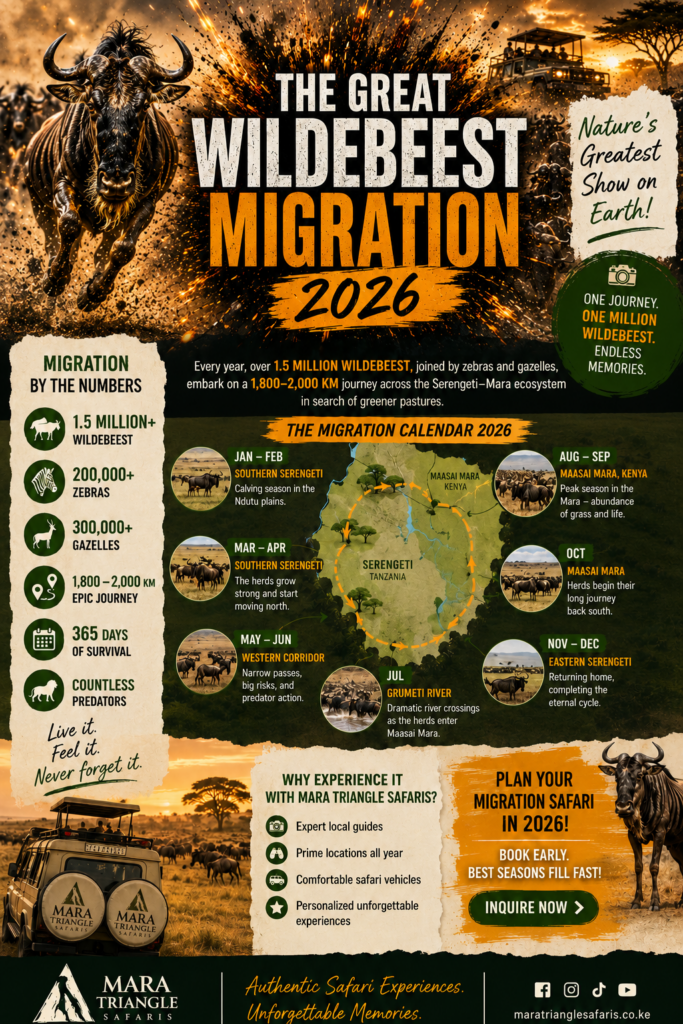
- Over 1.5 million wildebeest
- More than 200,000 zebras
- Approximately 300,000 Thomson’s gazelles
- Numerous elands and other antelope species
Following closely behind are predators such as lions, leopards, cheetahs, hyenas, crocodiles, and wild dogs, creating one of the richest wildlife spectacles on the planet.
The migration has been recognized as one of the Seven Natural Wonders of Africa and remains one of the most sought-after safari experiences in Kenya and Tanzania.
Great Wildebeest Migration 2026 Month-by-Month Guide
January to March: Calving Season
The migration begins the year in the southern Serengeti and Ndutu region.
During this period, approximately 500,000 wildebeest calves are born within a few weeks. The abundance of newborn animals attracts large numbers of predators, making this one of the best times to witness dramatic wildlife interactions.
Highlights:
- Thousands of wildebeest calves born daily
- Excellent predator sightings
- Beautiful green landscapes
- Outstanding wildlife photography opportunities
- Fewer crowds compared to river crossing season
Best locations:
- Ndutu Conservation Area
- Southern Serengeti
- Kusini Plains
April to May: The Long Rains
As seasonal rains continue, the herds begin moving northwest across the Serengeti.
Although these months are considered part of the low season, they offer excellent value for travelers looking to avoid crowds.
Highlights:
- Dramatic skies and lush scenery
- Lower safari prices
- Fewer vehicles at sightings
- Excellent birdwatching
Best locations:
- Central Serengeti
- Moru Kopjes
- Western Corridor
June to July: Western Corridor Movement
By June, the migration reaches the Western Corridor of the Serengeti. Herds begin gathering near the Grumeti River, where crocodiles wait for opportunities to ambush crossing animals.
Highlights:
- Large concentrated herds
- Grumeti River crossings
- Predator activity
- Beginning of migration peak season
Best locations:
- Grumeti Reserve
- Western Serengeti
- Kirawira region
July to October: Mara River Crossing Season
This is the period most travelers associate with the Great Migration.
Thousands of wildebeest attempt dangerous crossings of the Mara River while massive Nile crocodiles lurk beneath the water. The crossings are unpredictable, adding excitement to every safari game drive.
Highlights:
- Famous Mara River crossings
- Massive wildebeest herds
- Exceptional predator encounters
- Peak safari season
Best locations:
- Mara Triangle
- Northern Serengeti
- Kogatende
- Lamai Wedge
- Maasai Mara National Reserve
November to December: Return Journey
As short rains begin, the herds gradually move southward into the eastern Serengeti before returning to the southern plains.
Highlights:
- Migrating columns stretching for kilometers
- Excellent game viewing
- Reduced visitor numbers
- Beautiful landscapes after rainfall
Best locations:
- Eastern Serengeti
- Namiri Plains
- Central Serengeti
📖 Continue Exploring the Great Migration
Understanding the Migration Route
The migration follows a roughly circular route through the Serengeti-Mara ecosystem.
Southern Serengeti (January – March)
The journey begins in the nutrient-rich short grass plains of southern Serengeti and Ndutu.
Central Serengeti (April – May)
As grass becomes scarce, the herds move toward central Serengeti.
Western Corridor (June – July)
Animals continue west toward the Grumeti River region.
Northern Serengeti and Maasai Mara (July – October)
This phase includes the famous Mara River crossings and some of the migration’s most dramatic moments.
Return South (November – December)
Seasonal rains trigger the southward movement back to calving grounds.
Best Time to See the Great Wildebeest Migration in 2026
The best time depends on the experience you want.
Best for River Crossings
July to October
River crossings are the most iconic migration event. Large herds gather along riverbanks before making dramatic attempts to cross crocodile-infested waters.
Best for Calving Season
January to March
This period offers incredible opportunities to witness newborn animals and predator interactions.
Best for Photography
January through March and July through October
Photographers can capture both dramatic wildlife behavior and spectacular landscapes.
Best for Value
April, May, and November
Travelers often find lower accommodation rates and fewer crowds.
Why the Mara Triangle Is One of the Best Places to Watch the Migration
The Mara Triangle forms the western section of the Maasai Mara ecosystem and is considered one of the premier migration viewing areas.
Benefits include:
- Lower vehicle density
- Excellent river crossing locations
- Outstanding predator sightings
- Well-managed conservation area
- Exceptional photographic opportunities
Many experienced safari guides regard the Mara Triangle as the finest place to witness the migration in Kenya.
Wildlife You Can Expect to See
Although the migration itself is the main attraction, visitors encounter much more wildlife.
Common sightings include:
Big Cats
- Lions
- Leopards
- Cheetahs
Other Predators
- Spotted hyenas
- Black-backed jackals
- African wild dogs
Herbivores
- Elephants
- Buffaloes
- Giraffes
- Zebras
- Gazelles
- Topis
- Elands
Birdlife
The ecosystem supports over 500 bird species including:
- Secretary birds
- Crowned cranes
- Martial eagles
- Vultures
- Lilac-breasted rollers
Safari Planning Tips for 2026
Book Early
Migration season accommodations often sell out 8 to 12 months in advance.
Choose Your Location Carefully
Not all camps are equally positioned for migration viewing. Selecting the right location based on your travel dates is essential.
Stay Longer
A minimum of four to five nights increases your chances of witnessing major migration events.
Use Experienced Guides
Knowledgeable guides understand herd movement patterns and can significantly improve your safari experience.
Consider Fly-In Safaris
Fly-in safaris maximize wildlife viewing time and reduce long road transfers.
Kenya vs Tanzania: Which Is Better?
Choose Kenya If:
- You want to see Mara River crossings.
- You prefer shorter travel distances.
- You want excellent predator sightings.
- You are interested in the Mara Triangle.
Choose Tanzania If:
- You want to witness calving season.
- You prefer larger wilderness areas.
- You want a more extensive Serengeti experience.
- You enjoy varied landscapes.
Many travelers combine both countries for the ultimate migration safari.
What Should You Pack?
Essential items include:
- Neutral-colored clothing
- Lightweight layers
- Binoculars
- Camera with zoom lens
- Sun hat
- Sunglasses
- Sunscreen
- Power bank
- Insect repellent
- Reusable water bottle
Frequently Asked Questions
How many wildebeest participate in the migration?
More than 1.5 million wildebeest join the migration annually.
When are the Mara River crossings in 2026?
Crossings generally occur between July and October, although exact timing depends on rainfall patterns.
Is the migration guaranteed?
The migration itself occurs every year, but specific river crossings cannot be predicted with certainty.
How long should a migration safari last?
Five to seven days is ideal for maximizing viewing opportunities.
Is the migration suitable for families?
Yes. Many safari camps cater specifically to families and children.
Final Thoughts
The Great Wildebeest Migration 2026 promises another year of breathtaking wildlife spectacles across Kenya and Tanzania. From the calving season in the southern Serengeti to the dramatic Mara River crossings in the Maasai Mara, every stage of the migration offers unique experiences.
Whether you are a first-time safari traveler or a seasoned wildlife enthusiast, witnessing millions of animals moving across Africa’s iconic landscapes remains one of the world’s greatest travel experiences. Careful planning, choosing the right season, and working with experienced safari specialists will help ensure an unforgettable migration adventure in 2026.
🌍 More Safari Travel Guides
🦓 Witness the Great Wildebeest Migration!
Experience one of the world’s greatest wildlife spectacles as over 1.5 million wildebeest, zebras, and gazelles journey across the Serengeti and Maasai Mara.
Custom Kenya & Tanzania Migration Safaris • Family Safaris • Luxury Safaris • Private Tours