
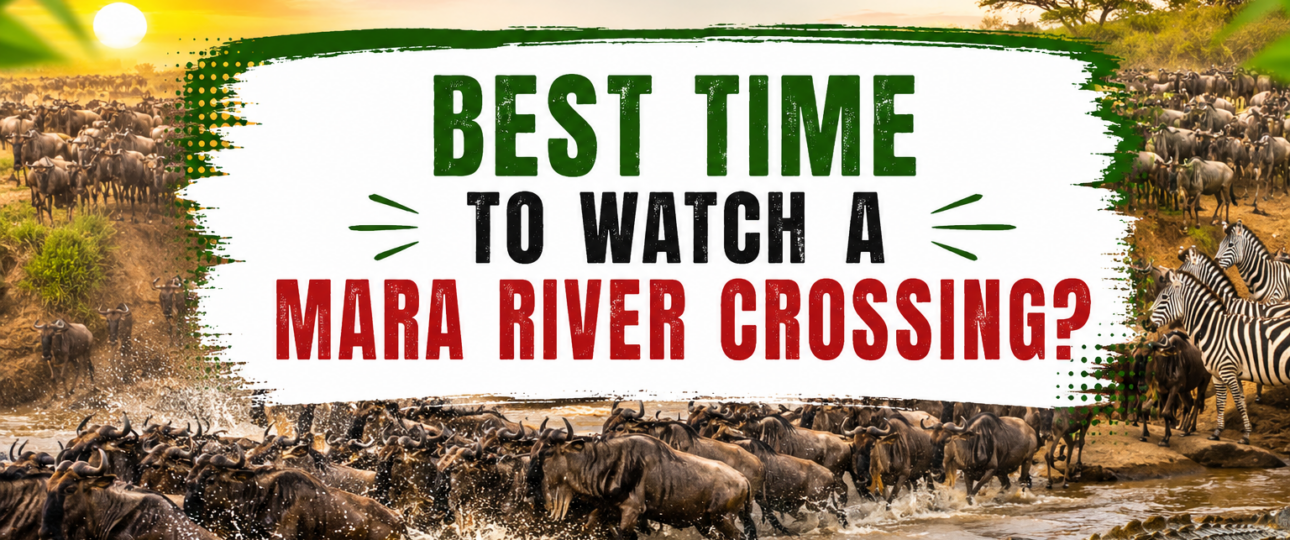
Best Time to Watch a Mara River Crossing: Morning or Afternoon?
What is the best time to watch a Mara River crossing? Discover morning vs afternoon viewing, herd behaviour, safari tips and how to maximise your chances.
Best Time of Day to Watch a Mara River Crossing
Discover when to be at the Mara River, what happens before a crossing, and how to maximise your chances during the Great Migration.
There is no guaranteed hour for a Mara River crossing. Wildebeest may gather at the river for hours before suddenly crossing. Late morning and afternoon can be productive periods, but herd movement, weather, river conditions and animal behaviour determine when a crossing actually happens. The best strategy is to allow several hours near the river rather than arriving for one specific time.
When Is the Best Time to Watch a Mara River Crossing?
Watching a Mara River crossing requires patience. The Great Wildebeest Migration does not follow a timetable, and thousands of animals can gather along the riverbank before making their move.
For travellers staying in the Mara Triangle or Masai Mara National Reserve, the goal is not simply to arrive at a particular hour. A good safari strategy is to spend enough time in the right area while your guide monitors the herds and river activity.
📍 Mara River Crossing Safari Area
| Location | Country | Why It Matters |
|---|---|---|
| Mara Triangle | Kenya | Excellent migration and river-crossing viewing |
| Masai Mara National Reserve | Kenya | Major wildlife and migration viewing area |
| Mara River | Kenya/Tanzania ecosystem | Famous wildebeest crossing location |
| Northern Serengeti | Tanzania | Important part of the migration route |
| Kogatende | Tanzania | Popular Northern Serengeti migration area |
Morning vs Afternoon: Which Is Better?
One of the most common questions from safari travellers is whether they should visit the river early in the morning or later in the day. The answer is that neither period guarantees a crossing.
| Time of Day | What You May Experience | Safari Strategy |
|---|---|---|
| Early Morning | Cool conditions, wildlife activity and herds near the river | Excellent for an early game drive and monitoring herd movement |
| Late Morning | Herds may gather and river activity can increase | Useful period to remain alert near crossing areas |
| Afternoon | Potential herd movement and changing light | Allow enough time to wait for sudden crossings |
| Late Afternoon | Beautiful photography light and possible wildlife activity | Combine river viewing with an evening game drive where practical |
Safari Tip
Don’t leave the river simply because nothing has happened for an hour. Wildebeest can spend a long time gathering, turning back and testing the water before one animal finally starts the crossing.
Why Wildebeest Do Not Cross at a Fixed Time
A Great Migration river crossing is driven by animal behaviour rather than a human schedule. Wildebeest may approach the river, stop at the edge, retreat, gather again and repeat the process several times before crossing.
Factors such as grazing conditions, rainfall, water levels, predators, herd pressure and the movement of other animals can influence when the herd decides to enter the water.
What Happens Before a Mara River Crossing?
The moments before a crossing can be just as fascinating as the crossing itself. Large groups of wildebeest and zebra may gather on the riverbank while animals appear nervous and repeatedly move toward and away from the water.
Eventually, one or several animals may commit to entering the river. The rest of the herd can then follow rapidly, creating the spectacular wildebeest crossing that safari travellers hope to see.
There is no fixed waiting time. If herds are actively gathering near the river, staying in the area for several hours can give you a better opportunity than making a short visit and leaving before the animals decide to cross.
Best Time of Day for Mara River Crossing Photography
Photographers often want more than simply seeing a crossing. The direction of light, position of the vehicles, dust, water spray and movement of the animals can all affect the final images.
Morning and late-afternoon light can provide attractive conditions for Mara River crossing photography, while the middle of the day can provide stronger light and dramatic contrast. Your safari guide can help you position safely while respecting park regulations and other vehicles.
📍 Photography Locations to Consider
Mara Triangle • Mara River • Masai Mara • Northern Serengeti • Kogatende • Paradise Plains • Lookout Hill
How Safari Guides Track the Migration
Experienced guides follow wildlife movement throughout the day. They watch where wildebeest and zebra are gathering, observe movement along the river and use their knowledge of the local landscape to decide where to position the safari vehicle.
This local knowledge is especially valuable during a Mara River crossing safari, because being in the right area at the right time is often more important than trying to predict an exact crossing hour.
Make Your Crossing Safari Count
- Allow several hours for river viewing.
- Follow current herd movements.
- Listen to your local safari guide.
- Be patient when animals gather at the riverbank.
- Carry binoculars and camera equipment.
- Never assume a crossing will happen at a specific hour.
Plan Your Mara River Crossing Safari
If witnessing a river crossing is one of your main safari goals, consider allowing several days in the Mara Triangle rather than relying on a single game drive. A longer itinerary gives your guide more opportunities to follow changing herd movements.
You can also combine your river-crossing experience with a Great Migration Update Today, explore the best Mara River crossing locations this week, or compare options through our Last Minute Great Migration Safari Deals.
Ready to Watch the Great Migration?
Plan your Mara River crossing safari with local experts who understand the Mara Triangle, migration routes and wildlife movements.
Plan Your Great Migration SafariMorning or Afternoon: When Should You Be at the Mara River?
If you are planning a Mara River crossing safari, timing matters—but flexibility matters even more. There is no official Mara River crossing time because wildebeest do not cross according to a predictable daily schedule.
Instead of asking only “What time do wildebeest cross the Mara River?”, a better question is: “When are the herds showing behaviour that suggests a crossing could happen?”
Both morning and afternoon can offer opportunities. The most important factor is where the herds are gathering and how they are behaving. A safari that allows enough time at the river gives you a better chance than one restricted to a specific hour.
Early Morning at the Mara River
Early morning is an excellent time to begin a Great Migration safari in Kenya. The temperatures are cooler, wildlife is often active and the morning light can create excellent conditions for photography.
However, arriving early does not guarantee that wildebeest will immediately cross. The herds may still be grazing, resting or moving toward potential crossing points.
Why Start Early?
- Cooler temperatures
- Excellent morning light
- Active wildlife
- Opportunity to follow moving herds
- More time to monitor the river
Late Morning Mara River Viewing
Late morning can be an interesting period for river watching when large herds have already gathered in the area. This is when patience becomes particularly important.
You may see thousands of wildebeest and zebra approaching the riverbank, moving away and returning repeatedly. These behaviours can make the anticipation almost as exciting as the actual crossing.
Afternoon at the Mara River
Afternoon game drives can also provide excellent opportunities for a wildebeest crossing. If the herds are positioned near the river, staying in the area allows your guide to continue monitoring their behaviour.
Afternoon light can also be attractive for wildlife photography, especially when dust, water and moving animals create dramatic scenes.
📍 Mara River Safari Planning
| Time | Potential Advantage | What to Expect |
|---|---|---|
| Early Morning | Cool weather & soft light | Wildlife activity and herd movement |
| Late Morning | More time around crossing areas | Herds may gather at the river |
| Afternoon | Extended river observation | Possible herd movement and crossing activity |
| Late Afternoon | Excellent photography light | Possible wildlife and migration activity |
What Should You Look for Before a Crossing?
Experienced safari guides look for several signs when monitoring a potential Mara River crossing. The behaviour of the herd can provide clues that animals are considering entering the water.
- Large numbers of wildebeest gathering near the riverbank
- Animals repeatedly approaching the water
- Herds moving along the river in search of a crossing point
- Zebras gathering alongside wildebeest
- Animals becoming increasingly restless
- Repeated movement toward and away from the river
You can observe signs that a crossing may be developing, but you cannot reliably predict the exact moment. Even when thousands of animals are gathered at the river, they may wait for hours before committing to the water.
How Long Should You Stay at the River?
If your main goal is to witness a Great Migration river crossing, avoid planning your entire experience around a short one-hour visit.
The longer you can comfortably remain near an active crossing area, the more opportunity your safari team has to monitor the herd and react when conditions change.
Safari Strategy
A 4–5 day Great Migration safari can provide more flexibility than a very short itinerary. If the herds are not ready to cross on one day, your guide can continue following migration activity on subsequent game drives.
Why a Longer Safari Can Increase Your Opportunities
The Great Migration is constantly moving through the Serengeti-Mara Ecosystem. A longer safari gives you more time to explore different areas of the Mara Triangle, follow the wildebeest herds and experience other wildlife while waiting for river activity.
This is also why a river crossing should be viewed as an extraordinary wildlife event rather than something that can be guaranteed simply by booking a particular date or game-drive hour.
Best Time for Mara River Crossing Photography
Photographers should consider both the light and the behaviour of the animals. A crossing can happen quickly, so keeping your camera ready is essential when the herd begins to gather.
The combination of wildebeest, zebra, crocodiles, dust and rushing water can create some of the most dramatic wildlife photographs in Kenya.
📍 Photography Opportunities in the Mara
Mara Triangle • Mara River • Masai Mara • Northern Serengeti • Kogatende • Paradise Plains
Morning or Afternoon: Our Practical Recommendation
If your itinerary allows it, don’t choose between morning and afternoon purely because of the clock. Instead, let the current migration activity determine where and when you spend your game-drive time.
Your safari guide can monitor the herds and recommend the best available opportunity based on their location and behaviour. This approach is more realistic than promising an exact Mara River crossing time.
For a broader view of current conditions, check our Great Migration Update Today before your trip.
Want to Maximise Your River Crossing Opportunity?
Let our local safari team help you plan a flexible Mara River crossing safari in the Mara Triangle.
Request Your Safari ItineraryWhat Happens Before a Mara River Crossing?
The most exciting part of a Mara River crossing often begins long before the first wildebeest enters the water. Large herds may gather along the riverbank, move back and forth, search for an entry point and suddenly change direction.
For safari travellers, these moments provide a fascinating look into the behaviour of the Great Wildebeest Migration. Understanding what happens before a crossing can also help you recognise when a herd may be preparing to enter the river.
Common signs include large herds gathering close to the river, repeated movement toward the water, animals becoming restless and wildebeest and zebra concentrating around potential crossing points. However, these signs do not guarantee that a crossing will happen.
1. Wildebeest Begin Gathering Near the River
One of the first things safari guides watch for is the concentration of wildebeest close to the Mara River. Instead of continuing across the plains, large groups may begin moving along the riverbank.
The sight of thousands of animals gathering together is one of the defining experiences of a Great Migration safari in Kenya.
📍 Where to Watch Herd Movement
Mara Triangle and the wider Masai Mara National Reserve are important areas for following migration activity in Kenya. Across the border in Tanzania, the Northern Serengeti is another major part of the Serengeti-Mara migration route.
2. The Herd May Move Along the Riverbank
Wildebeest do not necessarily walk directly to the water and cross. Sometimes a herd can travel considerable distances along the Mara River while searching for a suitable place to enter.
This is why your safari guide may move the vehicle when the animals change direction. The best Mara River crossing locations can change as the herds move.
Why Your Guide May Relocate
Following the herd rather than remaining at one fixed viewpoint can provide a better opportunity to observe migration behaviour. Guides continually assess the position of the animals and the conditions around the river.
3. Wildebeest Approach the Water and Turn Back
One of the most frustrating—and fascinating—parts of waiting for a wildebeest crossing is watching the animals approach the river only to retreat.
A herd may reach the edge, hesitate and then move away from the water. They may repeat this behaviour several times before eventually committing to the crossing.
For this reason, travellers should not assume that a retreat means the opportunity is over. The herd may return later and attempt another crossing.
4. Zebra Often Move With the Wildebeest
The migration is not made up of wildebeest alone. Large numbers of zebras travel through the ecosystem alongside the wildebeest, creating enormous mixed herds.
Seeing zebra gathering near the river alongside wildebeest can add another layer to the spectacle, particularly when thousands of animals are concentrated around the same crossing area.
📍 Great Migration Wildlife
| Animal | Role in the Migration Experience |
|---|---|
| Wildebeest | Main migrating herd |
| Zebra | Travel alongside migrating wildebeest |
| Gazelles | Follow available grazing areas |
| Crocodiles | Important river predators |
| Lions | Major predators around migration areas |
| Cheetahs | Predators of young and vulnerable animals |
5. The Herd Becomes Increasingly Restless
As more animals gather, the atmosphere can change dramatically. Wildebeest may bunch together, move rapidly along the riverbank and repeatedly test different access points.
These moments can be difficult to interpret for first-time visitors. Experienced guides, however, spend considerable time observing animal behaviour and the movement of the herd.
No. Restlessness can indicate that animals are considering movement toward the river, but a crossing can still be delayed or abandoned. The Great Migration remains a natural event that cannot be scheduled precisely.
6. Predators Can Add to the Drama
The arrival of enormous concentrations of prey also attracts predators. Lions, leopards, cheetahs, crocodiles and other wildlife can make the river-crossing areas particularly exciting during migration season.
This means that even if the herd does not cross while you are waiting, a Mara River safari can still produce remarkable wildlife encounters.
7. The Actual Crossing Can Happen Suddenly
After hours of hesitation, the decision to cross can happen surprisingly quickly. One group may enter the water and trigger thousands of animals behind it to follow.
The result can be a spectacular scene of dust, rushing water, splashing hooves and moving wildlife. This is why photographers and safari guests need to remain ready when the herd begins showing strong movement toward the river.
📸 Photography Tip
Keep your camera settings ready before the animals commit to the water. Once a crossing begins, the action can develop rapidly and important moments may last only a short time.
Why Patience Is Essential at the Mara River
A common mistake is expecting a Mara River crossing today to happen simply because the migration is in the area. The animals still make their own decisions.
You may spend time watching a large herd gather without seeing a crossing. Another safari vehicle may have witnessed one earlier, while your group experiences a crossing later in the day or on another date.
This unpredictability is precisely what makes the Great Migration such a remarkable wildlife experience.
How Guides Improve Your Chances
A knowledgeable local guide can make a major difference during a Mara River crossing safari. Instead of simply driving to the river and waiting, the guide can monitor herd movements and adapt the game drive as conditions change.
- Monitor current wildebeest movements
- Look for active gathering areas
- Watch for repeated approaches to the river
- Follow changing herd positions
- Identify potential crossing areas
- Help position the vehicle responsibly
📍 Kenya & Tanzania Migration Connection
The Great Migration moves through the wider Serengeti-Mara Ecosystem. Important locations include the Mara Triangle and Masai Mara in Kenya and the Northern Serengeti, Kogatende and Lamai Wedge areas in Tanzania.
The exact location of the herds changes throughout the season, so current migration information is more useful than relying solely on historical crossing dates.
How to Prepare for a Mara River Crossing
- Bring binoculars.
- Carry extra camera batteries.
- Use a telephoto lens where possible.
- Wear comfortable safari clothing.
- Carry drinking water.
- Prepare for a long wait.
- Follow your guide’s instructions.
- Respect wildlife and park regulations.
Follow the Latest Migration Conditions
Because migration activity changes constantly, travellers should combine long-term planning with current information. Our Great Migration Update Today provides a useful starting point for understanding current seasonal activity.
You can also explore the Best Mara River Crossing Locations This Week before planning your game drives.
If your dates are flexible, see our Last Minute Great Migration Safari Deals for current safari planning options.
Experience the Mara River Crossing
Give yourself enough time to follow the herds, explore the Mara Triangle and experience the incredible wildlife of Kenya’s Great Migration season.
Plan Your Mara River Crossing SafariBest Months to Watch a Mara River Crossing
The Mara River crossing season generally attracts the greatest attention between July and October, when the migrating wildebeest move through the Serengeti-Mara Ecosystem. However, the timing and location of individual crossings can vary from year to year.
If your main goal is to see a Great Migration river crossing, August and September are traditionally popular months to plan around. Even during these months, however, a crossing is never guaranteed on a particular day or at a particular time.
August and September are widely regarded as prime months for Mara River crossing opportunities, but crossings can occur at different times depending on rainfall, grazing conditions and herd movements. Flexibility and spending several days in the area are important.
📍 Mara River Crossing Season
| Month | Migration Activity | Crossing Opportunity | Safari Strategy |
|---|---|---|---|
| July | Herds begin reaching the Mara region | Possible | Follow current herd movements |
| August | Peak migration interest | Excellent opportunities | Allow several days |
| September | Strong migration activity | Excellent opportunities | Monitor river areas daily |
| October | Late migration activity | Still possible | Follow changing herds |
Best Places to Watch the Mara River Crossing
Choosing the right area is just as important as choosing your travel dates. The migrating herds move through different sections of the Mara River, so there is no single crossing point that can be guaranteed to produce an event.
The Mara Triangle is particularly attractive for travellers who want to combine river-crossing opportunities with excellent general wildlife viewing and Big Five game drives.
📍 Key Mara River Safari Areas
| Area | Country | Safari Interest |
|---|---|---|
| Mara Triangle | Kenya | River crossings, Big Five and open savannah |
| Masai Mara | Kenya | Migration, predators and diverse wildlife |
| Northern Serengeti | Tanzania | Northern migration route and river areas |
| Kogatende | Tanzania | Mara River migration activity |
| Lamai Wedge | Tanzania | Migration and northern Serengeti wildlife |
Mara Triangle or Northern Serengeti for River Crossings?
Both Kenya and Tanzania form part of the same enormous migration ecosystem. The choice between a Mara Triangle safari and a Northern Serengeti safari depends on your itinerary, current herd location, accommodation preferences and overall safari plans.
Travellers choosing Kenya can combine the migration with classic Masai Mara wildlife viewing, while a Northern Serengeti itinerary provides access to important migration areas on the Tanzanian side.
| Kenya | Tanzania |
|---|---|
| Mara Triangle | Northern Serengeti |
| Masai Mara National Reserve | Kogatende |
| Mara River viewing | Northern migration route |
| Big Five safari opportunities | Big Five safari opportunities |
| Kenya safari experience | Tanzania safari experience |
Why Staying Near the River Can Be an Advantage
If witnessing a river crossing is your priority, staying relatively close to the active migration areas can reduce the amount of time spent travelling between camp and wildlife viewing locations.
This gives your safari team greater flexibility to monitor the herds during the morning and afternoon rather than spending much of the day driving long distances.
Safari Planning Tip
When choosing accommodation, don’t look only at the lodge itself. Consider its location relative to the areas where the migration is currently moving. A comfortable camp combined with a strategic location can make a significant difference to your safari experience.
How Many Days Do You Need for a Mara River Crossing?
There is no magic number of days that guarantees a crossing. However, travellers who make the river a major priority should consider a 4–5 day Great Migration safari.
A longer itinerary gives your guide more opportunities to follow the herds, explore different river areas and adapt to changing migration conditions.
Four to five days is a practical choice for travellers who want enough time to follow the migration while also enjoying Big Five game drives and other wildlife experiences. More days can provide additional flexibility.
What If the Herds Are Not Crossing?
This is one of the most important things to understand before booking a Mara River safari. The migration is a natural process. If the animals are not crossing during your visit, your safari should not become a wasted trip.
The Mara Triangle offers exceptional wildlife viewing beyond the river. You may encounter lions, leopards, elephants, buffaloes, cheetahs, giraffes, hippos and many other species while following the migration.
Combine River Crossings With a Big Five Safari
One of the biggest advantages of visiting the Mara during migration season is the opportunity to combine two incredible experiences: witnessing the movement of the herds and searching for the Big Five.
Predators are particularly fascinating during migration because large concentrations of prey can create excellent opportunities for wildlife encounters.
📍 Big Five Wildlife Around the Mara
- 🦁 Lions
- 🐆 Leopards
- 🐘 Elephants
- 🦬 Buffaloes
- 🦏 Black rhinos
Check Current Migration Conditions Before Your Safari
Historical migration calendars are useful for planning, but current conditions are even more important. Rainfall and grazing conditions can influence where the herds move.
Before travelling, check our Great Migration Update Today for the latest seasonal information.
You can also see our guide to the Best Mara River Crossing Locations This Week when planning your river-viewing strategy.
Plan Around the Experience, Not an Exact Hour
The most important lesson for anyone planning a Mara River crossing safari is to remain flexible. Searching for an exact Mara River crossing time can create unrealistic expectations.
Instead, plan enough days, stay close to active wildlife areas, work with an experienced local guide and be prepared to wait. When thousands of wildebeest finally enter the river, the patience can be rewarded with one of the most extraordinary scenes in African wildlife.
Plan Your Great Migration River Crossing Safari
Explore the Mara Triangle during Kenya’s Great Migration season with a safari designed around your dates, interests and preferred accommodation.
Check Safari AvailabilityHow to Maximise Your Chances of Seeing a Mara River Crossing
Seeing a Mara River crossing is one of the most exciting experiences on a Great Migration safari in Kenya. But because the migration follows nature rather than a fixed timetable, preparation, patience and flexibility are essential.
The good news is that you can make several practical decisions before and during your safari that improve your opportunities to witness the wildebeest migration Kenya is famous for.
Plan several days in the Mara Triangle, travel during the main migration season, stay close to active wildlife areas, use an experienced local guide, monitor current herd movements and remain flexible with your daily game-drive schedule.
1. Allow Enough Days for the Migration
A one-night safari may give you a wonderful taste of the Masai Mara, but it gives you very little flexibility if your main objective is a river crossing.
A 4–5 day Great Migration safari provides considerably more time to follow the herds, explore different areas and wait for the right conditions.
Best Strategy
If the Mara River crossing is at the top of your safari wish list, consider dedicating several consecutive days to the Mara Triangle rather than trying to squeeze the experience into a single game drive.
2. Choose the Right Migration Season
The main Great Migration Kenya viewing season in the Mara region is generally associated with July through October. August and September are particularly popular with travellers hoping to witness the famous river crossings.
October can still offer excellent wildlife viewing, while July can bring the first significant migration activity into the Mara ecosystem. Conditions vary from year to year, so current information should always complement historical patterns.
📍 Migration Planning by Location
| Destination | Location | Migration Interest |
|---|---|---|
| Mara Triangle | Kenya | Wildebeest, river crossings and Big Five |
| Masai Mara National Reserve | Kenya | Migration and predator viewing |
| Northern Serengeti | Tanzania | Northern migration activity |
| Kogatende | Tanzania | Mara River and migration viewing |
| Lamai Wedge | Tanzania | Northern Serengeti wildlife |
3. Follow the Herds Instead of Following the Calendar
Knowing that August or September is migration season does not tell you where the wildebeest will be on a particular morning.
The herds can move considerable distances depending on grazing, rainfall and environmental conditions. That is why an experienced safari team will pay attention to current conditions rather than relying entirely on a historical migration calendar.
Remember
Migration season does not mean crossing every day. The location of the herds is more important than the date printed on a safari calendar.
4. Use an Experienced Local Safari Guide
Local knowledge can be particularly valuable during a Mara River crossing safari. Guides understand the roads, river areas, wildlife patterns and changing conditions across the Masai Mara ecosystem.
Instead of simply driving to a popular viewpoint, a knowledgeable guide can follow active herds and adjust the day’s route as wildlife movement changes.
5. Stay Flexible With Your Game Drives
Flexibility is one of the biggest advantages of a private or well-planned Kenya safari. If the herds are moving toward the river, you may want to spend more time in that area.
If the migration has moved away, your guide can concentrate on other wildlife areas and return to the river when conditions become more favourable.
6. Do Not Leave Too Quickly
A common mistake is leaving the river after 30 or 60 minutes because nothing has happened.
Wildebeest may gather for hours before crossing. They can approach the water, retreat and return repeatedly. If your guide believes the herd is actively considering a crossing, patience can be extremely valuable.
There is no guaranteed waiting period. If a large herd is actively gathering near the river, staying for several hours may give you a better opportunity than making a short visit.
7. Watch the Herd, Not Just the River
When waiting for a Mara River crossing, keep your attention on the animals. Their behaviour can be more informative than watching the water itself.
- Are large groups gathering?
- Are animals moving toward one particular riverbank?
- Are they repeatedly approaching the water?
- Are zebra joining the herd?
- Is the herd becoming restless?
- Are animals beginning to line up near an entry point?
None of these signs guarantees a crossing, but they can help your guide assess what may happen next.
8. Be Ready for the Moment the Herd Commits
Once wildebeest begin entering the water, the action can become intense very quickly. Thousands of animals may follow, creating a spectacular mixture of dust, water and movement.
Keep cameras and binoculars ready, but remember that wildlife safety comes first. Follow your guide’s instructions and maintain the required distance from animals.
📸 Quick Photography Checklist
- Camera battery charged
- Extra battery available
- Memory card ready
- Telephoto lens prepared
- Binoculars accessible
- Camera settings checked before the action begins
9. Consider a Private Great Migration Safari
A private safari can offer additional flexibility because your daily schedule can be planned around your interests rather than a fixed group itinerary.
If river crossings are your priority, discuss this objective with your safari planner before travelling. Your itinerary can then be designed around sufficient time in the Mara Triangle and other relevant migration areas.
10. Monitor Current Migration Updates
Current information is particularly useful during migration season. Conditions can change quickly, so travellers should combine historical knowledge with the latest information available from safari teams on the ground.
Before your safari, follow our Great Migration Update Today to understand the latest seasonal conditions.
You can also check the Best Mara River Crossing Locations This Week when considering where to focus your safari.
11. Consider the Kenya–Tanzania Migration Route
The Great Migration is not confined to one country. Kenya’s Mara Triangle and Masai Mara National Reserve connect ecologically with Tanzania’s Northern Serengeti.
Areas such as Kogatende and Lamai Wedge are important northern Tanzania migration areas, while the Mara region becomes a major focus as herds move north.
📍 The Serengeti-Mara Ecosystem
Kenya: Mara Triangle • Masai Mara • Mara River • Narok County
Tanzania: Northern Serengeti • Kogatende • Lamai Wedge
Together these landscapes form part of the wider Serengeti-Mara Ecosystem, one of Africa’s most important wildlife landscapes.
12. Have a Backup Wildlife Plan
Even if the herd does not cross during your visit, a Masai Mara safari can deliver exceptional wildlife encounters.
Use your river-crossing days to also search for lions, leopards, elephants, buffaloes, cheetahs, giraffes, hippos and other species. The migration is an entire ecosystem experience—not just a single river event.
Make the Most of Your Great Migration Safari
The best approach is simple: give yourself enough time, follow the herds, work with an experienced local guide and remain patient.
A river crossing cannot be ordered like a scheduled attraction. That uncertainty is part of what makes the experience so powerful when the herd finally enters the water.
If you are ready to travel, explore our Last Minute Great Migration Safari Deals or Book a Great Migration Safari Today while seasonal availability remains.
Ready for the Mara River?
Tell us your preferred travel dates, number of travellers and safari style. We can help you plan your Great Migration experience in Kenya.
Plan My Great Migration SafariWhat to Pack for a Mara River Crossing Safari
Preparing properly can make a major difference when spending several hours watching the Mara River crossing. The experience involves long periods of waiting followed by sudden wildlife action, so comfort, photography equipment and practical safari essentials are all important.
Whether you are joining a Great Migration safari Kenya itinerary from Nairobi or staying in the Mara Triangle, pack for changing temperatures, dusty roads and extended game drives.
Bring binoculars, a camera with spare batteries and memory cards, comfortable neutral-coloured clothing, a hat, sunglasses, sunscreen, drinking water, a light jacket and comfortable closed shoes. A telephoto lens is especially useful for wildlife photography.
Essential Mara River Crossing Packing List
📍 Safari Essentials
| Item | Why You Need It |
|---|---|
| Binoculars | Watch distant herds and wildlife along the river |
| Camera | Capture the migration and river-crossing action |
| Spare batteries | Important during long game drives |
| Memory cards | River crossings can produce hundreds of photographs |
| Neutral clothing | Comfortable and suitable for safari conditions |
| Hat & sunglasses | Protection from sun and glare |
| Light jacket | Useful during cool mornings |
| Drinking water | Important during extended river viewing |
Bring the Right Camera Equipment
A Mara River crossing safari can produce fast-moving scenes. Wildebeest may suddenly enter the water, animals can move through dust and spray, and the entire crossing may develop rapidly.
A camera with a versatile zoom or telephoto lens allows you to photograph animals at different distances without constantly changing equipment.
📸 Photography Tip
Prepare your camera before the herd begins moving. Check your battery, memory card, shutter settings and exposure while the animals are still gathering. Once the crossing starts, you may have very little time to make adjustments.
Why Binoculars Are Essential
The animals may gather some distance from your vehicle. Binoculars help you observe herd behaviour, identify potential movement and enjoy wildlife that may be too far away for comfortable viewing with the naked eye.
They are especially useful when monitoring the riverbank while your guide waits for signs that the wildebeest migration is beginning to move.
Dress for a Full Day in the Mara
River-crossing viewing can involve extended periods inside a safari vehicle. Choose comfortable clothing that works for both cool mornings and warmer daytime conditions.
- Lightweight trousers
- Breathable shirts
- Light fleece or jacket
- Comfortable closed shoes
- Wide-brimmed hat or cap
- Sunglasses
- Sunscreen
Earthy and neutral colours are generally practical for safari photography and wildlife viewing.
Prepare for Dust and Changing Weather
Safari roads around the Masai Mara and Mara Triangle can become dusty, particularly during dry periods. A small cloth or protective camera cover can help protect your equipment.
Weather can also change. A light waterproof layer is useful if conditions become wet, while a warm layer can make early morning game drives much more comfortable.
📍 What to Expect in the Mara
Mara Triangle, Kenya: Open savannah, riverine habitat, wildlife viewing, dusty safari roads and changing temperatures between morning and afternoon.
Northern Serengeti, Tanzania: Similar migration conditions with extensive savannah landscapes and important wildlife viewing areas around the northern migration route.
Protect Your Photography Equipment
Dust, water and sudden movement are all part of the adventure. Keep spare batteries and memory cards in a protected bag and consider carrying a small cleaning cloth for your camera and lenses.
During the actual Mara River crossing, water spray can reach areas around the vehicle. Keep equipment secure and follow your guide’s instructions about vehicle positioning.
Do You Need a Professional Camera?
No. You do not need professional equipment to enjoy a Great Migration safari. Modern smartphones can capture impressive wildlife photographs, especially when animals are relatively close.
However, a camera with optical zoom can provide considerably more flexibility when photographing wildebeest, zebra, crocodiles and predators from a safe distance.
Yes. A modern smartphone can capture memorable images and video, particularly when animals are within a suitable distance. For distant wildlife and detailed action photography, however, a camera with optical zoom or a telephoto lens is usually more effective.
Safety Comes Before the Perfect Photograph
A river crossing can become chaotic very quickly. Thousands of animals may move through the water while crocodiles wait nearby. Always remain inside the safari vehicle unless your guide specifically confirms that it is safe and permitted to leave.
Never attempt to approach wildebeest, crocodiles or other wildlife on foot for a better photograph. A responsible Kenya wildlife safari should prioritise both visitor and wildlife safety.
🦓 Important Safety Rule
Never sacrifice safety for a photograph. Follow your professional guide’s instructions, maintain appropriate distances and respect the animals’ space throughout the safari.
Keep Your Safari Day Comfortable
The secret to enjoying a long river-viewing session is simple: be comfortable. Bring water, dress appropriately, protect yourself from the sun and make sure your camera equipment is ready.
Remember that a Mara River safari is more than waiting for one dramatic moment. You may see elephants, lions, leopards, hippos, giraffes, buffaloes and other wildlife while following the migration.
Choose a Safari That Gives You Time
If a Mara River crossing is one of your main travel goals, the structure of your safari matters. A rushed itinerary can limit your opportunities to follow changing herd movements.
Consider a multi-day itinerary that allows your guide to monitor the migration and adapt your game drives. This is particularly valuable when planning a Great Migration safari in August, September or October 2026.
If you are travelling soon, explore our Last Minute Great Migration Safari Deals for available options.
Travellers ready to secure their dates can also Book a Great Migration Safari Today.
Check Current Conditions Before You Travel
Migration conditions can change quickly. Before departure, check the latest Great Migration Update Today and review the Best Mara River Crossing Locations This Week.
Ready for Your Mara River Adventure?
Tell us your travel dates and safari preferences and let us help you plan your Great Migration experience in Kenya.
Contact Mara Triangle SafarisFrequently Asked Questions About Mara River Crossings
Planning a Great Migration safari in Kenya often raises one big question: when and where will the wildebeest cross the Mara River? Here are practical answers to the questions travellers ask most before visiting the Mara Triangle and Masai Mara.
There is no guaranteed time. Crossings can happen at different times depending on herd behaviour, weather, river conditions and migration movement. Late morning and afternoon can be productive periods, but spending several hours near active herds is more important than targeting one exact hour.
What Time Do Wildebeest Usually Cross the Mara River?
Wildebeest do not follow a fixed Mara River crossing time. A herd can gather in the morning and cross later, or remain near the river for hours before suddenly entering the water.
This unpredictability is why experienced guides monitor the animals throughout the day rather than promising a specific crossing hour.
Do Wildebeest Cross the Mara River in the Morning?
Yes, a Mara River crossing can happen in the morning. Early morning is also an excellent period for general wildlife viewing because temperatures are usually cooler and many animals are active.
However, being at the river early does not guarantee that the herd will cross immediately.
Do Wildebeest Cross the Mara River in the Afternoon?
Yes. Crossings can also occur during the afternoon. If a herd is gathering near an active crossing point, staying in the area may provide an opportunity regardless of the exact hour.
Afternoon light can also provide attractive conditions for Mara River crossing photography.
📍 Mara River Crossing Locations
Important migration areas include the Mara Triangle, Masai Mara National Reserve, Northern Serengeti, Kogatende and Lamai Wedge.
These areas form part of the wider Serengeti-Mara Ecosystem spanning Kenya and Tanzania.
Can a Mara River Crossing Happen at Any Time?
Yes. Wildlife behaviour cannot be scheduled like a human event. A crossing may happen earlier or later than expected, which is why safari guides avoid giving travellers an artificial guarantee about an exact time.
A crossing can potentially occur at different times of day, but the animals are not crossing continuously. Herds may spend long periods gathering, resting, moving along the river or changing direction.
How Long Does a Mara River Crossing Last?
There is no standard duration. Some crossings can develop quickly, while others involve waves of animals entering the river over a longer period.
Once the herd commits, the scene can change dramatically in a short time, with wildebeest and zebra moving through the water while crocodiles wait nearby.
How Long Should I Wait at the Mara River?
If a large herd is actively gathering, it can be worthwhile to wait for several hours. However, your guide will assess the behaviour of the animals and determine whether remaining in the area makes sense.
If the herd moves away, your safari can continue with other wildlife viewing rather than spending the entire day waiting at an inactive location.
Are Mara River Crossings Guaranteed?
No. No responsible safari operator can guarantee a river crossing on a particular day.
The migration is controlled by natural factors, including rainfall, grazing conditions, herd movement, river conditions and animal behaviour. A safari operator can maximise your opportunities, but cannot control when the animals decide to cross.
Important Planning Advice
Be cautious of anyone promising a guaranteed Mara River crossing at a specific time or location. A good safari plan gives you flexibility rather than making promises that nature cannot keep.
What Is the Best Month for a Mara River Crossing?
July through October is the main period travellers associate with the northern migration and Mara River crossings. August and September are particularly popular, although the exact timing changes each year.
October can also provide excellent wildlife viewing, while early migration activity may begin reaching the Mara region in July.
Where Is the Best Place to Watch a Mara River Crossing?
There is no single best crossing point for every season. The herds move, and the most active areas can change from one day to another.
The Mara Triangle is an excellent base for travellers seeking a combination of migration viewing, river opportunities and exceptional Big Five wildlife.
On the Tanzanian side, the Northern Serengeti and Kogatende are important migration areas.
Can I See a Mara River Crossing From the Mara Triangle?
Yes. The Mara Triangle provides access to the Mara River and is one of Kenya’s important areas for experiencing the northern migration.
The exact crossing opportunity depends on where the herds are located during your visit. Your guide can follow current movement and identify suitable viewing areas.
📍 Kenya’s Mara Region
| Place | Known For |
|---|---|
| Mara Triangle | Migration, river viewing and Big Five |
| Masai Mara | Wildlife and Great Migration |
| Mara River | Famous wildebeest crossing area |
| Narok County | Home to Kenya’s Maasai Mara ecosystem |
What Animals Can You See During a River Crossing Safari?
The river crossing is only one part of the wildlife experience. A Kenya wildlife safari during migration season can also produce encounters with predators and other iconic African animals.
- 🦓 Wildebeest
- 🦓 Zebra
- 🦁 Lions
- 🐆 Leopards
- 🐆 Cheetahs
- 🐘 Elephants
- 🦬 Buffaloes
- 🐊 Nile crocodiles
- 🦛 Hippos
- 🦒 Giraffes
What Should I Bring to the Mara River?
Bring binoculars, a camera, spare batteries, extra memory cards, sunscreen, sunglasses, a hat, drinking water and a light jacket.
If photography is important to you, a telephoto lens can be extremely useful for capturing distant animals while maintaining a safe viewing distance.
Is a Private Safari Better for River Crossings?
A private safari can offer greater flexibility because the itinerary and game-drive schedule can be adapted around your interests and current migration conditions.
If the river crossing is your priority, discuss this with your safari planner before booking so that sufficient time can be allocated to the Mara Triangle and surrounding migration areas.
What If I Do Not See a River Crossing?
You can still have an extraordinary safari. The Mara is famous for its predators, elephants, buffaloes, giraffes, birds and dramatic open landscapes.
Treat the river crossing as a spectacular possibility rather than the only reason for visiting. This mindset makes the entire Great Migration safari more rewarding.
Where Can I Find Current Mara River Crossing Information?
Migration conditions change throughout the season. Before travelling, check our Great Migration Update Today for current seasonal information.
You can also explore our Best Mara River Crossing Locations This Week for additional planning information.
Ready to Plan Your Mara River Crossing Safari?
If you want to experience the Great Migration in Kenya, now is the time to start planning your itinerary. August, September and October are among the most sought-after periods, so accommodation and safari availability can become limited.
Explore our Last Minute Great Migration Safari Deals or Book a Great Migration Safari Today.
Let’s Plan Your Mara Adventure
Tell us your dates, number of travellers and preferred safari style. Our team can help you plan your Kenya Great Migration experience.
Contact Mara Triangle SafarisHow to Plan a Mara River Crossing Safari
Planning a Mara River crossing safari requires a different approach from planning a conventional wildlife holiday. The migration is constantly moving, and the exact location and timing of a crossing can change.
The best strategy is to combine the right travel period, a suitable location, enough safari days and a flexible game-drive schedule. This gives you more opportunities to follow the Great Wildebeest Migration rather than waiting for animals to appear at a fixed location.
Travel during the main July–October migration period, allow at least 4–5 safari days where possible, stay near active migration areas, use an experienced local guide and monitor current herd movements. No itinerary can guarantee a crossing, but good planning can maximise your opportunities.
Choose Your Travel Dates Carefully
For travellers specifically interested in a wildebeest crossing the Mara River, July through October is the key period to consider. August and September are particularly popular because migration activity in the Mara region can be intense.
However, choosing a date based only on a historical calendar is not enough. The migration responds to environmental conditions, and the herds can arrive earlier or later than expected.
📍 Best Months for Mara River Crossings
| Month | Planning Focus | Why Consider It? |
|---|---|---|
| July | Early Mara migration | Potential arrival and herd movement |
| August | Peak migration interest | Strong opportunity for river activity |
| September | Peak/late migration | Excellent wildlife and crossing potential |
| October | Late-season viewing | Possible crossings and excellent wildlife |
Why August and September Are Popular
August and September attract many travellers because the northern migration is often associated with spectacular Mara River crossings during this period.
The combination of large herds, predators and river habitat creates some of the most dramatic wildlife scenes in the Masai Mara.
Demand for camps, lodges and safari vehicles can also be high during popular migration periods, making advance planning important.
How Many Days Should You Spend in the Mara?
If your primary goal is the river crossing, avoid building your entire trip around one morning. A 4–5 day Great Migration safari gives you significantly more flexibility.
If the herd is inactive on your first day, your guide can continue monitoring the area during subsequent game drives. You can also enjoy Big Five viewing and other wildlife experiences while waiting.
Safari Planning Tip
More time does not guarantee a crossing, but it gives you more opportunities to respond to changing herd movements.
Choose Your Safari Base Strategically
Where you stay can influence how efficiently you can follow migration activity. Travellers interested in river crossings should consider accommodation that provides practical access to the relevant areas of the Mara Triangle.
A good location can reduce unnecessary driving and give your safari team more time to concentrate on wildlife viewing.
📍 Key Safari Areas
Kenya: Mara Triangle • Masai Mara National Reserve • Mara River • Narok County
Tanzania: Northern Serengeti • Kogatende • Lamai Wedge
Private Safari vs Group Safari
Travellers with a strong interest in Mara River crossing photography or migration tracking may appreciate the flexibility of a private safari.
A private vehicle can make it easier to discuss your priorities with your guide and adjust the day’s route when the herd changes direction.
| Private Safari | Group Safari |
|---|---|
| Greater itinerary flexibility | Fixed or shared schedule |
| More personalised game drives | Shared safari experience |
| Useful for photographers | Can offer lower overall cost |
| Can focus heavily on migration | Usually follows a planned itinerary |
Tell Your Safari Planner What Matters Most
Before booking, clearly explain that the Mara River crossing is one of your main priorities. This allows the safari itinerary to be designed around sufficient time in relevant migration areas.
You may also want to combine river viewing with the Big Five safari experience, photography, bird watching or cultural experiences.
Plan Your Daily Game Drives Around Migration Activity
A rigid itinerary can make it difficult to react when the herd changes direction. A flexible safari allows your guide to decide whether to concentrate on the river, follow wildebeest movement or explore another wildlife area.
This is especially useful because the answer to “What time is the Mara River crossing?” is never a reliable fixed hour.
Not necessarily. If a large herd is actively gathering, staying near the river may make sense. If the animals move away, your guide can use the opportunity to explore other parts of the Mara and return when conditions become more promising.
Use Current Migration Information
One of the most useful planning tools is current information from the migration region. Historical dates can show general patterns, while current updates can help you understand where activity is happening now.
Before your trip, read our Great Migration Update Today for current seasonal information.
You can also review the Best Mara River Crossing Locations This Week to understand how river-viewing plans can change.
Book Early for Peak Migration Months
The most popular migration months can experience strong demand for accommodation and safari services. Travellers with fixed August or September dates should therefore start planning early.
If your dates are flexible, you may have more options when choosing accommodation and safari duration.
For travellers planning close to their departure date, see our Last Minute Great Migration Safari Deals.
What If Your Dates Cannot Change?
Do not worry. You can still have an excellent Kenya Great Migration safari. The key is to maximise your time in the Mara, work with an experienced guide and maintain realistic expectations.
Even without a river crossing, the Mara can provide exceptional encounters with lions, leopards, elephants, buffaloes, cheetahs, giraffes, hippos and large concentrations of plains wildlife.
📍 Beyond the River Crossing
- 🦁 Big Five game drives
- 🐘 Elephant sightings
- 🐆 Leopard encounters
- 🐆 Cheetah sightings
- 🦓 Wildebeest and zebra herds
- 🦛 Hippo viewing
- 🦒 Giraffe encounters
- 🦅 African birdlife
Responsible Mara River Crossing Tourism
A memorable safari should also protect the wildlife and environment that make the Mara special. Follow park regulations and your guide’s instructions at all times.
Do not pressure animals, block their movement or encourage unsafe vehicle positioning simply to obtain a photograph. Responsible viewing helps protect the migration for future generations.
Make Your Mara River Crossing Trip More Flexible
The best river-crossing strategy is not about finding a secret Mara River crossing time. It is about giving yourself enough time and allowing your safari team to respond to nature.
Choose the right season, stay in a strategic location, spend several days in the Mara and follow current herd movements. Most importantly, enjoy everything the ecosystem offers while waiting for that unforgettable moment.
Ready to Plan Your 2026 Great Migration Safari?
Planning for August–October 2026? Tell us your preferred dates, number of travellers and safari preferences and we can help you build a flexible Mara itinerary.
Plan My Mara River SafariMara River Crossing Photography: How to Capture the Action
A Mara River crossing can produce some of the most dramatic wildlife photographs in Africa. Thousands of wildebeest and zebra, rushing water, dust, crocodiles and intense movement create extraordinary scenes—but the action can change in seconds.
The best photographs usually come from being prepared before the herd enters the water. During a Great Migration safari in Kenya, keep your equipment ready while your guide monitors the animals.
A versatile telephoto or zoom lens, fast shutter speed, charged batteries and sufficient memory are useful for river-crossing photography. Prepare your settings before the animals begin moving because the action can become very fast.
Position Yourself for the Best View
Your position inside the safari vehicle matters. Your guide will choose a safe location while considering the movement of the herd, other vehicles and the river environment.
Avoid trying to force the vehicle into a better position. A responsible Mara River safari should always prioritise wildlife welfare and visitor safety over getting the perfect photograph.
📸 Photography Rule
Follow your guide’s instructions and never ask the driver to move closer to wildlife simply to improve a photograph.
Use a Fast Shutter Speed
Wildebeest crossing a river can move rapidly. A faster shutter speed can help freeze splashing water, jumping animals and fast-moving herds.
If you are using a smartphone, activate its sports, action or burst photography mode if available.
📍 Mara River Photography Checklist
| Equipment | Purpose |
|---|---|
| Telephoto lens | Capture distant wildlife |
| Zoom lens | Adapt quickly to changing distances |
| Spare batteries | Important during long game drives |
| Extra memory cards | Useful for burst photography |
| Binoculars | Monitor herd movement before the action |
| Lens cloth | Clean dust or water from equipment |
Watch the Herd Before Taking Photographs
Do not spend the entire waiting period looking through your camera. Watch the animals directly and use binoculars to understand what is happening.
When wildebeest begin gathering, approaching and retreating from the river, that can be the time to prepare your camera for possible action.
Look Beyond the Wildebeest
The Great Migration is much more than photographing wildebeest. Look for zebra moving with the herd, crocodiles near the river, birds following activity and predators watching from nearby.
A wider photograph showing the landscape, river and enormous herd can sometimes tell a stronger story than a close-up animal portrait.
Capture the Environment
Include the surrounding Mara Triangle landscape where possible. The combination of open grassland, riverbank, sky, dust and wildlife can communicate the scale of the migration.
📍 Great Migration Photography Areas
Mara Triangle, Kenya • Masai Mara • Mara River • Northern Serengeti, Tanzania • Kogatende
Do Not Forget the Predators
Large concentrations of prey attract predators. During migration season, keep watching the surrounding plains for lions, leopards and cheetahs.
Even if the herd does not cross while you are watching, predator sightings can turn the same game drive into an unforgettable Big Five safari.
River Crossing Photography Is About Patience
One of the biggest mistakes photographers make is expecting constant action. The reality can be very different. You may spend hours watching a huge herd gather, only for the animals to turn around.
Rather than becoming frustrated, use the waiting period to photograph smaller wildlife scenes, landscapes and animal behaviour.
Wildebeest can gather near the river for long periods before crossing. They may approach the water several times and retreat. Patience gives you more opportunities to witness natural behaviour without rushing the experience.
Best Time of Day for River Crossing Photography
There is no guaranteed best time of day for a Mara River crossing. Morning and afternoon can both provide opportunities. The behaviour and location of the herd are more important than the clock.
Early and late daylight can also provide attractive natural light, while midday can offer strong contrast and dramatic reflections on the water.
Use Burst Mode When the Action Starts
If your camera supports continuous shooting, burst mode can help capture sequences of animals entering the water.
Do not rely on holding the shutter continuously, however. Watch the herd and anticipate important moments such as the first animals entering, jumping down the bank or emerging from the water.
Keep Your Equipment Protected
Dust from safari roads and water spray from the river can affect camera equipment. Keep your gear protected when it is not being used and carry a small cleaning cloth.
Never lean dangerously out of the vehicle to photograph an animal. Your guide will advise you about safe positioning.
Respect Other Safari Vehicles
During peak Great Migration Kenya season, several safari vehicles may gather around an active crossing area. Good safari etiquette is important.
- Do not block another vehicle’s view.
- Follow park regulations.
- Do not crowd wildlife.
- Keep noise to a minimum.
- Listen to your guide.
- Never encourage unsafe driving.
🌍 Responsible Wildlife Photography
The best safari photograph is never more important than the welfare of the animal. Responsible viewing helps preserve the Mara for future travellers and wildlife.
What If the Crossing Does Not Happen?
Do not put your camera away. The Mara Triangle offers outstanding wildlife opportunities even when the wildebeest decide not to cross.
Use your game drive to photograph elephants, lions, leopards, cheetahs, buffaloes, giraffes, hippos, birds and the spectacular Mara landscape.
Combine Photography With a Longer Safari
Photographers who want the best possible opportunity should consider a multi-day itinerary. A 4–5 day Great Migration safari provides more time to follow changing herd movements.
If the animals are not near the river on one day, your guide can use another game drive to search for current migration activity.
Check Current River Conditions
Before travelling, check the latest Great Migration Update Today and review the Best Mara River Crossing Locations This Week.
If you are still looking for availability, explore our Last Minute Great Migration Safari Deals or Book a Great Migration Safari Today.
Bring Your Camera to the Mara
Ready to experience the Great Migration and search for a spectacular Mara River crossing? Start planning your Kenya safari today.
Plan My Mara River SafariHow Much Does a Mara River Crossing Safari Cost?
The cost of a Mara River crossing safari depends on several factors, including the number of safari days, accommodation category, transport, travel dates, number of travellers and whether you choose a private or shared safari.
A Great Migration safari in Kenya during the peak July–October period can cost more than travelling during quieter seasons because demand for accommodation and safari services is higher.
There is no single fixed price. Your total cost depends on the safari duration, accommodation, vehicle, number of travellers, park fees, meals, transfers and travel dates. Requesting a personalised quotation is the most accurate way to determine your safari cost.
What Determines the Price of a Mara River Safari?
💰 Main Safari Cost Factors
| Factor | How It Affects Your Safari |
|---|---|
| Safari duration | More days increase accommodation, meals and guiding costs |
| Accommodation | Budget, mid-range and luxury options have different rates |
| Travel dates | Peak migration dates can have higher demand |
| Private vehicle | Provides greater flexibility but can increase the cost |
| Number of travellers | Per-person cost can change with group size |
| Transport | Road transfers or flights affect the final package price |
Why Peak Migration Season Can Cost More
August and September are among the most popular months for travellers hoping to experience the Mara River crossing. Demand for camps, lodges and safari vehicles can therefore be particularly strong.
If your dates are flexible, travelling slightly outside the busiest periods may provide more accommodation choices while still giving you excellent wildlife viewing opportunities.
💡 Booking Tip
Do not choose your safari based on price alone. Compare the number of safari days, accommodation location, transport, guiding and what is actually included in the package.
Is a Longer Safari Worth the Extra Cost?
If witnessing a wildebeest crossing the Mara River is your main objective, additional safari days can be valuable because they give you more time to follow the herds.
A 4–5 day Great Migration safari also gives you time to enjoy other parts of the Mara Triangle instead of depending entirely on one morning or afternoon.
Four to five days is a practical duration for travellers who want to combine migration viewing, potential Mara River crossings and Big Five game drives. Longer trips provide additional flexibility.
Budget vs Luxury Mara River Crossing Safari
You do not necessarily need an ultra-luxury safari to experience the Great Migration Kenya. The right option depends on your budget and priorities.
| Safari Style | Suitable For | Main Consideration |
|---|---|---|
| Budget | Travellers focused on affordability | Simple accommodation and shared arrangements may be used |
| Mid-range | Most safari travellers | Balance of comfort and value |
| Luxury | Premium safari experiences | Higher-end camps, service and personalised experiences |
| Private | Families, couples and photographers | Greater flexibility and personalised game drives |
What Should Be Included in a Great Migration Safari Package?
Before paying a deposit, check exactly what your safari quotation includes. Packages can differ considerably between operators.
- Safari vehicle and driver-guide
- Accommodation
- Meals
- Game drives
- Park or conservancy fees where applicable
- Airport or hotel transfers where included
- Drinking water during game drives
- Applicable taxes and service charges
📍 Planning a Kenya Great Migration Safari
Popular planning areas include Nairobi, Narok, Masai Mara, Mara Triangle and the Mara River.
Travellers combining Kenya and Tanzania may also consider the Northern Serengeti, Kogatende and Lamai Wedge.
Can You Find Last-Minute Great Migration Deals?
Last-minute availability can sometimes occur when camps or safari operators have remaining spaces. However, peak migration dates are also among the most competitive periods.
If you are travelling soon, check our Last Minute Great Migration Safari Deals for current options.
Travellers with fixed dates should ideally plan earlier to increase their choice of accommodation and safari style.
How Early Should You Book a Mara River Crossing Safari?
For popular August and September travel dates, early planning is recommended. This is particularly important for families, larger groups and travellers requesting specific camps or private vehicles.
If you already know your preferred dates, you can Book a Great Migration Safari Today and begin building your itinerary.
Can a Safari Operator Guarantee a River Crossing?
No responsible operator can guarantee that wildebeest will cross the Mara River on a particular date or at a particular time.
Your safari team can maximise your opportunities by following current herd movements and allowing sufficient time, but the final decision belongs to the animals.
🦓 Choose Experience Over Promises
Be cautious of any safari package that promises a guaranteed river crossing at an exact hour. A responsible safari operator should explain the natural uncertainty of the migration.
How to Get Better Value From Your Safari
The cheapest safari is not always the best-value safari. Consider what you actually want from your trip.
- Choose enough days to follow the migration.
- Compare accommodation locations.
- Ask whether the vehicle is private or shared.
- Confirm what park fees are included.
- Check transfer arrangements.
- Ask about meals and drinking water.
- Confirm the exact safari dates.
- Discuss your river-crossing priority before booking.
Check the Current Migration Situation
Before choosing your travel dates, review the latest Great Migration Update Today.
You can also explore the Best Mara River Crossing Locations This Week to understand how current herd movements can influence your safari plan.
Book Your Mara River Crossing Safari
Whether you are looking for an affordable Great Migration safari package, a private family safari or a premium wildlife experience, your itinerary should be built around your dates, budget and priorities.
Tell us when you want to travel, how many people are joining and what type of accommodation you prefer. We can then help you plan your Mara River crossing safari.
Ready to Get Your Safari Quote?
Planning a Great Migration safari for August–October 2026? Contact our team with your preferred dates and we’ll help you plan your Mara experience.
Request Your Great Migration Safari QuoteMara River Crossing Safari for Families and First-Time Visitors
A Mara River crossing safari can be an unforgettable family adventure and an extraordinary first safari experience. The combination of thousands of wildebeest, zebra, crocodiles, predators and the dramatic Mara landscape creates an experience unlike a conventional wildlife drive.
However, first-time visitors should understand that the Great Migration does not operate on a fixed timetable. A successful safari is therefore about enjoying the entire Masai Mara experience while giving yourself the best possible opportunity to witness a crossing.
Yes. Families can enjoy a Mara River crossing safari, especially when the itinerary includes comfortable accommodation, manageable game drives and enough time for children to rest between activities. Parents should prepare children for potentially long periods of waiting and explain basic wildlife-safety rules before the trip.
What Makes the Mara River Crossing Special for Children?
The Great Migration can turn wildlife lessons into a real-life adventure. Children can see wildebeest and zebra moving across the Mara River, crocodiles waiting in the water and predators following the herds.
The experience can also introduce children to animal behaviour, migration, ecosystems and conservation in a way that is much more memorable than reading about them in a classroom.
What Age Is Best for a Great Migration Safari?
There is no universal perfect age. Families with school-age children often find the safari experience easier because children can understand instructions, appreciate wildlife and handle longer periods in a safari vehicle.
Younger children can also enjoy the Mara, but parents should consider shorter activities, comfortable accommodation and a flexible daily schedule.
👨👩👧 Family Safari Tip
Don’t make the river crossing the only activity your children look forward to. Build the itinerary around wildlife, landscapes, interesting animals and fun safari experiences throughout the trip.
Prepare Children for Waiting at the River
One of the biggest surprises for first-time visitors is how much patience a river crossing can require. Thousands of wildebeest may gather at the riverbank without entering the water.
They may approach the river, retreat, move downstream and return later. This behaviour can continue for hours.
Possibly. A crossing cannot be scheduled, so families should be prepared for periods of waiting. Guides can make the experience more enjoyable by combining river monitoring with other wildlife viewing when the herd is inactive.
Make the Game Drive Comfortable
Children generally enjoy a safari more when they are comfortable. Bring drinking water, snacks where permitted, hats, sunscreen and suitable clothing.
A private safari can also be useful for families because the schedule can be adapted around children’s needs rather than following a fixed group itinerary.
📍 Family Safari Planning in Kenya
Mara Triangle • Masai Mara • Mara River • Narok County
These areas offer opportunities to combine migration viewing with classic Kenya wildlife experiences.
Private Safari or Shared Safari for Families?
Families often appreciate the flexibility of a private safari, especially when travelling with younger children. You can discuss breaks, game-drive duration and wildlife interests directly with your guide.
| Private Family Safari | Shared Safari |
|---|---|
| Flexible daily schedule | Shared itinerary |
| More personalised experience | Social safari experience |
| Easier to accommodate children | Often more budget-friendly |
| Can focus on migration or other wildlife | Usually follows a set programme |
Teach Children About Wildlife Safety
Before entering the Mara Triangle, explain that wild animals are not pets. Children should remain seated and quiet when instructed and should never attempt to attract an animal’s attention.
- Stay inside the safari vehicle.
- Listen to the guide.
- Do not shout at wildlife.
- Do not feed animals.
- Never attempt to approach wildlife.
- Keep hands and objects inside the vehicle.
🦁 Simple Rule for Children
Look, listen and respect the animals. The safest safari is also the most rewarding one.
What Animals Can Families See?
The river crossing is only one part of the experience. A Great Migration safari in Kenya can include sightings of many iconic African animals.
- Lions — often seen resting or hunting on the plains.
- Elephants — frequently encountered around the Mara ecosystem.
- Leopards — sometimes found in suitable habitats.
- Cheetahs — exciting sightings across open grasslands.
- Buffaloes — commonly encountered in large groups.
- Giraffes — impressive against the Mara landscape.
- Hippos — associated with the river and water areas.
- Crocodiles — important predators around river crossings.
When Should Families Visit the Mara?
Families interested specifically in the Mara River crossing often consider July through October. August and September are particularly popular migration months.
Families should also consider school holidays, accommodation availability, weather preferences and the age of the children when selecting dates.
📍 Family Migration Calendar
| Period | Family Planning Consideration |
|---|---|
| July | Early migration activity may reach the Mara |
| August | Popular peak migration period |
| September | Strong migration and wildlife viewing opportunities |
| October | Late-season migration and wildlife viewing |
Should Families Spend All Day at the River?
Not necessarily. If a large herd is actively gathering, staying longer can make sense. But if the animals move away, your guide can take the family on another game drive.
This approach prevents children from becoming bored while still allowing your safari team to return to the river if the migration changes.
First-Time Safari Mistakes to Avoid
- Booking only one short game drive.
- Expecting a guaranteed river crossing.
- Planning around an exact crossing time.
- Ignoring current herd movements.
- Choosing accommodation without considering location.
- Forgetting that wildlife viewing requires patience.
- Overpacking the safari vehicle.
- Ignoring children’s need for breaks.
How Many Days Should a Family Book?
A 4–5 day Great Migration safari is a practical starting point for families who want to combine migration viewing with other wildlife experiences.
This provides more flexibility than trying to see everything during a one- or two-night visit.
Not necessarily. Five days can provide a comfortable balance between migration viewing, Big Five game drives and rest. The itinerary should be adjusted to suit the children’s ages and interests.
Check Current Migration Activity
Families travelling during migration season should check current information before departure. The location of the herds can change, and this may influence the best areas to explore.
Read our Great Migration Update Today and check the Best Mara River Crossing Locations This Week.
Planning a Family Great Migration Safari for 2026?
August through October 2026 is expected to remain a popular period for travellers planning a Great Migration safari Kenya experience.
If you are still looking for availability, explore our Last Minute Great Migration Safari Deals.
Families who already know their travel dates can also Book a Great Migration Safari Today.
Plan a Family Safari to the Mara
Tell us your children’s ages, preferred travel dates and accommodation style. We can help you create a comfortable and exciting Kenya Great Migration safari.
Plan Our Family SafariWhat to Expect on Mara River Crossing Day
A Mara River crossing can be one of the most dramatic moments of a Great Migration safari in Kenya. But the day rarely begins with animals immediately charging into the water. Understanding what happens before, during and after a crossing can make the experience much more enjoyable.
The most important thing to remember is that there is no fixed Mara River crossing time. The wildebeest decide when they are ready.
Herds may gather near the river, move along the riverbank, approach the water and retreat several times. Eventually, if the herd commits, animals can enter the river in large numbers. After crossing, they continue into the surrounding grasslands while other groups may follow.
1. The Herd Begins Gathering
One of the first signs of possible river activity is a large concentration of wildebeest and zebra near the river. The animals may appear restless as they move backwards and forwards along the riverbank.
This does not necessarily mean a crossing is about to happen. The herd may remain there for hours or even change direction completely.
2. The Herd Approaches the River
The animals may gradually move closer to the water. You may see some wildebeest standing at the edge while others continue moving along the bank.
This is when patience becomes extremely important. Experienced guides monitor the behaviour of the herd rather than assuming that every group approaching the water will cross.
🦓 Don’t Assume Every Gathering Means a Crossing
Wildebeest frequently gather, approach the river and retreat. A good guide watches their behaviour and looks for signs that the herd is genuinely preparing to cross.
3. The Waiting Game Begins
This can be the most challenging part for first-time safari visitors. Hundreds or thousands of animals may appear ready to cross, yet nothing happens.
Use this time to enjoy the surrounding wildlife and landscape. You may spot lions, elephants, buffaloes, giraffes, crocodiles or hippos while waiting.
📍 The Mara River Ecosystem
The Mara River forms part of the wider Serengeti-Mara Ecosystem across Kenya and Tanzania. The river and surrounding grasslands support a remarkable variety of wildlife throughout the year.
4. The First Wildebeest Enters the Water
When the herd finally commits, the atmosphere can change instantly. Animals begin moving down the riverbank and entering the water.
The first animals may be followed rapidly by hundreds or thousands more, creating a spectacular scene of movement, dust and splashing water.
5. The Crossing Becomes Chaotic
A river crossing can be intense. Wildebeest may climb steep banks, jump into the water, swim across strong currents and scramble up the opposite bank.
Zebra often travel with the wildebeest, adding another layer of movement to the spectacle.
This is one reason photographers should already have their cameras ready before the first animals enter the river.
6. Crocodiles Wait in the River
The Nile crocodile is one of the most famous predators associated with the Mara River crossing. Crocodiles can position themselves in the water while herds attempt to cross.
This is completely natural predator-prey behaviour and one of the reasons the crossing is such a dramatic wildlife event.
🐊 Wildlife Is Unpredictable
Never expect or encourage a predator encounter. The animals should always be allowed to behave naturally while safari visitors observe from a safe distance.
7. The Herd Reaches the Other Side
After crossing the river, the wildebeest and zebra may spend time recovering before moving deeper into the grasslands.
Some animals continue moving immediately, while others pause near the riverbank.
📍 Where the Herd May Move Next
After crossing, migration movements can extend through areas of the Mara Triangle and wider Masai Mara ecosystem. Herd movement is constantly changing, so your guide may continue tracking the animals after the crossing.
8. More Herds May Follow
One crossing does not necessarily mean the migration is finished. Large groups can follow later, while other herds may remain on the opposite side.
This is why staying flexible can be valuable during a Great Migration safari.
Yes. Different groups can cross at different times, and activity can continue after an initial crossing. However, the number and timing of crossings are unpredictable.
How Long Does the Whole Experience Take?
There is no standard duration. The gathering phase can take hours, while the actual crossing may develop rapidly.
For this reason, travellers should avoid planning a river crossing around a tightly scheduled activity immediately afterwards.
What Should You Do While Waiting?
- Watch herd behaviour.
- Use binoculars.
- Photograph the landscape.
- Look for predators.
- Watch zebra and wildebeest interactions.
- Listen to your safari guide.
- Stay patient.
What Should You Wear?
Wear comfortable safari clothing suitable for changing temperatures. Neutral colours are practical, while a hat, sunglasses and sunscreen can make long game drives more comfortable.
A light jacket can also be useful during cooler morning drives.
What Should You Carry?
🎒 Mara River Crossing Day Checklist
| Item | Why Bring It? |
|---|---|
| Binoculars | Monitor distant herd movement |
| Camera | Capture wildlife and landscape moments |
| Spare batteries | Useful during long game drives |
| Memory cards | Important for burst photography |
| Sunscreen | Protection during extended outdoor viewing |
| Water | Stay hydrated during the game drive |
| Hat | Protection from the sun |
Why Your Safari Guide Matters
A knowledgeable local guide can help interpret animal behaviour and determine whether it makes sense to remain at the river or explore another area.
The guide’s experience is particularly valuable because there is no guaranteed best time of day for a Mara River crossing.
Do Not Expect a Guaranteed Crossing
Even after travelling during the right season and spending several days in the Mara, a crossing is never guaranteed.
Rainfall, food availability, river conditions, herd behaviour and other environmental factors influence migration movements.
Your safari can still be exceptional. The Mara offers outstanding opportunities to see lions, elephants, leopards, cheetahs, buffaloes, giraffes, hippos, birds and large concentrations of plains wildlife.
Make the Most of Your Mara River Crossing Day
The best approach is to enjoy the entire wildlife experience rather than spending the whole day watching the clock.
A crossing can happen suddenly, but the waiting, anticipation, landscape and wildlife around the river are also part of the adventure.
Check the Latest Migration Information
Migration conditions can change quickly. Before your safari, check our Great Migration Update Today for current seasonal information.
You can also explore our Best Mara River Crossing Locations This Week before planning your game drives.
Ready for Your Mara River Adventure?
If witnessing the Great Wildebeest Migration is on your bucket list, start planning early. August, September and October are popular periods for travellers seeking the Mara migration experience.
You can explore our Last Minute Great Migration Safari Deals or Book a Great Migration Safari Today.
Plan Your Great Migration Safari
Share your preferred dates, number of travellers and safari preferences with us. We’ll help you plan a memorable Mara River safari.
Contact Mara Triangle SafarisPractical Tips for Planning Your Mara River Crossing Safari
A successful Great Migration safari in Kenya is about preparation, flexibility and realistic expectations. If your main goal is to witness a Mara River crossing, these practical tips can help you make the most of your time in the Mara Triangle.
The migration is a natural event, so no guide, camp or safari operator can control exactly when or where the animals cross. The goal is to give yourself the best possible opportunity while enjoying the entire Mara ecosystem.
Allow enough time in the Mara, remain flexible and follow current herd movements with an experienced guide. Do not plan your entire safari around one exact crossing time.
Choose the Right Safari Duration
A short safari can produce amazing wildlife encounters, but travellers specifically interested in the wildebeest migration should consider staying several days.
A 4–5 day Great Migration safari gives your guide more opportunities to monitor the herds and adjust the game-drive plan.
🦓 More Time = More Opportunities
Additional safari days cannot guarantee a river crossing, but they reduce your dependence on one specific morning or afternoon.
Stay Close to the Migration Action
Accommodation location matters when your priority is the Mara River crossing. A strategically located camp or lodge can make it easier to spend productive time in relevant wildlife areas.
Discuss your priorities with your safari planner before selecting your accommodation rather than choosing a property based only on price.
📍 Key Migration Areas to Consider
| Area | Why It Matters |
|---|---|
| Mara Triangle | Mara River access and excellent wildlife viewing |
| Masai Mara | Major wildlife and migration destination |
| Northern Serengeti | Important migration area on the Tanzania side |
| Kogatende | Well-known northern Serengeti migration region |
| Lamai Wedge | Important northern migration landscape |
Don’t Plan Around an Exact Crossing Time
Searching for the exact Mara River crossing time can create unrealistic expectations. Wildebeest can cross in the morning, afternoon or at another point during the day.
Instead of asking your guide to guarantee a particular hour, ask where current herd activity is concentrated and how the animals are behaving.
Monitor Herd Behaviour
Experienced guides watch for changes in animal behaviour. Herds may gather, spread out, move upstream or downstream and repeatedly approach the riverbank.
These observations can help your safari team decide where to spend time, but even experienced guides cannot predict nature with certainty.
Be Patient at the River
Patience is one of the most important skills during a Mara River safari. The anticipation can last much longer than the actual crossing.
Take advantage of the waiting period by watching birds, crocodiles, hippos, other wildlife and the surrounding landscape.
There is no universal answer. If a large herd is actively gathering, your guide may recommend waiting. If the animals move away or the area becomes inactive, it may be more productive to explore another wildlife area and return later.
Pack for Long Game Drives
River-crossing searches can involve extended game drives. Carry practical essentials so that you remain comfortable while following the migration.
- Binoculars
- Camera and spare batteries
- Memory cards
- Drinking water
- Sunscreen
- Sunglasses
- Hat
- Light jacket
- Comfortable neutral-coloured clothing
Bring the Right Camera Equipment
If photography is important to you, a telephoto or versatile zoom lens can be useful for capturing distant animals without approaching too closely.
Keep your camera ready when a herd begins gathering. Once the animals commit to the crossing, the action can become extremely fast.
📸 Quick Photography Checklist
| Prepare | Why |
|---|---|
| Fast shutter speed | Freeze fast-moving animals and splashing water |
| Burst mode | Capture sequences of action |
| Telephoto lens | Photograph distant wildlife |
| Extra batteries | Useful during long waiting periods |
Respect the River and the Wildlife
The Mara River is a wild environment. Never attempt to approach the riverbank on foot simply to get a closer view or photograph.
Always remain inside the safari vehicle unless your guide specifically indicates that it is safe to leave the vehicle in a designated area.
🌍 Responsible Safari
Never encourage a guide or driver to chase animals, block their route or position the vehicle dangerously for a photograph.
Understand That Crocodiles Are Part of the Ecosystem
The presence of Nile crocodiles is one reason Mara River crossings can be so dramatic. They are natural predators and play an important role in the river ecosystem.
Observe predator-prey interactions from a safe distance and allow nature to take its course.
Combine the Crossing With Big Five Viewing
Do not spend every game drive searching only for wildebeest. The Masai Mara and Mara Triangle are outstanding wildlife destinations throughout the migration season.
Your safari may include sightings of:
- 🦁 Lions
- 🐆 Leopards
- 🐆 Cheetahs
- 🐘 Elephants
- 🦬 Buffaloes
- 🦒 Giraffes
- 🦛 Hippos
- 🦓 Wildebeest and zebra
Choose a Flexible Safari Itinerary
A flexible itinerary is especially useful during migration season. If the herd moves to another part of the Mara, your guide can adjust the day’s route where practical.
This flexibility is one reason many travellers interested in the best time of day to watch a Mara River crossing prefer a private safari.
Private Safari Advantages
| Advantage | Why It Helps |
|---|---|
| Flexible game drives | Adjust plans around herd movement |
| Personalised guiding | Focus on your wildlife interests |
| More control over timing | Useful when monitoring a river crossing |
| Photography-friendly | More flexibility for photographers |
Check Migration Updates Before Your Game Drive
Current information can be more useful than relying solely on historical migration calendars. Herd locations can change rapidly during the season.
Check our Great Migration Update Today and our Best Mara River Crossing Locations This Week.
Book Your Safari With Realistic Expectations
The most rewarding approach is to book a safari because you want to experience the entire Mara ecosystem—not simply because you expect one guaranteed river crossing.
A river crossing is an extraordinary bonus to an already spectacular Kenya safari.
If you are travelling soon, explore our Last Minute Great Migration Safari Deals.
For travellers ready to secure their dates, visit Book a Great Migration Safari Today.
Ready to Experience the Mara?
Tell us your preferred dates, group size and safari style. We’ll help you plan a flexible Great Migration safari focused on wildlife and potential Mara River crossings.
Request Your Safari PlanMara River Crossing Safety and Responsible Wildlife Viewing
Watching a Mara River crossing is an extraordinary wildlife experience, but it is important to remember that the Mara is a wild environment. The wildebeest, zebra, crocodiles, hippos and predators are not performing for visitors.
The best Great Migration safari in Kenya combines spectacular wildlife viewing with responsible behaviour. Following your guide’s instructions helps protect both visitors and wildlife.
Yes, when visitors remain in designated safari vehicles and follow their guide’s instructions. The river and surrounding wildlife are wild, so visitors should never approach animals or the riverbank independently.
Stay Inside the Safari Vehicle
During a river crossing, remain inside the safari vehicle unless your guide specifically tells you that it is safe to leave in a designated area.
Wildebeest can move unexpectedly, while crocodiles and other wildlife remain nearby. Never attempt to get closer to the river on foot for a better photograph.
⚠️ Your Guide Comes First
If your guide asks you to sit down, remain inside the vehicle, lower your voice or move away from an area, follow the instruction immediately.
Do Not Pressure the Animals
One of the most important rules of responsible Mara River safari viewing is allowing wildlife to behave naturally.
- Do not chase the herd.
- Do not drive into the animals’ path.
- Do not block animals attempting to reach the river.
- Do not shout to make animals move.
- Never encourage unsafe driving for photographs.
The crossing is much more impressive when observed as a natural event rather than something visitors attempt to control.
Respect Other Safari Vehicles
During peak migration months, several safari vehicles can gather near popular viewing areas. Good safari etiquette makes the experience better for everyone.
| Do | Avoid |
|---|---|
| Follow your guide | Arguing over vehicle positioning |
| Keep noise low | Shouting at wildlife |
| Give animals space | Blocking their movement |
| Respect other vehicles | Cutting across another vehicle’s position |
| Take photographs responsibly | Risky positioning for a photograph |
Why the Mara River Can Be Dangerous
The Mara River is a natural waterway with currents, steep banks and wildlife. During a wildebeest migration crossing, conditions can become particularly dynamic.
Visitors should never enter the river or attempt to approach crocodiles, hippos or other animals.
📍 Mara River Wildlife Safety
The Mara River passes through the Mara Triangle and forms part of the wider Serengeti-Mara ecosystem.
Important wildlife areas associated with the northern migration include the Masai Mara, Northern Serengeti, Kogatende and Lamai Wedge.
Keep a Safe Distance From Crocodiles
Nile crocodiles are among the most famous predators associated with the Mara River crossing. They can remain remarkably still and may be difficult to spot from a distance.
Never assume a quiet riverbank is safe simply because you cannot see crocodiles nearby.
🐊 Remember
A safari vehicle provides a safe viewing platform when used properly. Never leave it to approach the river or wildlife.
Be Careful Around Hippos
Hippos are another important part of the Mara River ecosystem. They can appear calm but are powerful wild animals and should always be observed from a safe distance.
Your guide will know suitable viewing positions and will advise you on appropriate behaviour.
River Crossing Photography Safety
A dramatic photograph should never come at the expense of safety. Keep your body inside the vehicle while photographing the Mara River crossing.
Use a telephoto or zoom lens rather than trying to move closer to wildlife.
- Keep camera straps secure.
- Do not lean dangerously from the vehicle.
- Listen to the guide before changing position.
- Keep equipment secure on uneven terrain.
- Do not distract the driver while wildlife is moving.
What Should Children Know Before a River Crossing?
Families should explain basic safari safety rules before arriving at the river. Children should understand that wildlife must be watched quietly from the vehicle.
👨👩👧 Simple Rules for Children
- Stay seated when the guide asks.
- Keep hands inside the vehicle.
- Use quiet voices.
- Never feed animals.
- Never throw anything toward wildlife.
- Listen to the safari guide.
Do Not Expect the Animals to Perform on Schedule
Searching for the best time of day to watch a Mara River crossing is useful for planning, but there is no guaranteed hour.
A herd may gather in the morning, wait until afternoon or move away without crossing at all. Respecting this unpredictability is part of experiencing a genuine wildlife safari.
No. A professional guide can track herd behaviour and improve your opportunities, but cannot guarantee that wildebeest will cross on a particular day, at a particular location or at a particular time.
Give Wildlife the Right of Way
If wildebeest, zebra, elephants or other animals are moving across a track, allow them to pass naturally.
The objective of a responsible safari is to observe wildlife without unnecessarily interfering with its behaviour.
🌍 Protect the Mara
Responsible tourism helps preserve the Mara ecosystem and the Great Migration for future generations of travellers and wildlife.
Follow Park and Conservation Rules
Rules can vary by protected area, so visitors should always follow the regulations applying to the area they are visiting.
Your safari guide should explain relevant rules and help you understand appropriate behaviour during game drives.
What Makes a Responsible Mara Safari?
🌿 Responsible Safari Checklist
| Practice | Why It Matters |
|---|---|
| Keep a safe distance | Reduces disturbance to wildlife |
| Stay inside the vehicle | Improves visitor safety |
| Follow your guide | Guides understand local conditions |
| Keep noise low | Allows natural behaviour |
| Do not litter | Protects the ecosystem |
| Respect other vehicles | Creates better viewing for everyone |
Enjoy the Entire Mara Experience
Even if the wildebeest do not cross during your visit, the Mara Triangle can provide exceptional wildlife encounters.
Look beyond the river for lions, elephants, leopards, cheetahs, buffaloes, giraffes, hippos, birds and spectacular landscapes.
Check Current Migration Conditions
Migration activity changes throughout the season. Before your safari, review our Great Migration Update Today for current seasonal information.
You can also check our Best Mara River Crossing Locations This Week for practical river-viewing information.
Ready to Experience the Great Migration?
A well-planned safari gives you the opportunity to experience the migration while respecting the natural environment. If you are planning an August–October 2026 trip, start organising your dates and accommodation early.
For travellers looking for current availability, explore our Last Minute Great Migration Safari Deals.
If your dates are ready, you can Book a Great Migration Safari Today.
Plan Your Responsible Mara River Safari
Share your travel dates, group size and safari preferences and let us help you create a memorable and responsible Kenya Great Migration safari.
Contact Mara Triangle SafarisBest Time of Day to Watch a Mara River Crossing: Final Verdict
The best time of day to watch a Mara River crossing cannot be guaranteed because the wildebeest decide when and where they will cross. However, morning and afternoon game drives can both provide excellent opportunities when herds are gathered near the river.
The most important factors are not simply the time on your watch. Herd location, weather, river conditions, animal behaviour and how much time you have in the Mara Triangle all matter.
If witnessing the Great Wildebeest Migration is your priority, give yourself several days in the Mara, remain flexible and work with an experienced safari guide who can monitor the latest herd movements.
There is no guaranteed best hour for a Mara River crossing. Morning and afternoon can both produce spectacular sightings. The best strategy is to spend several days in the migration area and follow current herd movements rather than relying on a fixed schedule.
🦓 Ready to Watch the Great Migration?
Planning to visit Kenya during the Great Migration season from July to October 2026? Let Mara Triangle Safaris help you plan your safari around the migration, wildlife viewing and potential Mara River crossings.
Tell us your preferred dates, number of travellers and accommodation preference and we’ll help you build the right safari itinerary.
GET YOUR GREAT MIGRATION SAFARI QUOTEFrequently Asked Questions About Mara River Crossings
What is the best time of day to watch a Mara River crossing?
There is no guaranteed time. Wildebeest can cross in the morning, afternoon or at other times of the day. The best approach is to follow current herd behaviour with an experienced safari guide.
Do wildebeest cross the Mara River in the morning?
Yes. A Mara River crossing can happen in the morning, although there is no fixed schedule. Herd behaviour and environmental conditions determine when the animals decide to cross.
Do wildebeest cross the Mara River in the afternoon?
Yes. Afternoon crossings are possible and can be spectacular. Travellers should avoid assuming that morning is automatically better than afternoon.
What time do wildebeest usually cross the Mara River?
There is no reliable fixed crossing time. Wildebeest may gather near the river for hours before suddenly committing to a crossing.
Can you predict a Mara River crossing?
A safari guide can monitor herd movements and identify signs that a crossing may be developing, but nobody can accurately guarantee when the animals will cross.
How long should I stay in the Masai Mara for a river crossing?
A stay of around four to five days provides a useful amount of time for following migration movements while also enjoying other wildlife experiences in the Mara.
What month is best for the Mara River crossing?
July through October are commonly associated with the migration in the Masai Mara. August and September are particularly popular with travellers hoping to see river-crossing activity, but the exact timing varies from year to year.
Can I see a Mara River crossing in September?
September can provide excellent opportunities to experience the Great Migration in the Mara. However, actual river crossings remain unpredictable and depend on herd movements.
Are Mara River crossings guaranteed on safari?
No. A responsible safari operator should never guarantee a river crossing. Wildlife movements are natural and unpredictable.
Where is the best place to see a Mara River crossing?
The Mara Triangle and wider Masai Mara ecosystem contain several areas where migration activity can occur. The best location can change depending on where the herds are currently concentrated.
What animals can I see during a Mara River crossing?
In addition to wildebeest and zebra, visitors may see Nile crocodiles, hippos, lions, leopards, cheetahs, elephants, buffaloes, giraffes and many bird species.
Is a Mara River crossing safe for tourists?
Wildlife viewing is conducted from safari vehicles under the guidance of trained safari professionals. Visitors should remain inside the vehicle when instructed and never approach wildlife or the riverbank on foot.
More Great Migration Safari Guides
Planning your Mara River crossing safari? Explore these related guides to help you choose the right dates, locations and safari package.
🌍 Your Mara River Adventure Starts Here
Don’t plan your safari around an exact crossing time. Plan around the migration, give yourself enough days and let the Mara’s wildlife create the unforgettable moments.
Ready for your Great Migration safari in Kenya?
PLAN MY MARA SAFARI