
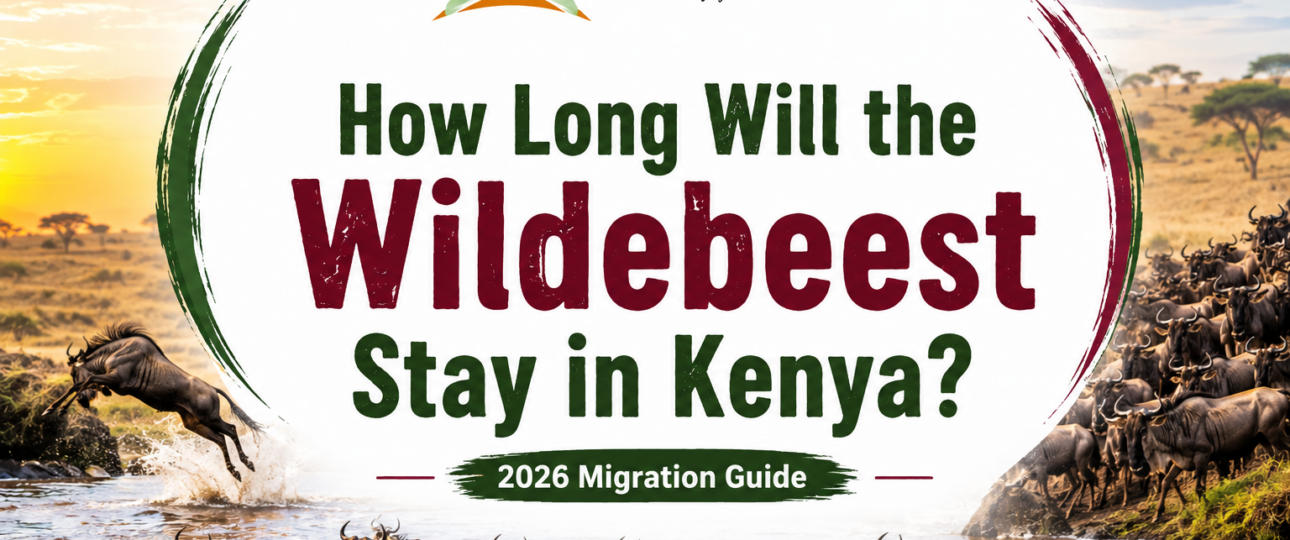
How Long Will the Wildebeest Stay in Kenya? 2026 Migration Guide
How long will wildebeest stay in Kenya in 2026? Discover when the herds reach the Masai Mara, Mara River crossing season, and when they usually leave Kenya.
How Long Will the Wildebeest Stay in Kenya?
Every year, thousands of travellers head to Kenya hoping to witness one of Africa’s greatest wildlife spectacles — the Great Wildebeest Migration.
But one question comes up again and again: how long will the wildebeest stay in Kenya?
The answer matters if you are planning a Great Migration safari in Kenya, especially if your dream is to see the herds in the Masai Mara, experience the Mara River crossing, or photograph thousands of wildebeest moving through the Mara Triangle.
The main wildebeest migration period in Kenya generally occurs from around July through October, although the exact timing changes from year to year. The herds follow rainfall, fresh grass and water rather than a fixed calendar, so some groups may arrive earlier, remain longer or begin moving south before others.
📍 Where Are the Wildebeest in Kenya?
During the Kenyan phase of the migration, the herds move through the Masai Mara ecosystem, including areas around the Mara Triangle and Mara River.
Their movements are connected to the wider Serengeti–Mara ecosystem stretching between Tanzania and Kenya.
The Wildebeest Do Not Follow a Fixed Calendar
One of the biggest misconceptions about the Great Migration is that the wildebeest arrive in Kenya on one exact date and leave on another.
In reality, migration is a constantly changing natural process. Rainfall, grass availability, water, temperature and herd behaviour all influence where the animals move.
This means that saying the wildebeest will leave Kenya on a specific day would be misleading.
Instead, travellers should think about the migration in terms of a general seasonal window.
Kenya Wildebeest Migration Timeline
| Period | What You May See |
|---|---|
| July | Herds begin entering or concentrating in the Masai Mara region, depending on conditions. |
| August | Major migration activity can occur in the Mara, including potential Mara River crossings. |
| September | Excellent opportunities for seeing large herds can continue, although movement remains unpredictable. |
| October | Some herds may still be in the Mara while others begin moving back towards the Serengeti. |
Why Does the Length of the Kenyan Migration Change?
The wildebeest are constantly searching for nutritious grass and water. Their movement therefore responds to environmental conditions rather than human travel calendars.
- 🌧️ Rainfall patterns
- 🌱 Availability of fresh grass
- 💧 Availability of water
- 🦓 Herd behaviour
- 🌡️ Changing weather conditions
- 🦁 Predator pressure
This is why one year may produce different migration timing from another. It is also why current migration updates can be more useful than relying exclusively on historical dates.
🦓 Planning to See the Wildebeest in Kenya?
Want to experience the Great Migration in the Masai Mara or Mara Triangle? Tell us your travel dates and we’ll help you plan around the migration.
PLAN MY GREAT MIGRATION SAFARIGet the latest seasonal information in our Great Migration Update Today .
When Do the Wildebeest Arrive in Kenya?
The arrival of the wildebeest in Kenya is one of the most anticipated moments of the Great Migration. After spending part of the year moving through the Serengeti in Tanzania, the herds gradually make their way toward the greener grasslands of the Masai Mara.
There is no single arrival date. The first herds can appear at different times depending on rainfall, grass conditions and movements across the wider Serengeti-Mara ecosystem.
Wildebeest generally begin reaching the Masai Mara region around July, although the timing can vary from year to year. By August and September, large numbers may be present in the Mara ecosystem.
July: The Migration Begins to Build in the Mara
July can mark the beginning of an exciting period for Great Migration safaris in Kenya. Depending on seasonal conditions, herds may begin entering the Mara ecosystem after moving northwards through Tanzania.
For visitors arriving in July, the experience can be particularly rewarding because migration activity is developing while the Masai Mara is also offering excellent resident wildlife viewing.
📍 July Migration Areas
Wildlife activity can be experienced across the wider Masai Mara, including the Mara Triangle and areas surrounding the Mara River.
August: A Major Migration Month in Kenya
August is one of the most popular months for travellers planning a Kenya Great Migration safari.
Large herds may be concentrated in the Mara ecosystem, and this is also a period when travellers hope to witness dramatic Mara River crossings.
However, a river crossing is never guaranteed. The herds may remain on one side of the river, move along the banks or suddenly change direction.
September: Large Herds Can Still Be in Kenya
September can continue to offer excellent wildebeest migration viewing in Kenya.
Some herds may remain in the Masai Mara while others gradually begin moving according to changing environmental conditions.
This makes September an attractive option for travellers who want to combine the possibility of migration activity with classic Masai Mara wildlife viewing.
Yes. Large numbers of wildebeest can still be found in the Masai Mara and Mara Triangle during September, although the location and size of herds can change throughout the month.
October: When the Herds May Begin Leaving Kenya
By October, some wildebeest may begin moving southwards toward the Serengeti. However, this does not mean that every wildebeest leaves Kenya at the same time.
Some herds can remain in the Mara later than expected if conditions continue to provide suitable grazing and water.
Therefore, October can still be worth considering when planning a Great Migration safari in Kenya.
🌍 Kenya–Tanzania Migration Cycle
The wildebeest migration is not a one-way journey. The animals continuously move through the wider Kenya–Tanzania ecosystem, following seasonal resources.
The Kenyan phase is therefore part of a much larger annual migration cycle connecting the Serengeti and Masai Mara.
Why You Should Not Rely on One Exact Migration Date
If you are planning your safari months in advance, it is tempting to search for the exact date the wildebeest will arrive or leave Kenya. Unfortunately, nature does not work according to a fixed itinerary.
Rainfall can alter grass growth, water availability can influence herd movements, and the animals themselves can change direction unexpectedly.
This is why an experienced safari guide and current migration updates are valuable during the season.
Best Months to See Wildebeest in Kenya
| Month | Migration Opportunity | What to Expect |
|---|---|---|
| July | Building | Herds may begin reaching the Mara ecosystem. |
| August | High | Major migration activity and possible river crossings. |
| September | High | Large herds may remain across the Mara. |
| October | Variable | Some herds may begin returning toward Tanzania. |
🦓 Want to See the Wildebeest in Kenya?
Planning your safari for July, August, September or October? Contact Mara Triangle Safaris and let us help you choose dates that match your migration interests.
PLAN MY KENYA SAFARISee where the herds are moving with our guide to Best Mara River Crossing Locations This Week .
How Long Do Wildebeest Stay in the Masai Mara?
The Masai Mara is one of the most important destinations in Kenya for experiencing the Great Wildebeest Migration. However, the herds do not arrive, stay for a fixed number of weeks and leave on a predetermined date.
Their stay in the Mara depends largely on the availability of fresh grazing, water and suitable conditions. This is why migration timing can vary between different years and even between different herds during the same season.
Wildebeest can remain in the Masai Mara for several months during the Kenyan phase of the Great Migration, with the main migration window generally falling between July and October. The exact length of their stay varies according to rainfall, grazing and herd movements.
The Mara Is More Than a River Crossing Destination
Many travellers associate the Kenyan migration entirely with the famous Mara River crossings. While these crossings are among Africa’s most spectacular wildlife events, the migration experience is much broader.
Wildebeest may spend considerable time grazing across the grasslands, moving between water sources and gathering in large herds before and after crossing attempts.
What Determines How Long the Herds Remain?
Several natural factors influence how long the wildebeest remain in the Masai Mara ecosystem.
- 🌧️ Rainfall: Rain can create fresh grazing and influence where the herds move.
- 🌱 Grass availability: Wildebeest need large areas of nutritious grass to support the enormous herds.
- 💧 Water: Reliable water sources influence migration routes and temporary concentrations.
- 🦓 Herd behaviour: Different groups can move at different speeds and directions.
- 🐊 River conditions: The Mara River can influence where animals gather and attempt to cross.
📍 The Mara Triangle and Wildebeest Migration
The Mara Triangle is part of the wider Masai Mara ecosystem and offers outstanding opportunities for wildlife viewing during the migration season.
The area around the Mara River can become especially significant when wildebeest herds gather near crossing points.
Can Wildebeest Stay in Kenya Longer Than Expected?
Yes. Some herds may remain in the Kenyan ecosystem later than travellers expect if conditions continue to provide suitable grazing and water.
This is one reason why an October safari can still produce rewarding migration sightings, even though some herds may already be moving back toward Tanzania.
The reverse is also possible. If conditions change, some groups can begin moving south earlier than expected.
Yes. Wildebeest can still be present in the Masai Mara during October, although their numbers and locations can vary as herds begin moving toward the Serengeti.
Why the Masai Mara Is So Important to the Migration
The Masai Mara provides important grazing areas during the northern phase of the annual migration. Its open grasslands also support a remarkable concentration of predators and other wildlife.
This means a traveller does not need to see a river crossing for the safari to be successful. Simply watching thousands of wildebeest moving across the Mara landscape can be an unforgettable experience.
Wildebeest, Zebra and Other Migrating Animals
The migration is not made up of wildebeest alone. Large numbers of zebra and gazelles also move through the ecosystem, creating extraordinary wildlife concentrations.
| Animal | Role in the Migration |
|---|---|
| 🦓 Wildebeest | The dominant species in the Great Migration herds. |
| 🦓 Zebra | Travel alongside wildebeest and contribute to the moving herds. |
| 🐐 Gazelles | Move through parts of the ecosystem following available grazing. |
| 🦁 Lions | Predators attracted by the abundance of migrating prey. |
| 🐊 Crocodiles | Important predators around sections of the Mara River. |
Why a Longer Safari Gives You More Opportunities
If your primary goal is to see the wildebeest, spending several days in the Masai Mara is generally more sensible than relying on a very short visit.
A longer stay gives your safari guide more opportunities to follow herd movements, explore different wildlife areas and adapt the itinerary when conditions change.
🗺️ A Flexible Mara Safari
Consider combining migration viewing in the Mara Triangle with broader game drives through the Masai Mara. This allows you to enjoy the wider ecosystem even when the herds are not immediately beside the river.
🦓 Want More Time With the Migration?
Give yourself the best opportunity to experience the wildebeest by planning a multi-day Masai Mara safari during the migration season.
PLAN MY MARA SAFARIFind out when migration activity is most likely with our guide to the Best Time for a Great Migration Safari in Kenya .
How Long Will the Wildebeest Stay in Kenya Month by Month?
The Kenyan phase of the Great Wildebeest Migration is best understood as a seasonal window rather than a fixed event. From July to October, different herds can move through the Masai Mara at different times.
If you are deciding when to book your Kenya Great Migration safari, understanding what each month can offer is more useful than looking for one guaranteed migration date.
July, August, September and October can all offer migration opportunities in Kenya. August and September are particularly popular for travellers hoping to see large herds and possible Mara River crossings, while October can offer a quieter experience as some herds begin moving south.
July: The Wildebeest Begin Reaching the Mara
July can mark the beginning of the main Kenya wildebeest migration season. As conditions change in Tanzania, herds may begin moving north toward the Masai Mara ecosystem.
The timing is not identical every year. Some areas may become active earlier while other herds arrive later.
📍 July in the Mara
July is an exciting period for wildlife viewing in the Mara Triangle, particularly as migration activity starts developing across the wider Mara ecosystem.
August: Peak Migration Excitement
August is one of the most sought-after months for a Great Migration safari in Kenya.
Large herds may gather across the Mara, and the Mara River crossing can become one of the major attractions for visitors.
However, even during August, no guide can guarantee that a particular herd will cross the river on a particular day. Patience and flexibility remain essential.
September: Excellent Migration Viewing Continues
September can continue to offer exceptional wildebeest migration viewing in Kenya.
Large groups may still be spread across the Masai Mara, while some herds can begin moving depending on changing grazing and weather conditions.
For travellers who want to combine migration viewing with the Big Five, September can also provide outstanding opportunities to see lions, leopards, elephants, buffaloes and rhinoceroses.
October: The Migration Begins to Change Direction
October is an interesting transition period. Some wildebeest may still be found in Kenya, while other groups begin their journey back toward the Serengeti.
This does not mean the migration suddenly ends at the beginning of October. Different herds move at different speeds and respond to local conditions.
Not necessarily. Wildebeest can still be present in the Masai Mara during October. However, migration activity can become increasingly variable as herds begin moving southward.
Kenya Wildebeest Migration: Month-by-Month Summary
| Month | Migration Situation | Safari Opportunity |
|---|---|---|
| July | Migration building | Excellent wildlife viewing and increasing herd activity |
| August | High migration activity | Excellent opportunity for large herds and river crossings |
| September | Migration continues | Strong opportunity for herds and predator viewing |
| October | Movement becomes more variable | Some herds may remain while others move toward Tanzania |
Why August and September Are So Popular
August and September attract many travellers because they fall within the period when large numbers of wildebeest can be present in the Mara ecosystem.
These months also provide the possibility of witnessing one of the migration’s most dramatic moments: a wildebeest crossing the Mara River.
But remember: the migration is a natural process. A safari booked in August or September increases your opportunity, but it cannot guarantee a crossing.
🌍 Kenya–Tanzania Migration Connection
The wildebeest do not consider the Kenya–Tanzania border when following food and water. Their annual journey connects the Serengeti in Tanzania with the Masai Mara in Kenya as part of one interconnected ecosystem.
Which Month Should You Choose?
Your ideal month depends on your priorities. If your main objective is to maximise the possibility of seeing large migration herds, August and September are strong choices.
July can be attractive for travellers who want to experience the developing migration season, while October may appeal to visitors who prefer a potentially quieter period and are comfortable with greater uncertainty about herd locations.
🦓 Choose Your Migration Month
Not sure whether July, August, September or October is right for your safari? Share your travel dates and we’ll help you plan around the migration.
PLAN MY GREAT MIGRATION SAFARIDiscover what makes the migration so remarkable in Interesting Facts About the Wildebeest Migration .
When Do the Wildebeest Leave Kenya?
One of the biggest questions for travellers planning a Great Migration safari in Kenya is when the wildebeest will finally leave the Masai Mara.
The simple answer is that there is no single departure date. The herds gradually begin moving back toward Tanzania when local conditions change and the available grazing becomes less favourable.
Wildebeest generally begin moving out of Kenya from around October, but the timing varies. Some herds may remain in the Masai Mara later in the season while others have already started returning toward the Serengeti.
Why Do the Wildebeest Leave Kenya?
The wildebeest do not leave Kenya because the migration season has officially ended. They move because they are constantly searching for the best available combination of fresh grass and water.
When conditions elsewhere become more attractive, herds gradually begin moving south toward Tanzania.
Does Rainfall Affect When Wildebeest Leave Kenya?
Yes. Rainfall is one of the major environmental factors influencing migration movements.
New rainfall can produce fresh grass and change where water is available. This can encourage herds to change direction and begin the journey back toward the Serengeti.
Because rainfall patterns vary from year to year, the date on which wildebeest leave the Masai Mara can also vary.
🌍 From the Masai Mara Back to the Serengeti
The annual migration connects the Masai Mara in Kenya with the Serengeti in Tanzania. The animals move between these ecosystems throughout the year rather than completing one simple north-to-south journey.
Can Wildebeest Still Be Seen in Kenya in October?
Yes. October should not automatically be considered the end of the migration in Kenya.
Some herds may still be grazing in the Mara while other groups have already begun their journey south. This creates a period of changing wildlife concentrations across the ecosystem.
October can still provide wildebeest sightings in the Masai Mara and Mara Triangle. However, migration activity becomes less predictable as herds gradually begin returning toward Tanzania.
What Happens After the Wildebeest Leave Kenya?
As herds move south, the migration continues across the wider Serengeti-Mara ecosystem.
This is why the Great Migration should not be viewed as a short event that starts and finishes in Kenya. It is an ongoing annual cycle that takes place across Tanzania and Kenya.
Even after large concentrations of wildebeest move away from the Mara, the ecosystem remains an exceptional destination for Big Five wildlife viewing.
Does the End of the Migration Mean the Mara Is Empty?
Not at all. The Masai Mara supports resident wildlife throughout the year.
| Wildlife | Can Be Seen Beyond Migration Season? |
|---|---|
| 🦁 Lions | Yes |
| 🐆 Leopards | Yes |
| 🐘 Elephants | Yes |
| 🦒 Giraffes | Yes |
| 🦛 Hippos | Yes |
| 🦓 Wildebeest | Numbers vary with migration movements |
Should You Avoid Kenya After September?
Not necessarily. If your only objective is to maximise your chances of seeing a major Mara River crossing, the core migration season is generally the stronger choice.
But if your priority is a broader Kenya safari, October can still be an excellent time to explore the Mara and its resident wildlife.
📍 Kenya Safari Beyond the Migration
The Masai Mara and Mara Triangle remain important wildlife destinations even when large migration herds move toward the Serengeti.
A safari itinerary can therefore focus on the wider ecosystem rather than depending entirely on the presence of migrating wildebeest.
How to Maximise Your Chance of Seeing Wildebeest Before They Leave
- 🦓 Travel during the main migration window.
- 📅 Allow several days in the Masai Mara.
- 📍 Stay informed about current herd locations.
- 🌦️ Consider current weather and grazing conditions.
- 🚙 Use an experienced local safari guide.
- ⏳ Remain flexible because wildlife does not follow a fixed timetable.
🦓 Don’t Miss Your Migration Window
Thinking about visiting Kenya before the wildebeest move back toward Tanzania? Let us help you choose the right dates and create a flexible Masai Mara Great Migration safari.
PLAN MY MIGRATION SAFARICheck our Last Minute Great Migration Safari Deals for current safari options.
Best Time to Visit Kenya for the Wildebeest Migration
If your main goal is to see the Great Wildebeest Migration in Kenya, the most popular window is generally July to October. Herd movements remain unpredictable, so your travel dates should allow flexibility. :contentReference[oaicite:0]{index=0}
August and September are popular choices for travellers hoping to see large herds and possible Mara River crossings. July and October can also offer excellent migration experiences, but herd locations vary naturally. :contentReference[oaicite:1]{index=1}
How Many Days Do You Need in the Masai Mara?
For a general Masai Mara safari, 3 days and 2 nights can work well. For the Great Migration, however, staying longer gives you more time to follow herd movements and wait for opportunities. 4 to 5 nights is a stronger option for migration-focused travellers. :contentReference[oaicite:2]{index=2}
| Stay | Best For |
|---|---|
| 2 Nights | Short Mara safari |
| 3 Nights | Good first-time safari |
| 4 Nights | More wildlife and migration time |
| 5 Nights+ | Migration, photography and greater flexibility |
📍 Why Stay in the Mara Triangle?
Staying in or near the Mara Triangle can place you close to important migration areas while allowing your safari to explore the wider Masai Mara ecosystem.
The best location still depends on where the herds are actually moving during your visit.
Give Yourself Time to Follow the Herds
A short safari can produce amazing sightings, but migration viewing is partly a game of patience. Herds can change direction, gather near the river or move away from an area unexpectedly.
A multi-day itinerary gives your guide more opportunities to adjust game drives according to current wildlife movements.
🦓 Planning Your 2026 Migration Safari?
Tell us your preferred dates and how many days you have available. We’ll help you plan a flexible Masai Mara Great Migration safari.
PLAN MY SAFARISee our guide to the Best Time for a Great Migration Safari in Kenya .
Frequently Asked Questions About Wildebeest in Kenya
How long will the wildebeest stay in Kenya?
The main wildebeest migration period in Kenya generally runs from around July to October, but the exact length of the stay varies each year according to rainfall, grazing and herd movements.
When do wildebeest leave the Masai Mara?
Some herds may begin leaving the Masai Mara around October, gradually moving back toward the Serengeti. There is no single departure date for all the herds.
Can I see wildebeest in Kenya in October?
Yes. Wildebeest can still be present in the Masai Mara and Mara Triangle during October, although migration activity becomes increasingly variable.
What is the best month to see wildebeest in Kenya?
August and September are popular months for migration viewing, particularly for travellers hoping to see large herds and possible Mara River crossings. July and October can also provide rewarding experiences.
How long should I stay in the Masai Mara for the migration?
A 4- to 5-night safari gives migration-focused travellers more time to follow herd movements and explore different areas of the Mara ecosystem.
Are Mara River crossings guaranteed?
No. River crossings are completely natural events and cannot be guaranteed on a particular date or at a particular location.
Final Verdict: How Long Will the Wildebeest Stay in Kenya?
The best way to think about the Kenyan phase of the Great Wildebeest Migration is as a seasonal window, not a fixed timetable.
From July through October, the Masai Mara can become one of the most spectacular wildlife destinations in Africa as migrating wildebeest, zebra and gazelles move through the ecosystem.
If seeing the migration is your priority, choose your dates carefully, allow several days in the Mara and remain flexible. The animals decide when they move — not the calendar.
Wildebeest generally spend part of the July–October period in Kenya’s Masai Mara ecosystem. August and September are popular migration months, while some herds may remain into October before gradually returning toward Tanzania.
🦓 Ready to See the Great Migration in Kenya?
Don’t leave your migration safari to chance. Plan your Masai Mara or Mara Triangle safari around your preferred travel dates and give yourself enough time to follow the herds.
July • August • September • October 2026
BOOK MY GREAT MIGRATION SAFARIBest Time of Day to Watch a Mara River Crossing