
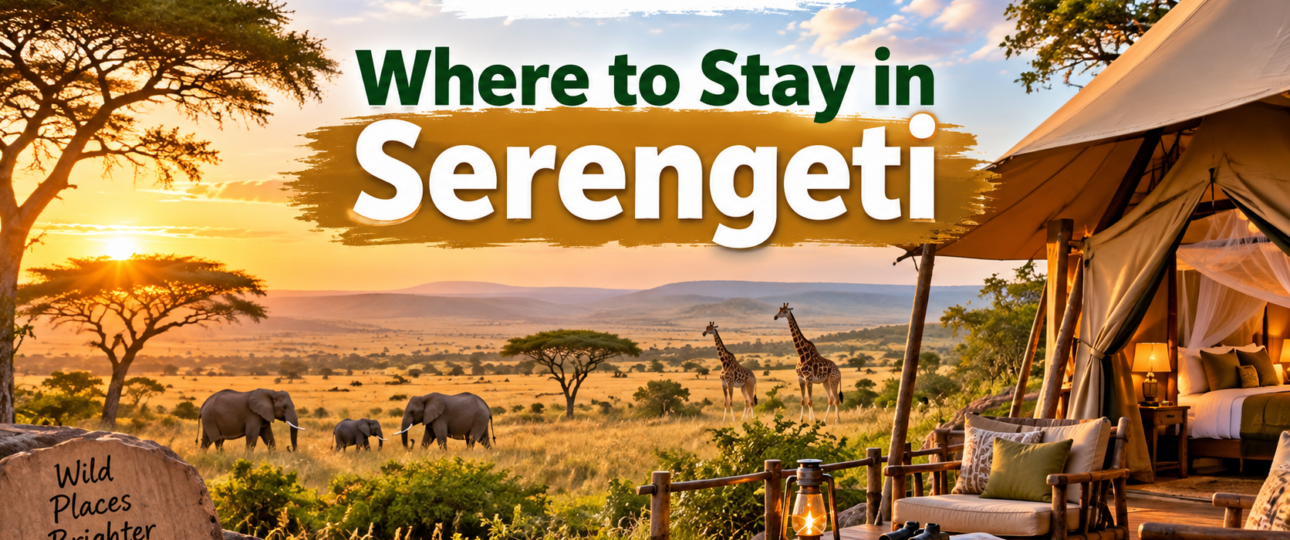
Where to Stay in Serengeti: Central, Northern, Southern or Western Serengeti?
Where to Stay in Serengeti: Central, Northern, Southern or Western Serengeti?
Choosing where to stay in Serengeti can be just as important as choosing when to visit. Central, Northern, Southern and Western Serengeti offer different wildlife experiences, migration opportunities, landscapes and camp styles. This guide helps you choose the right Serengeti region for your safari.
There is no single best area for every safari. Central Serengeti, particularly Seronera, is one of the best choices for first-time visitors and year-round wildlife. Northern Serengeti is especially attractive when the Great Migration reaches the Mara River area. Southern Serengeti becomes particularly important during the green and wildebeest calving season. Western Serengeti is associated with the migration’s movement through the Western Corridor and Grumeti area. The right choice depends mainly on your travel month, wildlife priorities, number of safari days and preferred accommodation style.
Serengeti National Park is enormous.
Looking at a map and simply choosing a beautiful lodge can therefore be a costly mistake.
Two camps described as being “in Serengeti” may actually be several hours apart and offer very different wildlife experiences.
This matters even more when you are trying to see the Great Migration. The wildebeest herds move through different parts of the wider Serengeti ecosystem throughout the year.
Your camp should therefore be chosen around the safari experience you want, not simply around photographs of the rooms.
If you are still learning how the park works, our complete Serengeti safari guide is a useful starting point for understanding wildlife, game drives and the overall Serengeti experience.
Key Takeaways
- Central Serengeti: one of the strongest all-round choices for year-round resident wildlife, big cats and first-time visitors.
- Northern Serengeti: best known for the Mara River, Kogatende and the northern phase of the Great Migration.
- Southern Serengeti: especially important during the green season and wildebeest calving period.
- Western Serengeti: known for the Western Corridor, Grumeti River and mid-year migration movement.
- The best region depends heavily on when you travel.
- Do not choose accommodation based only on luxury level. Location can save several hours of unnecessary driving.
- First-time visitors with limited safari days often benefit from spending time in Central Serengeti.
- Migration-focused travelers may need to stay in more than one Serengeti region.
- A good safari itinerary balances wildlife location with road transfers, camp changes and game-drive time.
Not Sure Where to Stay in Serengeti?
Tell us your travel dates, number of safari days and the wildlife you most want to see. Mara Triangle Safaris can help match your itinerary with the right Serengeti region.
Help Me Choose My Serengeti AreaWhere to Stay in Serengeti: Quick Navigation
- Serengeti Regions at a Glance
- Central Serengeti & Seronera
- Northern Serengeti & Kogatende
- Southern Serengeti & Ndutu
- Western Serengeti & Grumeti
- Best Area for First-Time Visitors
- Best Area for the Great Migration
- Where to Stay by Month
- Best Area for Families
- Best Area for Couples & Honeymoons
- Best Area for Photography
- How Many Nights in Each Region?
- Can You Combine Different Serengeti Areas?
- How to Choose a Serengeti Camp
- Planning Your Safari Route
- Frequently Asked Questions
Central vs Northern vs Southern vs Western Serengeti
| Region | Best Known For | Strongest Period | Best For |
|---|---|---|---|
| Central Serengeti | Seronera, resident wildlife, big cats, central access | Year-round | First visits, shorter safaris, predators, families |
| Northern Serengeti | Mara River, Kogatende, migration herds | Generally July–October for northern migration activity | River crossings, migration safaris, wilderness |
| Southern Serengeti | Short-grass plains, Ndutu area, calving | Roughly December–March, especially calving season | Wildebeest calves, predators, green-season photography |
| Western Serengeti | Western Corridor, Grumeti River, woodland | Generally late wet season into early dry season | Migration movement, Grumeti, less conventional routes |
Choose your Serengeti region according to your travel month and safari goal before choosing a lodge or camp. A beautiful camp in the wrong area can mean long transfers and less time watching wildlife.
Central Serengeti: Best All-Round Area for Many Visitors
Central Serengeti is often associated with the Seronera Valley, one of the best-known wildlife areas in the park.
Unlike regions whose appeal is strongly connected to one phase of the migration, Central Serengeti has substantial resident wildlife.
The Seronera River system and surrounding habitats support wildlife even when the main migration herds are elsewhere.
Visitors may encounter lions, leopards, cheetahs, elephants, giraffes, buffalo, hyenas and numerous plains animals.
Why Stay in Central Serengeti?
- Excellent resident wildlife.
- Strong big-cat opportunities.
- Useful location for first-time Serengeti visitors.
- Good selection of camps and lodges.
- Seronera Airstrip provides convenient fly-in access.
- Practical base for shorter itineraries.
- Possible migration activity when herds move through central areas.
What Is the Downside?
Because Seronera is so productive and accessible, it can attract more safari vehicles than some of the remote parts of Serengeti.
Travelers who place a very high value on isolation may prefer spending at least part of the safari in another region.
However, for someone visiting Serengeti for the first time and wanting a broad wildlife experience, Central Serengeti is difficult to ignore.
How Long Should You Stay in Central Serengeti?
For many itineraries, two or three nights is a useful starting point.
A longer stay makes sense for travelers interested in relaxed game drives, photography or avoiding too many camp changes.
A short itinerary can also be built around Central Serengeti. See our 5-day Serengeti safari itinerary for one way to structure a compact safari.
First Time in Serengeti?
Central Serengeti can provide an excellent foundation, but the best route still depends on your travel month. Let us help you decide whether to stay entirely around Seronera or combine Central Serengeti with another region.
Plan My First Serengeti SafariNorthern Serengeti: Best for Mara River Migration Safaris
Northern Serengeti has become one of the most sought-after regions for travelers following the Great Migration.
The region includes the Mara River and Kogatende area, where migration herds may gather and cross between different parts of the Serengeti-Mara ecosystem.
This is very different from Central Serengeti.
You do not choose Northern Serengeti simply because it is “better.” You choose it when its location matches your travel dates and wildlife priorities.
When Is Northern Serengeti Most Important?
Northern Serengeti is particularly associated with the dry-season phase of the Great Migration, generally from around July into October.
Exact migration timing varies because wildebeest move according to rainfall, water and grazing conditions rather than fixed dates.
For a more detailed seasonal breakdown, see our guide to the best time to visit Northern Serengeti .
Where Should You Stay in Northern Serengeti?
Camp choice should take into account proximity to useful game-drive areas, access to the Mara River region and the amount of daily driving required.
Our guide to the best camps in Northern Serengeti looks more closely at accommodation options for this part of the park.
Is a Mara River Crossing Guaranteed?
No.
A river crossing is a natural event rather than a scheduled attraction.
Herds may gather near the river and then wait, move away or cross at a different location.
That is why travelers should avoid designing the entire safari around one exact crossing time.
Read our Mara River wildebeest crossing guide to understand what the experience is really like.
If you are considering a later dry-season visit, our September Great Migration guide looks specifically at this popular period.
How Long Should You Stay in Northern Serengeti?
For a migration-focused safari, consider at least two to three nights in the north.
More time gives you additional game drives and reduces the pressure of expecting one particular wildlife event to happen immediately.
Planning a Mara River Safari?
River crossings cannot be scheduled, but your safari can be positioned intelligently. Tell us your dates and we can help choose the Northern Serengeti area and camp that fit your itinerary.
Plan My Northern Serengeti SafariSouthern Serengeti: Best for Calving & the Green Season
Southern Serengeti presents a completely different version of the ecosystem.
During the wetter months, the short-grass plains become green and productive, drawing enormous concentrations of wildebeest and other grazing animals.
The broader southern ecosystem includes areas toward Ndutu and the Ngorongoro side.
Why Is Southern Serengeti Famous?
Its biggest seasonal attraction is the wildebeest calving period.
Large migration herds gather across the short-grass plains, with the main calving phase generally associated with January through March and especially February.
Newborn calves also attract predators, creating opportunities to see lions, cheetahs, hyenas and other carnivores interacting with the migration.
Is Southern Serengeti Only About Calving?
No, but seasonality matters.
The green landscapes themselves can be a major attraction for photographers and travelers who want something different from the classic dry, golden Serengeti.
If you are considering this part of the safari year, read our Serengeti rainy season safari guide for the advantages and practical trade-offs of green-season travel.
How Long Should You Stay in Southern Serengeti?
Around two to three nights can work well for a migration and calving-focused itinerary.
Photographers or travelers specifically targeting predator activity may prefer additional time.
Do not automatically book Northern Serengeti because you have heard it is the best place for the migration. If you travel during calving season, the southern plains may be far more relevant to your safari goals.
Western Serengeti: Grumeti & the Western Corridor
Western Serengeti stretches toward the Western Corridor and Grumeti River.
The habitat is different from the open southern short-grass plains and parts of Central Serengeti, with areas of woodland, riverine habitat and open grassland.
When Is Western Serengeti Most Important?
The Western Corridor becomes especially relevant as migrating herds move away from the southern and central plains and begin pushing west and north.
This is generally a mid-year migration experience rather than a Mara River crossing experience.
Is Western Serengeti Worth Visiting?
Yes, if the region fits your season and route.
It can also appeal to travelers who have visited Serengeti previously and want to experience a different landscape.
But just like Northern or Southern Serengeti, it should not be added to an itinerary simply to say you visited another region.
Every additional region creates extra travel time.
Which Serengeti Area Is Best for First-Time Visitors?
Seronera offers strong resident wildlife, predator viewing, a wide choice of accommodation and relatively convenient access compared with some of the more remote seasonal areas.
That does not mean every first-time visitor should stay only in Central Serengeti.
If your dates coincide with a major migration phase, combining Central Serengeti with Northern or Southern Serengeti can create a stronger itinerary.
For example:
- First safari + calving season: Southern + Central Serengeti.
- First safari + Mara River season: Central + Northern Serengeti.
- Short general wildlife safari: Central Serengeti may be enough.
- Longer migration safari: Combine two or more regions where appropriate.
Where Should You Stay for the Great Migration?
This is one of the most important questions in Serengeti planning.
The answer changes during the year.
| Approximate Period | Migration Focus | Area to Consider |
|---|---|---|
| January–March | Calving and southern plains | Southern Serengeti / Ndutu area |
| April–May | Herds moving away from southern plains | South-central / Central areas depending on conditions |
| June–July | Westward and northward movement | Western Corridor and onward north |
| July–October | Northern migration and Mara River phase | Northern Serengeti / Kogatende |
| November–December | Return movement south as rains influence grazing | Central, eastern and southern direction depending on rainfall |
This table is a planning framework, not a promise.
The Great Migration responds to rainfall and grazing, so actual herd locations can change from one year to another.
For a complete explanation, see our guide to where and when to see the Great Migration .
Closer to your travel dates, you can also check our Great Migration today update for current planning context.
Can You Follow the Migration Into Masai Mara?
Yes, a longer East African safari can include both Serengeti and Masai Mara.
Our Serengeti to Masai Mara Great Migration journey explains how the two ecosystems can fit into one trip.
Travelers considering a broader circular route can also explore the Great Migration Circle through Serengeti and Masai Mara .
Want to Stay Near the Great Migration?
Tell us your travel month rather than simply asking for a “migration camp.” We can help match your dates with the part of the ecosystem most likely to be relevant to your safari.
Plan My Great Migration SafariWhere to Stay in Serengeti by Month
| Month | Area to Consider | Main Reason |
|---|---|---|
| January | Southern Serengeti | Green plains and gathering migration herds |
| February | Southern Serengeti / Ndutu | Wildebeest calving |
| March | Southern / Central | Calving activity and changing herd movement |
| April | Central / South-central | Green season and transitional migration movement |
| May | Central / toward Western Corridor | Migration moving west and north |
| June | Western / Central | Western Corridor migration phase |
| July | Western / Northern | Northward migration movement |
| August | Northern Serengeti | Mara River region and northern herds |
| September | Northern Serengeti | Strong northern migration focus |
| October | Northern / Central | Late northern migration with movement beginning to shift |
| November | Central / Eastern / Southward | Short rains can influence return movement |
| December | Central / Southern direction | Greening plains and migration moving south |
Do not treat this month-by-month table as a fixed migration timetable. Rainfall patterns can change the location and speed of herd movement. Use it for initial planning, then confirm conditions closer to your travel dates.
Which Serengeti Area Is Best for Families?
Central Serengeti is often a practical choice for families because of its resident wildlife and broad accommodation selection.
Families can spend more time on game drives and less time repositioning between distant seasonal areas.
A private safari vehicle can also give parents greater flexibility with:
- Game-drive length.
- Meal breaks.
- Children’s energy levels.
- Photography stops.
- Early returns to camp.
Families should also consider camp age policies and the safety procedures of individual properties.
Our Serengeti safety guide explains wildlife, road and camp precautions in more detail.
Which Serengeti Area Is Best for Couples & Honeymoons?
Couples have more freedom to choose a region based on atmosphere rather than simply trying to maximize the number of wildlife sightings.
Central Serengeti offers reliability and excellent game viewing.
Northern Serengeti can feel more remote outside concentrated migration activity.
Southern Serengeti can be exceptionally beautiful when the plains are green.
The best honeymoon itinerary often combines strong wildlife viewing with a camp that has privacy, good food, comfortable rooms and enough time to enjoy the property rather than changing accommodation every night.
For romantic safari planning, explore our Serengeti safari guide for couples and honeymooners .
Which Serengeti Area Is Best for Photography?
There is no single answer because different regions create different photographic opportunities.
Central Serengeti
Excellent for predators, resident wildlife, kopjes and repeat game-drive opportunities.
Northern Serengeti
Strong for migration herds, Mara River scenes and wider wilderness landscapes during the northern migration period.
Southern Serengeti
Excellent during the green season for wildebeest calves, predators, dramatic skies and expansive short-grass plains.
Western Serengeti
Offers a different visual environment with the Grumeti region, riverine habitat and migration movement during the relevant season.
Photographers often benefit from staying longer in fewer locations rather than moving camp every day.
More time allows you to revisit promising sightings in better light.
How Many Nights Should You Spend in Each Serengeti Region?
Two or three nights per region is a useful general starting point, but the answer depends on the purpose of the trip.
| Safari Style | Possible Stay |
|---|---|
| Short first safari | 2–3 nights Central Serengeti |
| 5-day safari | Central Serengeti plus nearby circuit destinations or another region if timing works |
| Calving safari | 2–4 nights Southern Serengeti, possibly combined with Central |
| Mara River safari | 2–4 nights Northern Serengeti, often combined with Central |
| Photography safari | 3+ nights in each key area to reduce constant transfers |
| Long migration safari | Multiple regions depending on month and route |
A common mistake is trying to visit Central, Northern, Western and Southern Serengeti in one short safari.
That may look impressive on an itinerary, but much of the trip can be consumed by moving between regions.
Can You Stay in More Than One Serengeti Region?
The key is choosing regions that make sense together for your travel dates rather than trying to cover the entire park.
Useful combinations may include:
- Central + Northern Serengeti during the northern migration period.
- Southern + Central Serengeti during calving season.
- Central + Western Serengeti during westward migration movement.
- Serengeti + Ngorongoro for a broader northern Tanzania safari.
- Serengeti + Zanzibar for a bush-and-beach itinerary.
Serengeti and Ngorongoro
Ngorongoro Crater and Serengeti offer very different experiences and work well within the same northern Tanzania safari.
Our Serengeti vs Ngorongoro Crater comparison explains how they differ and whether you should visit one or both.
Serengeti and Zanzibar
A safari can also finish with several days on the coast.
Read our Serengeti to Zanzibar guide for information on connecting safari and beach destinations.
You can also see how both experiences fit together in our 10-day Tanzania bush-to-beach itinerary .
How to Choose the Right Serengeti Camp or Lodge
Location comes first.
After that, compare the property itself.
✅ Is the camp in the correct region for your travel month?
✅ How much driving is required to reach key game-viewing areas?
✅ Is it permanent or seasonal?
✅ Does the property accept children if you are travelling as a family?
✅ Does the camp offer private or shared game drives?
✅ How far is the nearest useful airstrip?
✅ Is the accommodation level appropriate for your budget?
✅ Are meals and drinks included?
✅ Does the location reduce unnecessary transfers?
✅ Is the camp style appropriate for your honeymoon, family or photography trip?
Luxury Serengeti Accommodation
Luxury can mean spacious suites, private plunge pools, high-end dining, beautiful locations or more personalized service.
But a luxury camp still needs to be in the right area for your itinerary.
Compare options in our guide to luxury Serengeti lodges and camps .
Budget Serengeti Accommodation
Travelers working with a tighter budget should focus on overall itinerary efficiency rather than simply choosing the lowest nightly room rate.
A cheaper camp that requires major detours may not create the best overall value.
See our guide to planning a more affordable Serengeti safari for practical cost-saving ideas.
Need Help Choosing Between Serengeti Camps?
Send us your travel month, number of travelers, budget and preferred safari style. We can help narrow down the regions and camp locations that fit the trip.
Ask About Serengeti CampsShould You Stay Inside Serengeti or Outside the Park?
Where you stay affects how quickly you can begin wildlife viewing each day.
Accommodation inside or strategically positioned near your target safari area can reduce unnecessary transfers.
However, the right decision depends on the complete itinerary, budget, park-entry logistics and where you are travelling next.
This is another reason to design the route first and choose accommodation second.
Should You Fly Between Serengeti Regions?
Flying can reduce long overland transfers, particularly when combining remote parts of Serengeti or connecting the park with other destinations.
Road travel, however, can form part of the safari experience and may make more sense for certain circuit itineraries.
Our guide on how to get to Serengeti National Park compares the main road and air access options.
Travelers beginning in Kenya can also read our guide to planning a Serengeti safari from Nairobi .
How to Build the Right Serengeti Itinerary
Start with your travel dates.
Then decide what matters most:
- General wildlife viewing?
- Big cats?
- Wildebeest calving?
- Mara River crossings?
- Photography?
- Family travel?
- Honeymoon privacy?
- Luxury camps?
- Budget?
- Serengeti plus Zanzibar?
Only after answering those questions should you choose the region and accommodation.
Our Serengeti safari booking guide takes you through the planning process step by step.
You can also compare our Serengeti safari packages to see how different trip lengths and routes can be structured.
Build Your Serengeti Safari Around the Right Region
Central, Northern, Southern or Western Serengeti? The answer depends on your dates and what you want to experience. Mara Triangle Safaris can help you turn those priorities into a practical route.
Create My Serengeti ItineraryCentral vs Northern Serengeti: Which Is Better?
This is one of the most common Serengeti planning questions.
| Central Serengeti | Northern Serengeti |
|---|---|
| Strong resident wildlife | Strong seasonal migration focus |
| Excellent for first-time visitors | Excellent for Mara River season |
| Useful year-round | More seasonal for migration-focused travelers |
| Seronera Airstrip access | Kogatende-area flight access |
| Can be busier | Can feel more remote away from concentrated migration areas |
| Big cats and broad wildlife | Migration herds and northern landscapes |
If you have enough days during the northern migration period, you do not necessarily need to choose between them.
A Central + Northern Serengeti itinerary can provide both resident wildlife and migration-focused game viewing.
Southern vs Northern Serengeti: Which Is Better for the Migration?
Neither is universally better.
They represent different chapters of the migration.
Choose Southern Serengeti if you are travelling for the green plains, calving and predator activity.
Choose Northern Serengeti when your travel dates align with the Mara River phase and northern migration movement.
The better question is not: “Which area is best?”
It is: “Which area is best during my travel month?”
What About Eastern Serengeti?
Although this guide focuses on Central, Northern, Southern and Western Serengeti, the eastern part of the ecosystem can also offer rewarding wildlife and open landscapes.
Certain eastern areas can become relevant as wildlife responds to seasonal rains and migration movement.
For most first-time itineraries, however, Central, Northern, Southern and Western Serengeti provide a simpler framework for understanding where to stay.
Where to Stay in Serengeti FAQs
What is the best area to stay in Serengeti?
The best area depends on your month and wildlife goals. Central Serengeti is a strong all-round option, Northern Serengeti is important for the Mara River migration phase, Southern Serengeti is excellent for calving, and Western Serengeti becomes relevant during the Western Corridor migration period.
Where should first-time visitors stay in Serengeti?
Central Serengeti, particularly the Seronera area, is often a good choice for first-time visitors because of strong resident wildlife, predator viewing, accommodation options and convenient safari access.
Is Central or Northern Serengeti better?
Central Serengeti is generally better for year-round wildlife and first-time visitors. Northern Serengeti becomes particularly attractive during the northern phase of the Great Migration and Mara River season.
Where should I stay for the Great Migration?
The answer changes by month. Southern Serengeti is important during calving season, the Western Corridor becomes relevant during mid-year movement and Northern Serengeti is associated with the Mara River phase later in the migration cycle.
Where should I stay for wildebeest calving?
Travelers targeting wildebeest calving should focus on the Southern Serengeti ecosystem and Ndutu-area short-grass plains during the relevant green-season period.
Where should I stay for Mara River crossings?
Northern Serengeti around the Kogatende and Mara River region is the main area travelers consider when planning a Tanzanian safari around potential Mara River crossings.
Is Seronera worth staying in?
Yes. Seronera is one of the strongest year-round wildlife areas in Serengeti and is particularly attractive for big cats, first-time visitors and shorter safaris.
How many nights should I stay in Serengeti?
Three to five nights can provide a useful introduction, while longer stays allow travelers to combine different regions and reduce pressure to rush between wildlife areas.
Can I stay in two different parts of Serengeti?
Yes. Combining two regions can be an excellent strategy when you have enough time. Central plus Northern Serengeti and Southern plus Central Serengeti are examples that can work well during appropriate seasons.
Is Northern Serengeti worth the extra travel?
It can be, especially when travel dates align with northern migration activity. Outside a migration-focused itinerary, the value depends on your safari length, wildlife goals and desire for a more remote setting.
Which Serengeti area is best for families?
Central Serengeti is often practical for families because it provides strong resident wildlife, a good range of accommodation and the opportunity to reduce unnecessary long-distance transfers.
Which Serengeti area is best for honeymooners?
Honeymooners can choose based on season and atmosphere. Central Serengeti offers reliable wildlife, Northern Serengeti can provide remote seasonal experiences and Southern Serengeti can be beautiful during the green season.
Which part of Serengeti is best for lions?
Central Serengeti and the wider Seronera region are particularly well known for resident predators and year-round opportunities to see lions and other big cats.
Is Western Serengeti worth visiting?
Yes, particularly when the Western Corridor fits the migration season or when travelers want to explore a different Serengeti habitat. It should be included because it suits the itinerary, not simply to add another region.
Final Verdict: Where Should You Stay in Serengeti?
For many first-time travelers, Central Serengeti is the strongest all-round starting point. Choose Northern Serengeti when your dates align with the northern migration and Mara River phase. Choose Southern Serengeti for green-season landscapes, wildebeest calving and predator activity. Choose Western Serengeti when the Western Corridor fits the migration movement and your overall safari route.
The biggest mistake is assuming that all Serengeti camps provide the same safari experience.
They do not.
In Serengeti, location and timing work together.
A camp positioned close to the wildlife experience you want can give you more game-drive time, shorter transfers and a much stronger safari.
Let Mara Triangle Safaris Help You Choose Where to Stay
Tell us when you want to travel, how many days you have, your budget and the wildlife you hope to see. We can help you choose the Serengeti regions, camps and route that fit your safari.
Start Planning My Serengeti Safari